Protect Your Rights: Photographers' 5 Point Contest Checklist

The decisive rule is simple: enter contests that match your primary goal, whether that’s cash, exposure, exhibition or critique, and that ask for no more licensing than they need to promote or display your work. Curated directories speed up discovery, but a fast scan of the terms and conditions before you submit protects your portfolio and your rights.
TL;DR:
Read the legal terms before the prize details: perpetual, exclusive, transferable, or sublicensable rights can outlast promotion and outweigh the contest’s potential reward.
International awards tend to offer prestige and exposure, association exhibitions emphasize critique and community standing, while local calls provide lower stakes and practice.
Professionals who license images should resist broad promotional rights, while newer photographers may accept limited promotional licenses for work supporting a cause.
Check named judges, past winners, and documented exhibitions or publications before paying; a fee alone does not prove a contest is illegitimate.
A curated directory can filter by genre, deadline, and free entry status, but photographers still need to verify each contest’s terms.
Table of Contents
A prioritized checklist for choosing photo contests fast
Before you open your wallet or your portfolio, run every contest through the same short filter. The order matters: goal and category fit come first, because a contest that doesn’t serve your purpose isn’t worth evaluating further no matter how fair its terms are.
Confirm your primary goal first (cash, exhibition, publication or critique), then check that the contest’s categories and prize structure actually serve it.
Scan the license language for words like exclusive, perpetual, transferable or sublicensable. These are the clearest red flags in contest terms.
Weigh the entry fee against the realistic value of the prize, and look for transparent fee policies such as early bird pricing or volume discounts.
Check whether judges are named and whether the contest offers any feedback or critique, not just a winners list.
Review logistics: deadlines, file specifications, category rules and eligibility requirements, all of which reputable organizers spell out clearly, as shown in ASMP’s model contest terms.
Photographers who skip the first step often end up entering contests that technically accept their work but never serve the outcome they actually wanted, a wasted fee and a missed deadline elsewhere.
Pro Tip: Keep a simple spreadsheet with columns for goal, fee, license type and deadline. It turns a vague sense of “too many contests” into a five-minute weekly decision.
How to read contest terms and licensing without a law degree
Licensing language determines what happens to your image after you hit submit, and the difference between a fair license and a damaging one often comes down to a handful of words. A license grants specific, limited use, while a copyright assignment transfers ownership outright, something no promotional contest should require. Exclusive means only the organizer can use the image, even if you want to license it elsewhere. Perpetual means the rights never expire. Sublicensable means the organizer can pass your image to third parties without asking you again.
Read the licensing clause first, before the prize description, since the prize means little if the rights cost you more than the contest offers.
Watch for combinations like “irrevocable, perpetual, transferable, infinitely sub-licensable,” which ASMP flags as a warning sign that strips photographers of long-term control.
If a contest’s marketing page promises “limited promotional use” but the actual terms grant broader rights, the legal document governs, not the friendly copy.
Verify who runs the contest, look up past winners, and email the organizer for clarification when a clause is vague. Keep that correspondence on file.
Nearly every reputable contest publishes entry periods, fee tiers and category rules in plain language, the kind of detailed structure ASMP’s model terms demonstrate. A contest that can’t produce that level of clarity when asked is one to skip, regardless of how prestigious it sounds. Our photo contest rules template breaks down what reasonable clauses look like, side by side with the kind that should give you pause.
How to prioritize contests by goal, budget, and risk tolerance
Not every contest deserves the same investment of time, money or rights. Large international awards tend to reward prestige and exposure, association exhibitions reward critique and community standing, and local calls for entry reward practice and low-stakes feedback. Matching the contest type to what you actually need keeps your entries purposeful instead of scattershot, a point Improve Photography raises when weighing feedback against raw exposure.
Set an annual contest budget and track entry fees against it the way you would any other business expense.
Favor contests with demonstrated outcomes, such as past winners who went on to exhibit or publish, when a fee is involved.
Use early bird and volume discounts when they fit your shortlist, but never let a discount justify entering a contest that doesn’t match your goal.
Accept limited promotional licenses more readily early in your career or for cause-aligned work, but hold a harder line if you license images professionally.
Shortlist three to five contests per cycle and calendar every deadline so nothing slips past you.
This kind of discipline keeps ambition and strategy in balance, rather than letting enthusiasm drive you toward every open call that crosses your feed.
Where to find vetted contests and how to use a directory well
Reliable discovery starts with sources that have a track record: professional associations, established camera clubs, long-running international awards and curated directories that disclose their sourcing and update schedule. Each source earns trust differently, but the verification habit stays the same across all of them.
Cross-check any contest by looking up the named jury, searching past winners, and confirming whether exhibitions or publications actually followed, a habit worth forming given how Fstoppers documented contests with unclear organizer credentials and little demonstrable benefit.
Read the full terms before committing funds or images, even when a directory has already done the initial filtering.
Use filters for genre and free-to-enter status to narrow a long list into a realistic shortlist within minutes.
Sort by deadline and save a working shortlist so you’re not re-researching the same contests every month.
A directory that lists contests chronologically and updates weekly removes the research burden, but it doesn’t replace reading the fine print yourself. Our juried exhibition guide and judging criteria breakdown are useful companions once you’ve narrowed a list down to contests worth a closer look.
What a contest researcher sees after years of tracking entries

The same mistakes repeat across thousands of contest listings: photographers enter everything without reading a word of the terms, overpay for contests with no real benefit, or mistake a social media popularity contest for a juried evaluation of their craft. Social voting rewards network size, not photographic merit, a distinction Improve Photography draws clearly when comparing feedback value across contest formats.
The shortcuts that hold up over time are unglamorous. Favor juried contests with named judges over anonymous panels. Limit license acceptance to what’s needed for promotion or exhibition, nothing broader. Keep a running calendar of deadlines and follow-ups rather than relying on memory. None of this requires giving up ambition, it just means entering a mix of prestige awards, niche competitions and feedback-driven shows with eyes open.
— DARIO
Let a weekly updated directory do the searching for you
Finding contests worth your fee and your rights takes hours of research most photographers don’t have, and that’s the gap our PhotoContestsClub was built to close. Instead of checking dozens of organizer sites, we maintain a single continuously updated page listing active international photography contests, including a filter for free-to-enter opportunities, so you can scan options by genre and deadline in minutes rather than hours.
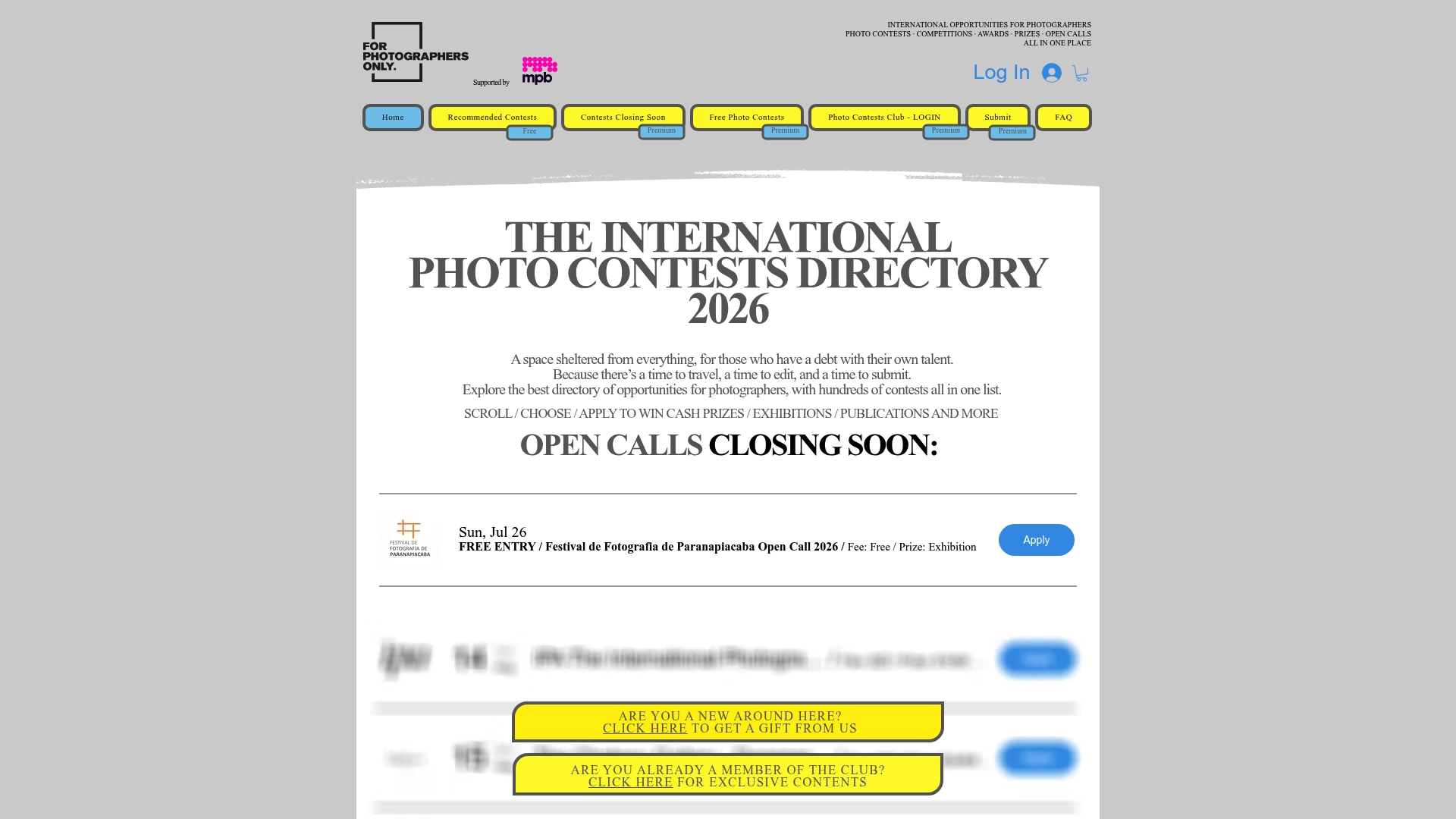
Access one page covering hundreds of active contests from major brands, institutions and independent festivals.
Filter for free-to-enter competitions when budget is the deciding factor.
Get weekly updates to deadlines and listings, which cuts down on stale or outdated entries.
We don’t organize these contests ourselves. We research and curate them, and the final read of any contest’s terms is still yours to do, using the checks outlined above. Membership runs 6 € per month or 40 € per year on our contests directory, and if boosting your visibility once you’ve entered matters too, SEO support for photographers can help turn contest recognition into actual bookings.
FAQ
What is the single most important factor in choosing a photo contest?
Match the contest to your actual goal first, whether that’s cash, exhibition, publication or critique, since a contest’s prestige means little if it doesn’t serve what you need. After that, licensing terms are the next filter, because a contest that demands broad or permanent rights can cost more than any prize is worth.
How do I spot a scam or low-value photography contest?
Watch for opaque organizer credentials, entry fees with no clear connection to prizes or published work, and licensing language that grants perpetual or sublicensable rights. Fstoppers’ reporting on fake contests documents these exact patterns across contests that charged fees far exceeding any realistic benefit.
Are entry fees a sign that a contest isn’t legitimate?
No, a fee alone doesn’t indicate a scam. Reputable contests often use fees to fund exhibitions, printed books or judging costs, so the deciding factors are fee transparency and whether past winners show real outcomes, not the existence of a fee itself.
What licensing terms should make me walk away from a contest?
Language combining “irrevocable,” “perpetual,” “transferable” and “sublicensable” signals that the organizer wants ongoing control over your image well beyond contest promotion. ASMP’s guidance on contest terms treats this combination as a clear reason to decline entry or request narrower terms.
How can a curated directory help me choose contests faster?
A directory that updates weekly and lists contests chronologically cuts hours of scattered searching down to a quick scan by genre and deadline. Our PhotoContestsClub works this way, though you should still read each contest’s own terms before entering.
Sources
Recommended