320+ Contests: Photographers Make Minor Releases Contest Ready

A parent or legal guardian must sign a model release before a minor’s image can be used commercially, since a minor cannot legally enter into a binding contract. Editorial, candid, and artistic uses often fall outside that requirement, though contest entries, professional sessions, and certain state performer rules frequently change the equation. When a child under 13 will be identified online, COPPA’s verifiable parental consent rules may also apply.
TL;DR:
A guardian must sign a release for any commercial or promotional use of a minor’s image, as minors cannot legally grant binding consent themselves.
A parent or guardian’s authority to sign is critical to making any commercial use enforceable, though copyright ownership remains with the photographer regardless of release; a release grants usage rights, not ownership.
Not all images of minors need a release; editorial, artistic, or incidental crowd shots often do not require one, but any use implying endorsement or promotion does.
A legally sound minor release must include specific details, such as party identification, scope of rights, use limits, signatures, and optional witness or notarization; vague or incomplete forms are ineffective.
When online identification of children under 13 is involved, COPPA rules require verifiable parental consent beyond just a signed release, especially for direct online use or publication.
Table of Contents
Minor vs. Adult Releases: Legal Differences and Why They Matter
The line between a minor release and an adult release comes down to one principle: capacity to contract. In the United States, the age of majority is 18, and anyone younger lacks the legal standing to grant binding permission for commercial use of their likeness. A minor’s signature on a release carries no legal weight on its own, no matter how enthusiastically a young model signs the form.
This is why a parent or legal guardian’s signature becomes the operative legal act. Their authority to consent on the child’s behalf is what transforms a photo session into an enforceable commercial arrangement. Without that guardian signature, a photographer holds images but not the rights to use them for advertising, product promotion, or any trade purpose, regardless of how the session itself was conducted.
A related but separate issue is copyright. Copyright in a photograph belongs to the photographer the moment the shutter closes, and a model release does not change that ownership. What a release does is grant permission to use the image of the person photographed, which matters because a striking portrait with no release is still copyrighted work, just work that cannot be licensed for commercial use without legal exposure. The U.S. Copyright Office’s guidance on registration addresses authorship and publication, but it is the release, not the copyright record, that protects against claims the image implies endorsement or violates privacy.
For photographers building a body of work that might appear in contests, stock libraries, or client campaigns, understanding this distinction early prevents a common and costly mistake: assuming that owning the copyright automatically means having the right to use someone’s face in an ad.
A few practical distinctions worth keeping straight:
Capacity to contract: anyone under 18 cannot sign a legally binding release; a guardian must sign in their place.
Enforceability: a guardian’s signature is what makes commercial use of the image defensible if challenged later.
Copyright versus release: copyright protects the image itself, while the release protects the use of the person’s likeness within it.
Editorial exception: many jurisdictions allow editorial and artistic use without a release, but commercial use almost always requires one.
Treating these as separate legal questions, rather than one blurry requirement, makes it much easier to decide quickly whether a shoot needs paperwork before anyone picks up a camera.
When You Actually Need a Minor Model Release
Not every photograph of a child needs a signed release, but the exceptions are narrower than many photographers assume. The safest working rule is this: if the image will be used to sell, promote, or endorse anything, get the release signed before the session ends.
Commercial and trade use covers advertising, stock photography, product packaging, brand campaigns, and influencer content. Any time an image implies that the subject endorses or uses a product or service, a guardian’s signature is required.
Editorial and artistic use generally does not require a release. News photography, documentary work, and fine art prints fall under First Amendment protections in most cases, since the image informs or comments rather than sells.
Candid and incidental subjects in crowd shots, street photography, or background figures at public events typically fall outside release requirements, since no single individual is the focus of a commercial message.
Contest and client-driven requirements override the general rules. Many contest organizers and publications treat every submitted image as a potential commercial use and require a signed release as a condition of entry, regardless of how the photo was originally intended. The USU Brand Standards guidance reflects this same institutional caution, recommending a signed release whenever a minor subject appears in marketing materials.
Scheduled professional sessions, such as paid family portraits sold to a brand or a styled shoot booked specifically for commercial output, almost always require a release because the intent to use the images commercially is established from the outset.
The practical gray zone sits between editorial and incidental. A photojournalist covering a school event is on solid ground without a release. A photographer at the same event who later wants to submit a standout image of one child to a contest, or license it to a stock agency, has moved into commercial territory and needs a guardian’s signature retroactively or, better, obtained in advance.
When a release is genuinely impractical, such as a wide shot of a packed stadium where no individual is identifiable or singled out, most legal guidance treats the image as incidental rather than requiring individual consent from every guardian present. The moment one face becomes the clear subject of a commercial piece, that exception disappears.
What a Valid Minor Release Must Include
A release that looks official but skips key fields offers no real protection. The document needs to function as a contract, which means it needs the same structural rigor as any other binding agreement.
At minimum, a legally sound minor model release includes:
Full identification of the photographer or studio, the minor model, and the consenting parent or guardian, including legal names and contact details.
Session date and description, specifying when and where the images were taken and what the shoot involved.
Explicit grant of rights, naming the media types (print, web, social, broadcast), territory, duration, and whether sublicensing to third parties is permitted.
Any limits on use, such as excluding certain products, markets, or sensitive content categories.
Compensation or consideration language, stating whether payment was made and whether any revocation rights exist.
Signature blocks for the parent or guardian, a clear parental declaration of authority to consent, and space for a witness signature or notary stamp where extra assurance is wanted.
Storage and retention notes, indicating how long the release will be kept and how a parent could request its removal.
Pro Tip: Build your release template so the guardian declaration reads as a plain sentence, not legal boilerplate: “I am the parent or legal guardian of the minor named above and I have the legal authority to consent to this agreement.” A clear, readable line like this holds up better than dense clauses nobody actually reads.
When images will identify a child under 13 and appear on a child-directed website or app, COPPA considerations come into play. The FTC’s compliance guidance treats photographs that identify a child under 13 as personal information in certain online contexts, which means collecting or disclosing those images may require verifiable parental consent, not just a signed paper release. This matters most for photographers running their own websites, apps, or galleries aimed at young audiences, where the consent process needs to go beyond a standard form.
A model release is a legal document signed by a parent or legal guardian, required for commercial use of an image featuring anyone under 18, according to general model-release guidance. That single sentence is the backbone of every checklist above: every field exists to make that guardian consent specific, provable, and durable enough to survive a legal challenge years later.
Templates widely used by legal service providers reinforce the same structure, recommending clear identification of all parties and explicit scope of rights to minimize disputes. The more specific the language, the less room there is for a guardian to later argue they did not understand what they signed.

Common Mistakes That Make a Minor Release Worthless
A release that exists but fails to protect anyone is often worse than no release at all, since it creates a false sense of security. The most frequent failures are avoidable once you know what to look for.
Using an adult-only form with no guardian consent line, which leaves the entire document unenforceable for a minor subject.
Leaving fields blank, especially the scope of use, territory, or duration, which turns a specific grant of rights into an argument waiting to happen.
Accepting a minor’s own signature or a verbal “yes” from a parent standing nearby, neither of which holds up as legal consent.
Vague language about permitted uses, such as “for promotional purposes” with no further detail, which invites disputes over whether a specific later use was actually covered.
Skipping identity verification, signing someone in as a guardian without confirming their relationship to the child or their legal authority to consent.
No storage system, so the release exists somewhere but cannot be matched to the correct image file months or years later when a client or contest organizer asks for proof.
Pro Tip: Keep a one-line rule on set: no signed release, no shutter click for anything intended for commercial use. It is far easier to pause a shoot for five minutes than to track down a parent for a signature after the images have already been submitted somewhere.
Each of these mistakes shares a common thread: they all treat the release as a formality rather than a contract. A release with vague scope language or a missing guardian name will not protect a photographer any more than having no release at all, because an enforceable agreement depends entirely on specificity and proper signing authority.
How to Collect Signatures Without Slowing Down Your Shoot
Getting a release signed does not have to disrupt the flow of a session, but it does require a consistent process so nothing gets missed.
In person, check a photo ID against the name on the release, have the guardian sign in front of you, and keep a witness present when the shoot involves a brand campaign, a paid booking, or any situation where disputes are more likely later.
Remote and e-signature options work well for pre-booked sessions. Platforms that log IP addresses, timestamps, and identity verification steps make consent easier to defend later, since the signature alone is not what matters most, the proof of who signed is.
Verifiable parental consent becomes relevant specifically when children under 13 will be identified through an online platform you control. The FTC’s six-step COPPA compliance plan outlines acceptable methods, which can include phone verification, signed consent forms returned by mail or scan, or payment card verification tied to the parent’s identity.
File naming and retention should pair every image with its release from day one. Naming a release file to match its image set, then storing both together, prevents the common scramble of trying to prove consent for a photo pulled from an archive two years later.
For most portrait, event, or editorial photographers, in-person signing with a basic ID check covers the vast majority of situations. The added verification steps matter most when images will live on a platform that collects or displays personal information from children under 13, where the FTC’s COPPA guidance sets a higher bar than a standard paper release.
Who Can Sign: Parents, Guardians, and Divorced Parents
The default rule is simple: a parent or legal guardian with parental authority signs the release. Complications arise when custody is shared, contested, or unclear, which is common enough that every photographer working with minors should have a standard response ready.
Default signer: either parent with legal custody can typically sign, unless a custody order states otherwise.
Both parents, when possible: collecting both signatures, even when only one is legally required, reduces the chance of a later dispute from a parent who was not present at signing.
Divorced or separated parents: if one parent objects or custody arrangements are unclear, request documentation confirming legal authority before proceeding with commercial use.
Other caregivers: grandparents, babysitters, or coaches generally cannot sign a binding release unless they hold documented legal guardianship or a power of attorney covering this kind of decision.
When custody status is genuinely uncertain, the safest path is to pause commercial use of the images until the signing parent’s authority is confirmed, whether through a signed statement, redacted custody paperwork, or direct confirmation from the other parent. It costs a short delay, but it closes off a dispute that could otherwise surface months later when the image is already running in a campaign.
Guardian letters and limited power-of-attorney documents can work as alternatives when a non-parent caregiver has temporary custody, but they need to explicitly name the authority to consent to commercial use of the child’s image, not just general caregiving permission. A vague guardianship letter that never mentions image rights will not satisfy the same legal function as a direct parental signature.
State Rules and Permits: What to Check Before Booking a Child Model
Beyond the standard model release, several states regulate child performers and models directly, layering additional permit and oversight requirements on top of the release itself. These rules typically apply to paid modeling work, runway shows, and scheduled professional sessions rather than casual family portraits or editorial shoots.
Paid, scheduled modeling work is the activity most likely to trigger state performer rules, since it resembles employment more than a casual photo session.
New York requires a child performer permit for minors engaged in certain professional modeling and performance work, along with trust-account rules requiring a portion of the child’s earnings to be set aside.
Other states maintain their own labor provisions for minors in entertainment and modeling, varying in scope and enforcement.
When in doubt, check with the relevant state labor department before booking a paid session that resembles professional child modeling work, rather than relying on a release alone to cover every legal angle.
At least one state, New York, mandates a child performer permit and potential trust-account treatment for certain minor models and performers, which means a standard model release is not always the full picture. A signed guardian release handles the image-use question, but it does not substitute for a required state permit if the engagement qualifies as professional performance work under that state’s labor code.
The safest practice for any photographer booking a paid, recurring, or agency-style session with a minor is to ask early whether the engagement might qualify as regulated performance work, since finding out after the shoot is far more expensive than a short phone call to a labor department beforehand.
Checklist and Contest Submission Tips From For Photographers Only
Contest organizers almost always treat submitted images as commercial use, which means a release is typically a condition of entry even when the original shoot was editorial in spirit. We built our model-release workflow guide for contest submissions around that reality, walking through a five-step process for preparing releases before a deadline rather than scrambling after an organizer asks for proof.
A few habits make that process smoother:
Pair every image with its release using a consistent file naming pattern, so a reviewer or organizer can match the two instantly.
Keep a simple log mapping each image filename to its signer and signing date, which saves time when multiple contests request documentation in different formats.
Store originals digitally and physically when possible, since some organizers request scanned copies while others ask for the original document.
Check each contest’s specific rules early, since release requirements vary by organizer and sometimes by category within the same competition.
Our contest directory exists precisely because those rules vary so much from one competition to the next, and reading them one listing at a time eats into the hours photographers would rather spend shooting or editing. Building a release habit before you need it, rather than after an organizer flags a missing document, is one of the simplest ways to protect months of work from being disqualified over paperwork.
Balancing Legal Protection With Rapport on Set
The biggest misconception we hear from photographers is that asking for a release makes a shoot feel transactional. In practice, the opposite tends to be true: parents relax once they understand exactly how their child’s image will be used, and a short, plain-language explanation does more good than a long legal lecture.
A simple script works better than most forms: “I’d like your signature here so I can use these photos for [specific use], and I’ll keep the original on file in case you ever want a copy.” That single sentence covers consent, scope, and trust in about ten seconds.
Flexibility has its place for casual, editorial, or clearly non-commercial sessions. It has no place once money, a brand, or a contest submission enters the picture. Keeping a simple digital log of every signed release, cross-referenced to image files, is the habit that quietly prevents the most expensive disputes years down the line.
— DARIO
How Our Contest Directory Supports Release-Ready Photographers
Every contest we list comes with its own entry rules, and release requirements are one of the details that trips up otherwise strong submissions. Our PhotoContestsClub directory gathers more than 320 to 330 active international competitions, including over 100 free-to-enter opportunities, in one continuously updated page, so checking a specific organizer’s release policy does not mean searching a dozen separate websites.
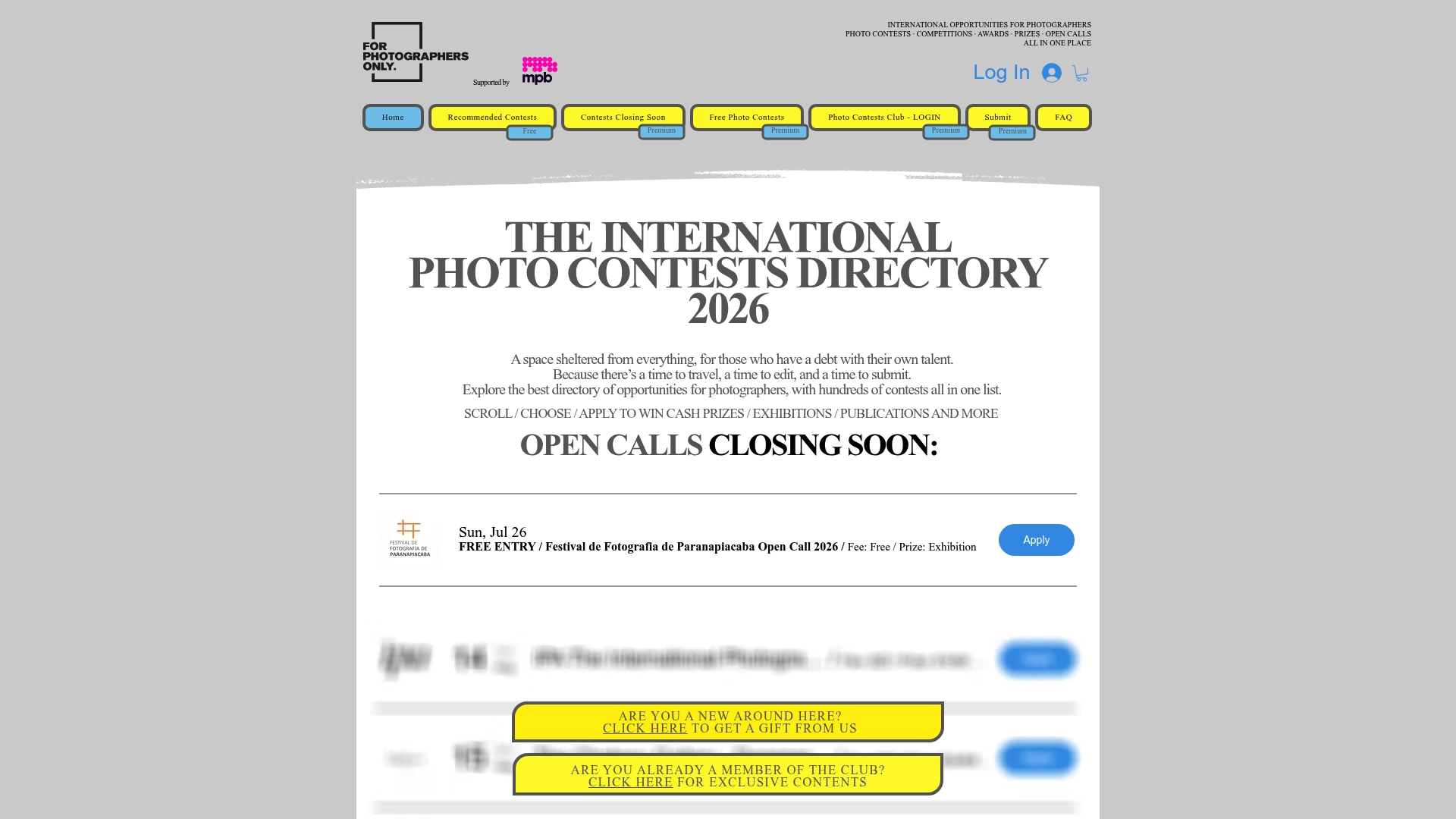
Alongside the directory, our workflow guide for pairing releases with contest entries walks through the same file-naming and storage habits covered above, built specifically around submission deadlines rather than general legal theory.
A few ways this saves time when a minor appears in your entry:
One page, weekly updates, instead of tracking dozens of individual organizer websites for rule changes.
Free and paid listings together, so entry-fee budgets do not limit which opportunities you can evaluate.
A direct link between contest research and release prep, since knowing a deadline early gives you time to track down a guardian signature before the submission window closes.
Subscribers get full access to the continuously updated contest list for a monthly or annual fee, which pairs naturally with the kind of release discipline this guide recommends. Visit the contests directory to see what is open for entry right now.
This article is general information, not a substitute for advice from a qualified lawyer. Consult a qualified legal professional about your own circumstances before acting on anything here.
FAQ
Do I need a witness for a model release?
A witness is not always legally required, but it strengthens a release by adding an independent party who can confirm the signing actually took place. For commercial campaigns, paid bookings, or any situation where a dispute seems possible, having a witness sign alongside the guardian is a reasonable extra safeguard.
Is it illegal to take photos of a minor without permission?
Taking photographs of minors in public spaces is generally legal in editorial, artistic, and incidental contexts, since no release is required for those uses. Using an identifiable minor’s image for commercial or trade purposes without a signed guardian release, however, exposes a photographer to legal claims, so the legality depends heavily on the intended use rather than the act of photographing itself.
What should be included in a model release form?
A valid minor release names the photographer, the minor, and the consenting parent or guardian, describes the session, and spells out the scope of rights granted, including media type, territory, and duration. It also needs signature blocks, a guardian declaration of authority to consent, and clear storage instructions so the document stays linked to the correct images.
What does “model release” mean?
A model release is a legal document signed by a parent or legal guardian that grants permission for the commercial or trade use of a minor’s image, such as advertising or product promotion. Without it, a photographer may hold copyright to the image but lacks the right to use that person’s likeness commercially.
Does COPPA apply to photos of children used on my website?
COPPA can apply when a website or app is directed at children or knowingly collects personal information from kids under 13, and the FTC treats identifying photographs as personal information in that context. If your platform fits that description, verifiable parental consent is required before collecting or publishing those images, beyond what a standard release covers.
Sources
Recommended