When Photographers Need a Model Release for Contests: A 5 Step Workflow
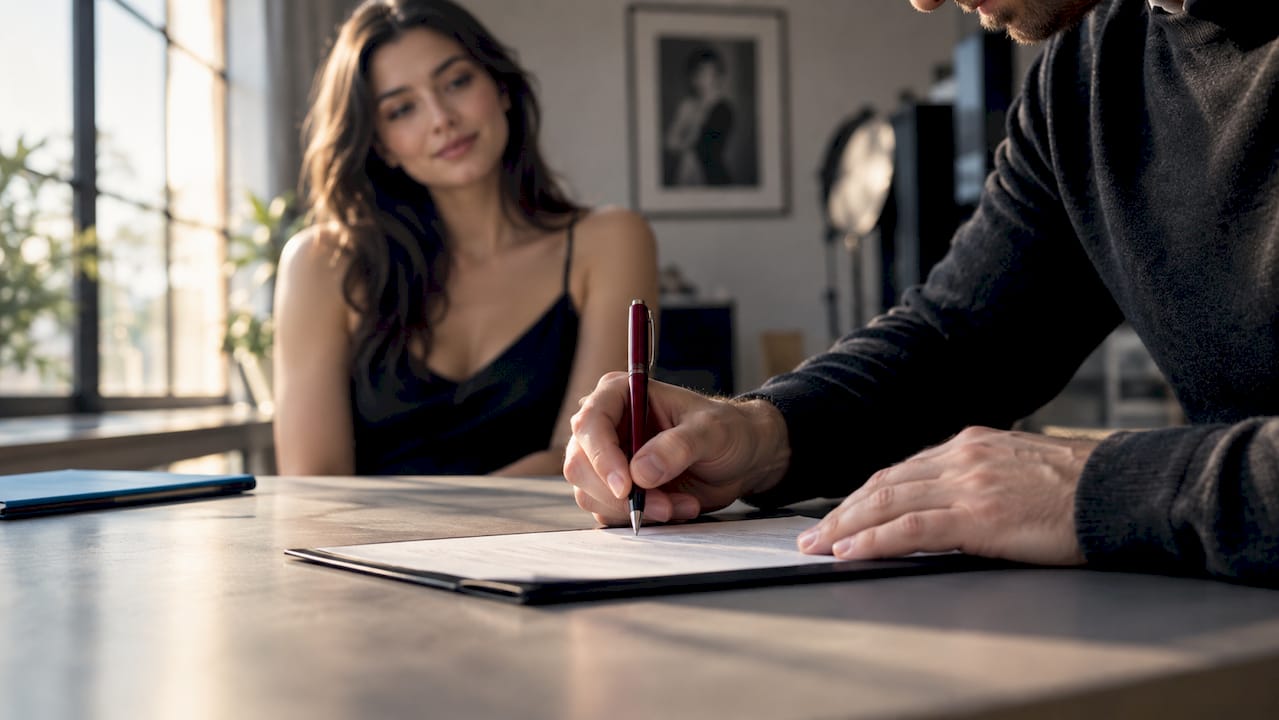
A model release is required whenever a contest’s rules reserve promotional, publishing, or commercial rights over your entries and the image shows a recognizable person. Read the entry terms before you submit, not after you win: organizers routinely request releases post-submission, and being unprepared can cost you the placement entirely.
TL;DR:
Recognizable persons in contest images often require signed model releases if the rules mention promotional use, advertising, or publication rights.
Identifiable features like tattoos, clothing, context, or clear facial recognition trigger the need for releases, especially in close-up or isolated shots.
Property, artwork, or location releases may be necessary when using private interiors, trademarks, or distinctive environments for promotional or commercial purposes.
Failing to produce a required release can lead to disqualification, revoked awards, or legal liability due to indemnity clauses in contest agreements.
Building a habit of collecting and securely storing signed releases on shoot day helps avoid last-minute scrambling and ensures readiness for any contest.
Table of Contents
Which Contests Typically Require Model Releases
The clearest signal sits inside the “Official Rules” section, not the entry form. Scan for phrases like “promotional use,” “license to publish,” “advertising,” “exhibition rights,” or “indemnify,” because each one signals that the organizer intends to use your image beyond simple recognition, which is exactly when recognizable subjects need to sign off.
Certain contest types almost always require releases:
Brand or sponsor-backed competitions, where the organizer plans to reuse winning images in marketing.
Promotional exhibitions tied to a commercial partner or product launch.
Contests explicitly built around advertising campaigns or stock licensing.
Editorial and documentary-focused contests tend to be more forgiving, since journalistic use often falls under fair-use style exceptions that don’t require consent. But “more lenient” isn’t “exempt.” Smithsonian Magazine’s photo contest rules require entrants to be ready to produce a release for any recognizable person, even though the publication itself is editorial in nature. If a contest reserves the right to publish your work in a magazine, on a website, or in a traveling gallery show, treat that as a promotional use trigger, not an editorial pass.
Is the Person in Your Photo Actually ‘Recognizable’?
Contest organizers don’t require a legal definition here. They apply a common-sense test: could someone who knows this person point them out in the frame? Clear facial features are the obvious trigger, but recognizability also extends further:
Distinctive marks like tattoos, scars, or a unique hairstyle.
Unmistakable clothing, jewelry, or gear tied to a specific identity.
Context clues, such as a name tag, a storefront, or a location that narrows down who the subject must be.
Crowd shots complicate this. Someone buried in a stadium of 40,000 people usually isn’t “personally and substantially identifiable,” the standard Jostens uses in its contest release requirements. But if your composition isolates one face in that same crowd, that person now needs a signature.
Pro Tip: Show the image to someone who doesn’t know your subject and ask, “Could you pick this person out of a lineup?” If yes, assume a release is required and act accordingly.
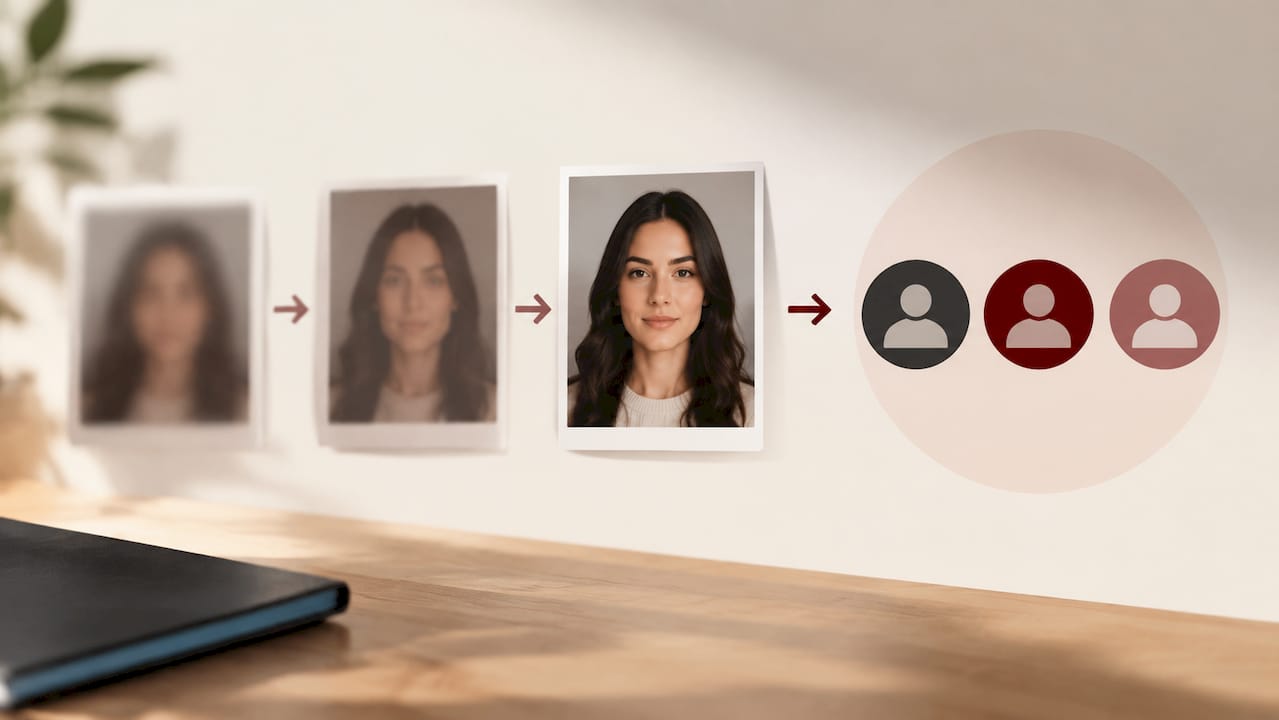
Do Locations and Artwork Need Their Own Releases?
People aren’t the only subjects that trigger paperwork. Private interiors, museum artwork, trademarked signage, and commissioned architectural work can all require a property or art release, particularly when a contest plans promotional or commercial use of the winning entries.
Some contests explicitly extend their release language to “recognizable locations,” meaning a distinctive storefront, a private estate, or a branded interior might need separate permission even if no person appears in the shot at all.
If you don’t have that permission and the deadline is close, you have three real options:
Enter a different contest category where usage rights are less restrictive, often editorial or documentary divisions.
Crop or reframe to remove the identifying property or artwork.
Track down the property owner or gallery and request a release before you submit.
None of these are glamorous fixes, but any one of them beats a disqualification notice after your entry has already advanced.
What Happens if You Can’t Produce a Release?
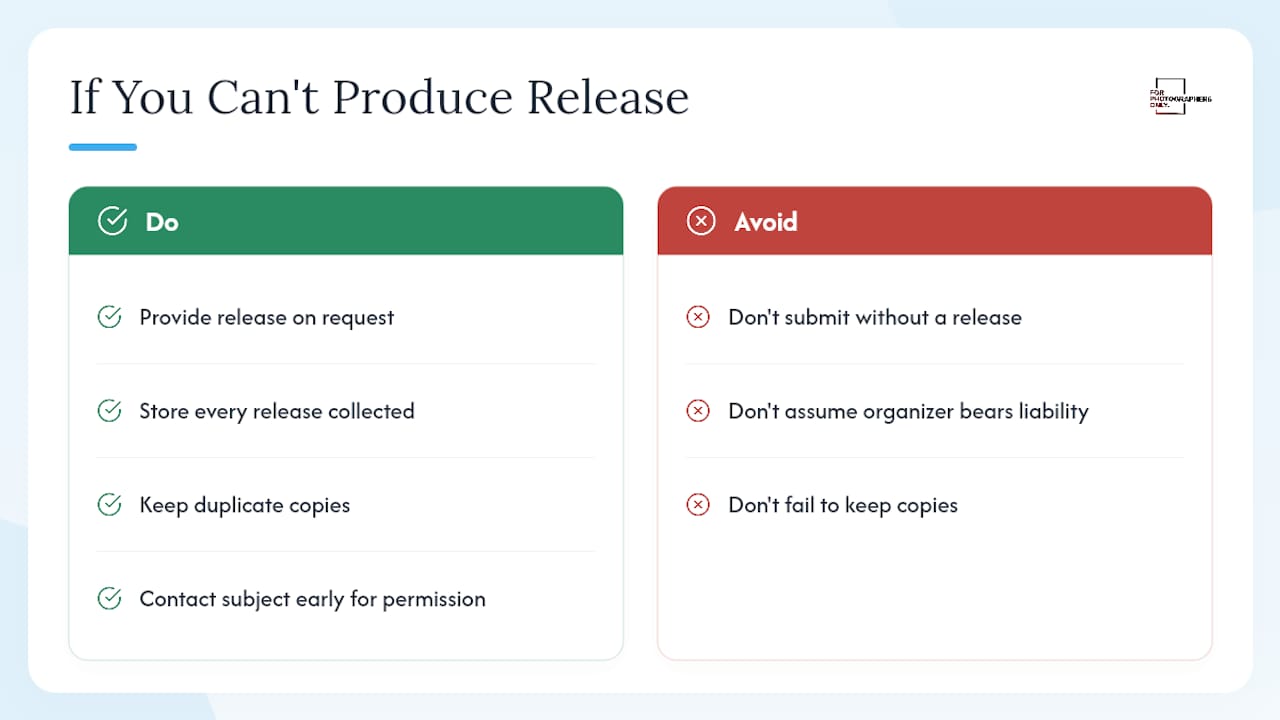
Organizers don’t bluff about this. Smithsonian’s contest rules state plainly that entrants must be ready to provide a model release on request, and failure to do so can mean disqualification, revoked awards, or the organizer attempting to secure the release directly from your subject.
Indemnity clauses raise the stakes further. Most entry agreements require you to promise the organizer won’t face legal exposure from your submission, which means an unreleased recognizable subject becomes your liability, not theirs, if a dispute surfaces after publication.
The mitigation is unglamorous but effective: store every release you collect, keep duplicate copies, and avoid submitting images where you can’t secure third-party permission in time.
How to Collect and Store Contest-Ready Model Releases
Build this into your shooting habits, not your submission night. Here’s a workflow that holds up under deadline pressure:
Use a one-page release listing your name, the subject’s name, the image filename or ID, the scope of use (web, print, advertising), the date, and a signature line. Free templates from eForms cover these fields cleanly.
Sign digitally when possible. ESIGN and UETA-compliant tools create a timestamped audit trail that most U.S. contests accept without question, and Poper’s digital release templates are built for exactly this.
Print and scan when a contest demands wet signatures. Some sponsors still require original ink, so check the fine print before assuming digital will fly.
Match filenames to releases. Something like IMG-20260214-003_release.pdf keeps a shoot’s paperwork tied to the exact photo, which matters when an organizer asks for proof under a tight window.
Back up everything. Store signed PDFs in at least two locations and tag the corresponding entries in your cataloging software for instant retrieval.
Pro Tip: Treat every portrait session as a contest entry in waiting. Collecting the release on shoot day takes two extra minutes; chasing one down six months later, after a client has moved or a subject stops answering, can cost you the win entirely.
Where to Find Reliable Release Templates
Always default to the contest’s own release form when one is provided. Jostens, for example, supplies a fillable release and explicitly rejects typed signatures, so a generic template won’t satisfy their requirements even if it covers the same information.
When no contest-specific form exists, lean on established sources:
eForms’ photo release templates for straightforward, one-page coverage.
Poper’s digital release forms when you need ESIGN-compliant signing in the field.
RPS model release guidance for a look at how usage rights and remuneration terms should be worded.
Whichever template you use, confirm it has subject name, signature, a guardian signature line for minors, explicit usage categories, a date, and an image identifier.
How Forphotographersonly Helps You Avoid Release Surprises
Reading every contest’s full legal terms before you enter takes time most photographers don’t have. Forphotographersonly curates active competitions with key rule fields, including rights granted and release expectations, surfaced up front rather than buried in a PDF you have to hunt down.
That means you can filter for contests whose usage terms actually fit the images you’re ready to submit, instead of discovering a release requirement after your entry fee has cleared. Members get consolidated rule summaries alongside deadline tracking, which matters most when you’re preparing documentation for several open calls at once.
A Submit-Ready Checklist Worth Keeping
My honest advice: collect releases as a habit, not a scramble. Every portrait shoot, festival gig, or street session should end with a signed release if there’s any chance the image ends up in a contest entry later. Label each PDF by filename and date, and keep one folder per contest so nothing goes missing at 11 p.m. before a deadline.
Before you upload, run through this: verify the rights language in the rules, confirm every signature is present, attach the release where the contest allows uploads, and back up your files somewhere outside your laptop.
— DARIO
Find Contests That Match the Paperwork You Already Have
Chasing down release requirements contest by contest eats hours you could spend shooting. Forphotographersonly is the alternative to scrolling a dozen scattered contest sites: one curated, weekly-updated page listing over 320 international competitions, with rule details like rights granted and release expectations surfaced so you’re not digging through fine print at midnight.
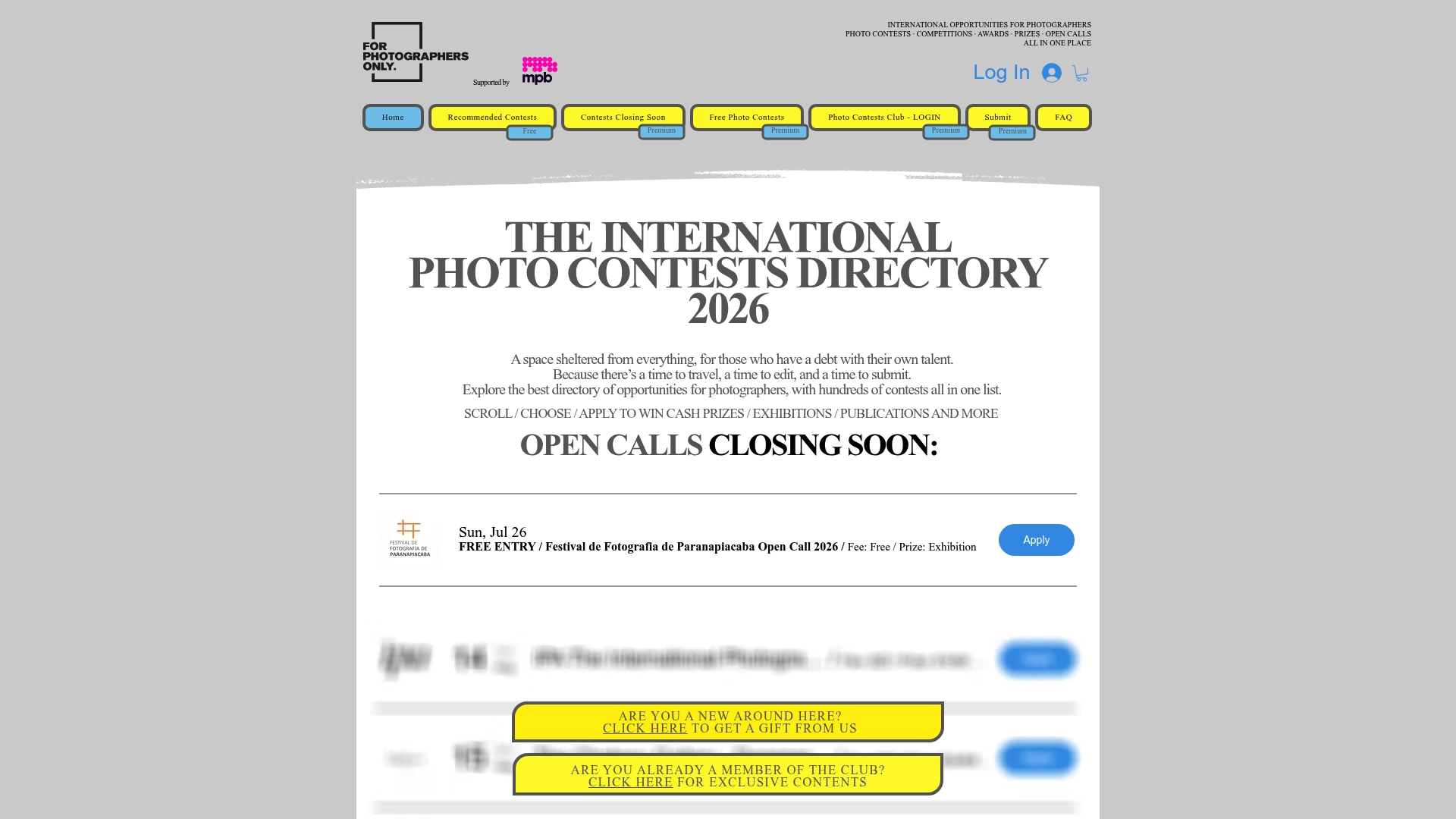
Subscribers get access to the full directory, including more than 100 free-to-enter opportunities, through a subscription plan with a free trial to start. If you’d rather browse editorial coverage of contest strategy and gear first, Photography Life is a good place to start. When you’re ready to see the full contest lineup and start matching your release-ready portfolio to open calls, visit Forphotographersonly and check current deadlines today.
Sources
FAQ
What If I Don’t Have a Model Release Form?
Contact your subject as soon as possible and use a standard template from a source like eForms; if you can’t secure a signature before the deadline, consider withdrawing the image or entering a category with lighter usage restrictions.
What Should Be Included in a Model Release Form?
At minimum, list the photographer’s name, subject’s name, image filename or identifier, explicit usage categories (web, print, advertising), the date, and a signature, with a guardian signature line if the subject is a minor.
Do I Need a Witness for a Model Release?
Most standard templates don’t require a witness, though some contest-specific forms or state requirements may ask for one, so check the exact form the organizer provides before assuming a simple signature is enough.
What Is the 20-60-20 Rule in Photography?
The 20-60-20 rule refers to a compositional or exposure guideline used in some photography instruction, not a contest or release standard. Definitions of it vary by source, so it has no bearing on model release or contest eligibility requirements.
Recommended