7 Prestigious Photography Awards That Deliver Cash, Exhibitions & Press
The photography world’s most prestigious awards are the Hasselblad Award, World Press Photo, Sony World Photography Awards, the International Photography Awards (IPA), LensCulture Critics’ Choice Awards, the Lucie Awards, and the Audubon Photography Awards. Each earns its standing through a mix of substantial prize money, respected jury panels, museum-level exhibitions, and publication in outlets that curators and editors actually watch. The profiles below break down what each one offers and how to enter.
TL;DR:
Winning entries typically include a cohesive series of images aligned with the contest’s theme and verified technical standards, not just isolated pictures.
Juror credibility, institutional backing, and a history of placing winners in exhibitions or publications are strong signals of an award’s prestige.
Entry fees can be substantial, especially across multiple contests, and judging transparency or regional diversity often raises concerns in the industry.
Major awards open and announce winners on a seasonal basis, making a regularly updated deadline tracker essential for efficient submission planning.
Awards should complement a broader career strategy, with smaller, mission-driven contests like IPA or LensCulture offering accessible opportunities to gain visibility.
Table of Contents
What Makes These Prestigious Photography Awards Stand Out
Not every competition with a trophy and a press release deserves the word “prestigious.” The ones that do share a specific combination of traits: significant money enough to matter, a jury with real curatorial weight, and a track record of putting winners’ work in front of institutions and editors who shape careers. Here’s how the field’s most respected honors rank against each other.
Hasselblad Award — the deepest pockets and the most exclusive stage; a lifetime-achievement honor with a solo exhibition at the Hasselblad Center in Gothenburg.
World Press Photo — the gold standard for photojournalism and documentary storytelling, judged on scale few competitions can match.
Sony World Photography Awards — broad reach across professional, student, and youth categories, with cash and equipment prizes plus global media coverage.
International Photography Awards (IPA) — a reliable path to publication and touring exhibitions, open to professionals and enthusiasts alike.
LensCulture Critics’ Choice Awards — built on curator endorsement, with a group exhibition tied to Photo London.
Lucie Awards — an industry-honors program that functions like photography’s version of a hall of fame, recognizing lifetime bodies of work alongside single achievements.
Audubon Photography Awards — the top prize in nature and conservation photography, pairing recognition with editorial publication and sponsor visibility.
Winners across this group typically walk away with some combination of cash, a physical or touring exhibition, and placement in a magazine or annual book. That combination, more than any single perk, is what separates a genuinely prestigious photography award from a contest that simply charges an entry fee and hands out a certificate.
Award Profiles: History, Entry Rules, and What Winners Receive
Hasselblad Award. Established by the Hasselblad Foundation, this is widely considered one of the most prestigious prizes in photography, carrying a SEK 2,000,000 cash award, a gold medal, and a solo exhibition at the Hasselblad Center. It isn’t an open-entry contest. A nomination committee selects laureates for sustained contribution to the medium, which is part of why the honor carries so much weight. The 2026 laureate, Zanele Muholi, is receiving a solo exhibition, award-week events, and international shows as part of the program. Photographers interested in the broader call structure around Hasselblad-affiliated opportunities can check current Hasselblad Foundation submission details and related Hasselblad competition entries.
World Press Photo. Open to professional photojournalists and documentary photographers worldwide, this contest is judged on visual excellence, storytelling, and diversity of representation. The 2026 contest reviewed 57,376 images from 3,747 photographers, a submission volume that makes the win rate genuinely competitive rather than symbolic.
Sony World Photography Awards. Run by the World Photography Organisation, this program spans Professional, Open, Student, and Youth competitions. The Series winner receives $25,000, Single Image category winners take home $5,000, and prizes extend to Sony equipment, exhibitions, and heavy media exposure.
International Photography Awards (IPA). IPA accepts entries from professionals and non-professionals across a wide range of genres. Winners receive cash prizes, publication in an annual book, and touring exhibitions, along with the IPA Trophy for top honorees.
LensCulture Critics’ Choice Awards. This program leans on curator endorsement rather than a single jury vote. Top-ten photographers are exhibited in London alongside cash grants and editorial features, giving winners a direct line to gallery-level visibility.
Lucie Awards. Named for photography’s founding figures, the Lucie Awards function as an industry honors program, recognizing career achievement and standout single projects at a black-tie ceremony that draws major names in the field.
Audubon Photography Awards. Focused entirely on birds and conservation storytelling, Audubon ties recognition to advocacy. Entries emphasize conservation narrative and often lead to magazine publication and sponsor visibility that generalist contests can’t offer.

How Judging Works and Why Certain Signals Signal Prestige
Judging criteria vary by competition, but the strongest programs converge on similar priorities: visual excellence, storytelling strength, and relevance to a stated theme. World Press Photo’s judging process, applied across tens of thousands of entries, illustrates how scale itself becomes a credibility marker. A prize that survives rigorous review at that volume means something different than one judged on a few hundred submissions.
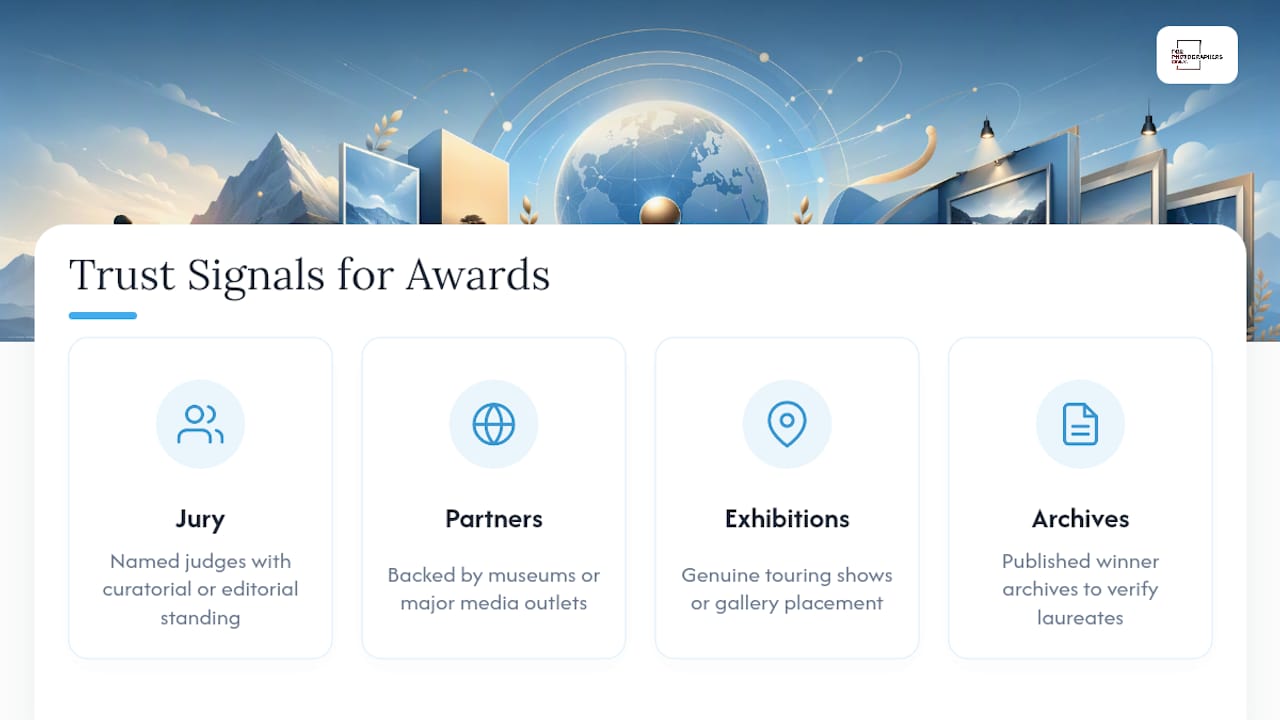
Before entering, check for four trust signals. First, jury composition: do named judges have real curatorial or editorial standing? Second, media and institutional partners, since a competition backed by a museum or major outlet carries more weight than one with no visible affiliation. Third, whether winners actually get a touring exhibition or gallery placement, not just a digital badge. Fourth, published winner archives, which let you verify past laureates went somewhere real. These signals matter because career impact comes from exposure and curatorial recognition, not from the trophy itself.
Choosing Awards and Preparing Submissions That Win
Start by matching the award to your genre and your goal. A conservation photographer belongs at Audubon before Sony World; a documentary shooter should prioritize World Press Photo over a generalist contest with a bigger entry pool but a vaguer theme.
Audit your portfolio for a cohesive series. Judges reward thematic depth over scattered single images, so build submissions around three to five images that clearly belong together.
Match captions to the stated judging theme. Generic captions read as an afterthought; specific ones show intent.
Verify technical requirements early. Some programs run a two-stage process, where digital finalists advance to an in-person print round with its own size and framing standards, adding cost and lead time.
Budget for fees and logistics. Entry fees, print costs, and travel for exhibition openings add up fast across multiple contests.
Track deadlines systematically. A directory that updates weekly beats a spreadsheet you forget to open.
Pro Tip: Enter the same image or series into two or three complementary awards rather than spreading a dozen unrelated shots across a dozen contests. Consistency reads as intention to judges, and it cuts your entry-fee budget significantly.
How For Photographers Only Verifies This Shortlist
For Photographers Only tracks 320 to 330 active photography contests at any given time, with weekly updates and regular checks against primary award pages. Inclusion on our radar depends on international reach, verifiable jury and exhibition history, and a reputation that holds up over multiple award cycles, not just one flashy year. We still recommend confirming current deadlines and rules directly on each award’s official site before you submit.
The Real Controversies Behind Photography’s Biggest Prizes
Prestige doesn’t mean immunity from criticism. Entry fees are the most common complaint. Larger competitions can charge per image or per category, and costs multiply fast for photographers entering multiple genres, raising fair questions about who can afford to compete at all.
Judging transparency draws scrutiny too. Some programs publish detailed criteria and named jurors; others keep the process vague, which fuels suspicion when winners seem to repeat across circuits or share the same handful of workshops and mentors. World Press Photo has faced its own image-manipulation controversies over the years, prompting tighter verification standards for photojournalism entries specifically.
There’s also a genuine debate about representation. Juries drawn heavily from Western institutions can skew toward familiar aesthetics and subjects, sidelining strong work from regions or communities outside that lens. Several major awards have responded by diversifying jury panels and adding regional categories, though critics argue progress remains uneven.
Finally, some photographers question whether entry-fee revenue funds prize money and exhibitions fairly, or whether organizers profit disproportionately from high entry volume. None of this erases the value of a genuine win. It does mean you should read the fine print, check who’s judging, and treat any award’s marketing claims with the same skepticism you’d apply to a client contract.
When Major Photography Awards Open and Announce Winners
Award calendars follow a rough annual rhythm, though exact dates shift year to year, so official pages remain the final word. World Press Photo typically opens entries in the fall and announces regional and global winners in the spring. Sony World Photography Awards usually opens in the summer for a following-year cycle, with winners revealed in the spring at a London ceremony. IPA runs an annual cycle with a fall deadline and winners announced in the following spring, followed by publication and touring exhibition dates later in the year. LensCulture Critics’ Choice generally opens in the fall with results and the London exhibition following in the new year. Audubon opens its call in late winter with winners announced in summer, timed to align with peak birding season. The Hasselblad Award and Lucie Awards operate on invitation or nomination cycles rather than open rolling deadlines, with winners announced once annually. Because these windows shift, a continuously updated tracker beats trying to memorize seven separate calendars.
An Editor’s View on Awards and Career Strategy
Treat awards as one input in a career plan, not the plan itself. A Hasselblad nomination won’t replace client work, but a well-placed IPA or LensCulture win can open doors that cold outreach never will. Watch the mission-driven awards, Audubon among them. They’re gaining ground because editors increasingly want work tied to a cause, not just a striking frame.
— DARIO
Track Every Deadline Without the Guesswork
Chasing seven award calendars across seven different websites eats hours you could spend shooting or editing. A subscription service solves that by putting every major deadline, entry fee, and prize detail from a large collection of active contests on a single page, updated weekly, including many free-to-enter opportunities.
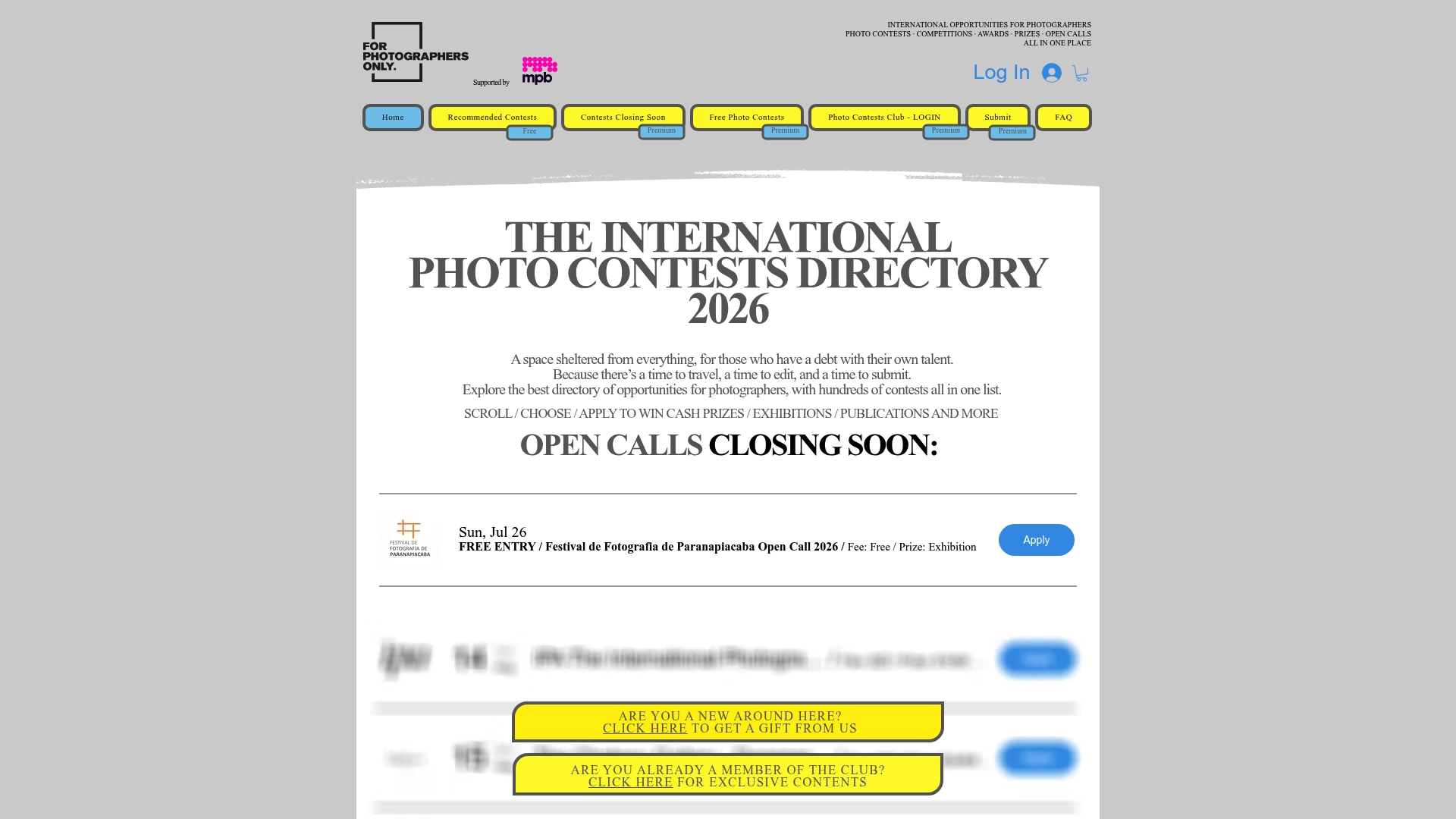
A subscription plan provides access to the full curated list instead of piecing together search results at midnight before a deadline closes. Browse editorial features like Photography Life for context on where winning work gets covered, or explore the Robert Giard Grant for emerging LGBTQ+ photographers if you’re building a portfolio around underrepresented voices. Pair your award research with visibility strategy through resources like SEO services for photographers, since winning a prize only pays off if the right people find out. Start your subscription today and stop missing deadlines that could have carried your name into a gallery or a magazine spread.
Sources
Recommended