5 Press Photography Awards Photographers Should Track in 2026
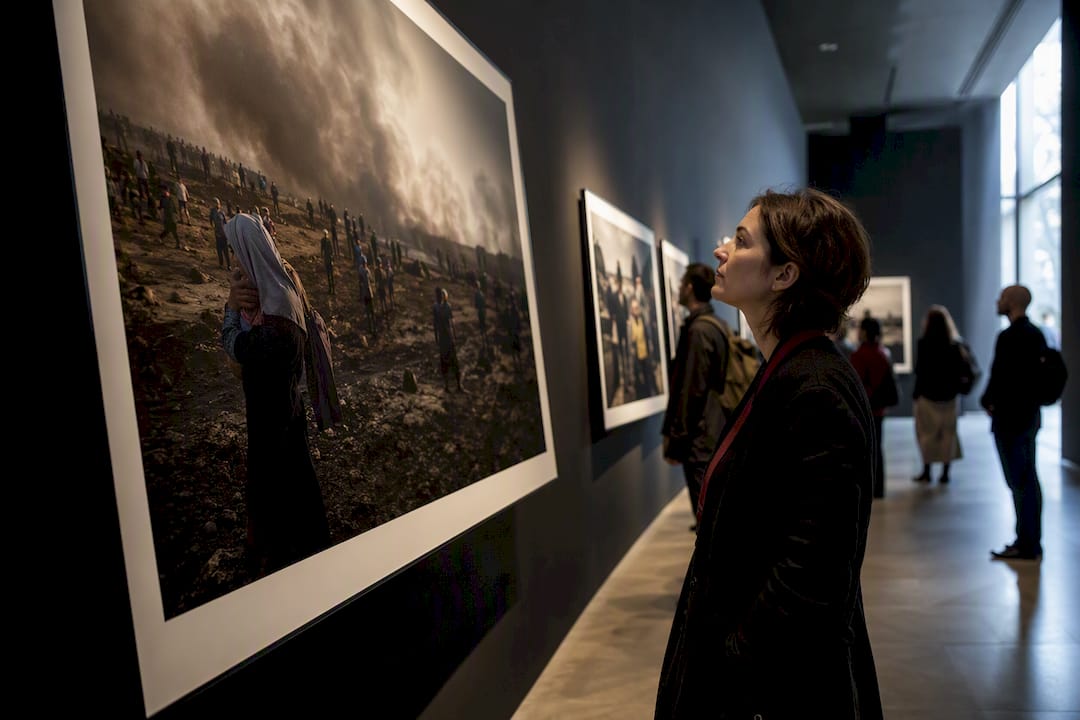
The awards that matter most to working photojournalists are World Press Photo, the Sony World Photography Awards from the World Photography Organisation, NPPA Best of Photojournalism, the Walkley Awards, and the photography categories of the Pulitzer Prize. Every one of them has already announced 2026 winners, and every one runs on an annual entry calendar that photographers need to track well before deadlines close. The fastest way to stay ahead of those windows is a curated contest directory like Forphotographersonly, which tracks entry rules and deadlines across the whole field.
TL;DR:
Winning entries prioritize long-term access, storytelling depth, and clear social relevance over solely technical excellence or aesthetic spectacle.
Curating a coherent, thematic portfolio that demonstrates sustained reporting and ethical sourcing significantly improves chances of success.
Knowing each award’s category focus, entry rules, and deadlines allows targeted submissions that align with the specific judging criteria.
Building an updated, organized “award-ready” folder with high-resolution files, captions, and releases reduces last-minute prep stress.
Using a curated contest directory helps photographers track over 320 international awards efficiently, ensuring timely submissions and strategic planning.
Table of Contents
The top press photography awards and what they actually reward
Building a stronger entry: editing, sequencing, and the paperwork nobody enjoys
What the 2026 winners reveal about what juries actually reward
Why photographers rely on a curated directory to track it all
How press photography awards became the industry’s benchmark
Building a portfolio that actually fits what award juries look for
The top press photography awards and what they actually reward
Each major award has carved out its own territory, and knowing the differences saves you from entering the wrong category or missing a better-fit opportunity entirely.
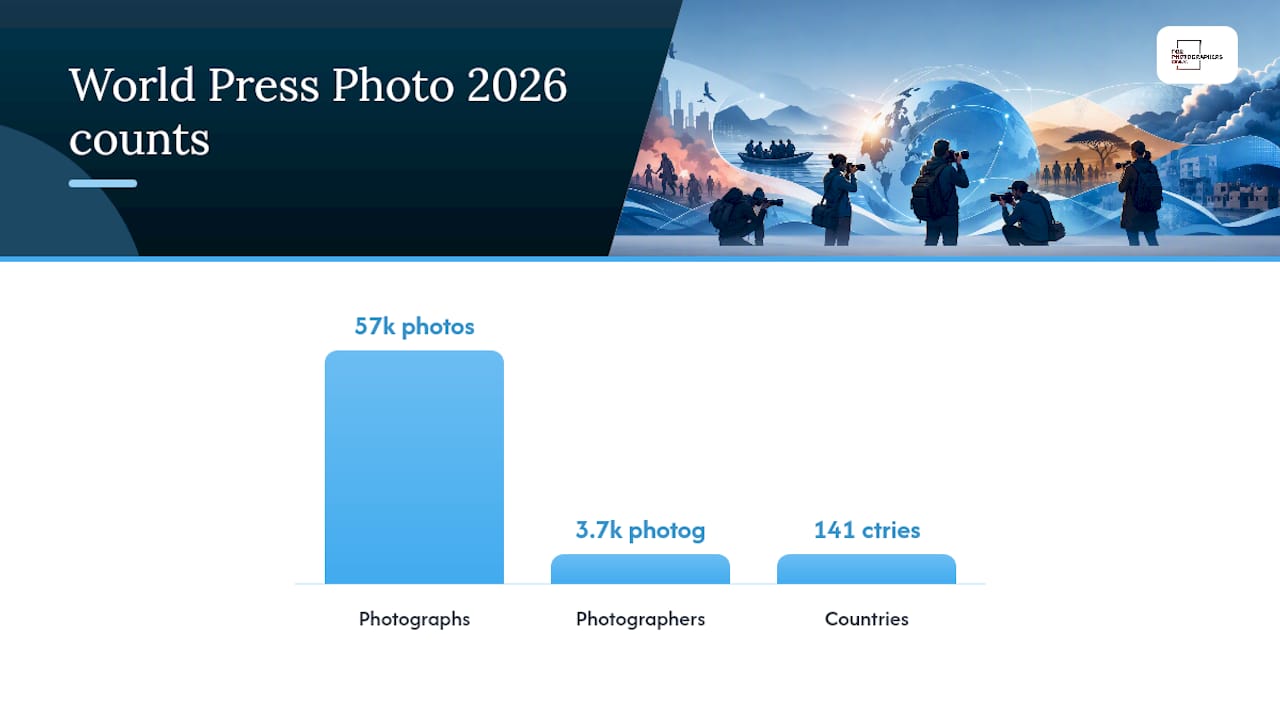
World Press Photo remains the benchmark for global photojournalism. The 2026 contest drew 57,376 photographs from 3,747 photographers across 141 countries, all competing across regional categories that feed into a single Photo of the Year. Categories span singles, stories, and open-format work covering news, environment, and long-term projects. There’s no entry fee for the main contest, and winners get something few other awards can match: a touring exhibition that puts their work in front of audiences on nearly every continent.
The Sony World Photography Awards, run by the World Photography Organisation, split into Professional, Open, Student, and Youth competitions. The Professional Series award carries a $25,000 prize, while Single Image winners receive $5,000 plus equipment and exhibition placement. The Open competition, which covers everyday photographers rather than working press, is free to enter in most categories, making it one of the more accessible entry points into the same ecosystem that produces award-winning press photos.
NPPA Best of Photojournalism operates differently: it’s judged by working visual journalists rather than a curated jury drawn from art and media institutions, which gives its results a distinctly newsroom-tested credibility. The 2026 Sony Electronics Best of Show went to ProPublica’s investigative project on maternal health, a reminder that this award leans hard into accountability journalism over single dramatic frames.
The Walkley Awards, based in Australia, judge news photography, sports, and photographic essays on newsworthiness, impact, and technical skill. Entries must be fact-based and free of commercial influence, a rule that keeps the competition strictly within editorial journalism rather than branded or sponsored content.
Pulitzer Prize photography categories (Breaking News Photography and Feature Photography) sit apart from the rest because they’re restricted to work published in U.S. newspapers, news sites, and wire services during the previous calendar year. There’s no entry fee, but eligibility is narrower than any award on this list.
A few other programs are worth watching if your beat doesn’t fit neatly into the big five:
Photojournalism Prize (PJP) open calls, which run through smaller nonprofit and editorial partnerships
Regional press club awards in most major countries, which often serve as feeder competitions for the bigger international stage
World Press Photo’s Joop Swart Masterclass, a mentorship track rather than a prize, but one that regularly produces future award winners
How the juries actually judge these entries
World Press Photo uses a two-tier structure: regional juries make the first cut per category, and their selections feed into a global jury that weighs local cultural context against worldwide relevance. That structure exists specifically to stop one region’s news agenda from dominating a genuinely international contest. NPPA takes a flatter approach, pulling in more than 170 visual journalists to judge across categories in a single sitting rather than layering regional and global rounds.
Across nearly every major award, judges keep coming back to the same handful of criteria:
Newsworthiness and real-world impact, not just visual drama
Storytelling depth across a sequence, not a single strong frame
Originality of access or vantage point
Ethical sourcing, including verification and freedom from staging
Technical execution, but treated as a baseline requirement, not the deciding factor
The Walkley Foundation puts it plainly: judges weigh newsworthiness, impact, and technical skill together, and a technically flawless image without narrative weight rarely wins.
Pro Tip: Read the published judging criteria for your target award before you shortlist entries. Most organizations post them publicly, and matching your submission language to their stated priorities (impact, access, ethics) does more for your odds than another round of retouching.
Building a stronger entry: editing, sequencing, and the paperwork nobody enjoys
Strong entries get built, not selected. Here’s the sequence that consistently produces competitive submissions:
Cut hard before you sequence. Narrow a shoot down to your strongest 8 to 12 frames before you think about order.
Sequence for narrative arc, not chronology. Open with an establishing frame, build tension in the middle, close on resolution or consequence.
Write captions like a wire reporter, not a caption generator. Name people, places, dates, and stakes. A vague caption undercuts even a strong image.
Check technical specs early. Most awards require high-resolution, minimally processed files with unaltered metadata. Confirm requirements before your deadline, not the night of.
Secure releases and permissions for any identifiable subjects, especially in vulnerable or sensitive contexts.
Run an ethics check: no staging, no composite editing, no misleading crops that change the meaning of a scene.
Judges at the Walkley Foundation note that cohesive sequencing and deep reporting separate winning series from technically competent ones, and that many award-winning projects take months of access and reporting to build, not a single afternoon of shooting. That’s a longer runway than most photographers plan for. If you’re building out a series specifically for competition, our guide on how to win photo contests breaks down the judge-backed tactics in more depth, and our piece on caption writing for photo awards covers the specific language patterns judges respond to.
What the 2026 winners reveal about what juries actually reward
The 2026 World Press Photo of the Year, Separated by ICE by Carol Guzy, was chosen from those 57,376 entries, selected from 42 category winners by the global jury. It won not because of technical polish but because it documented an ongoing, socially urgent story with clear evidentiary weight.
World Press Photo leadership frames the selection criteria around work that “illuminates and resonates,” images that carry documentary evidence and genuine social relevance rather than aesthetic spectacle alone.
NPPA’s 2026 Sony Electronics Best of Show went to ProPublica’s Before a Breath: America’s Stillbirth Crisis, judged by a panel of over 170 visual journalists. Both winners share a pattern worth noting:
Long-term access to a difficult, ongoing story
A narrative built across multiple images or a full series, not one hero shot
Clear public-interest stakes that extend past the newsroom
Neither project relied on a single dramatic frame. Both relied on sustained reporting.
Where winning work travels after the ceremony ends
A win rarely ends at the prize check. World Press Photo winners get folded into the World Press Photo Yearbook and a touring exhibition that opens in Amsterdam before moving through dozens of cities worldwide, putting the work in front of curators, editors, and the public over months, not days. Sony World Photography Awards winners get invited into programs like Sony’s “Insights” sessions, where networking with industry experts and curators can open doors that outlast the award itself.
To make the most of a win:
Build a one-page press kit with your winning image, caption, and a short artist statement
Pitch your win to photo editors at outlets you want to work with, not just your existing network
Submit the same body of work to touring exhibitions and festivals once award embargoes lift
Follow up on any mentorship or masterclass invitations tied to the award. They often outlast the prize money in career value.
If you’re new to turning a competition win into exhibition opportunities, our guide on exhibiting photography internationally walks through that pipeline step by step.
Choosing the right awards for your year
Don’t spread yourself across every deadline you see. Run this quick filter instead:
Match category to body of work. A single dramatic frame fits Sony’s Single Image or a Walkley news category better than a slow-building series award.
Weigh fee and time against exposure. A free-entry Sony Open category costs you almost nothing to test; a paid Pulitzer-adjacent submission demands a body of eligible published work first.
Map deadlines to your production schedule, not the other way around. If a series needs three more months of reporting, target next year’s cycle rather than rushing this year’s.
A typical annual plan might pair a single strong frame for Sony’s Single Image category in early spring with a longer-form series aimed at World Press Photo’s fall opening, giving you two very different production timelines running in parallel.
Why photographers rely on a curated directory to track it all
Keeping tabs on deadlines across five major awards and dozens of smaller regional ones is a full-time research job on its own. Forphotographersonly tracks more than 320 international competitions, updated weekly, including over 100 free-to-enter opportunities. Dario, who oversees the platform’s contest curation, built the directory around a simple workflow: scan one continuously updated page, flag the awards matching your genre and timeline, and build a prioritized entry calendar instead of hunting across dozens of scattered award sites.
How press photography awards became the industry’s benchmark
Press photography awards trace back to the mid-20th century, when wire services and newspapers first needed a way to distinguish exceptional reporting from routine daily coverage. World Press Photo launched in 1955 in the Netherlands, originally as a modest competition among Dutch photographers before growing into the global institution it is now. The Pulitzer Prize added a dedicated photography category in 1942, formalizing what had been an ad hoc recognition of standout news images during wartime coverage.
What changed these awards from trade curiosities into career-defining events was television, and later, the internet. Once winning images could circulate globally within hours instead of appearing only in print, the reach of an award-winning photo, and the reputational weight attached to winning, multiplied dramatically. NPPA’s Best of Photojournalism, founded decades ago as a peer-judged program for working American news photographers, expanded that same logic: judgment by working journalists carries a different kind of authority than judgment by critics or curators.
Today these awards function as more than recognition. They shape which stories get funded, which photographers get hired for long-term investigative work, and which images end up in history textbooks decades later. A World Press Photo win can redirect a career trajectory in ways a strong portfolio alone rarely does, because the award signals vetted, jury-tested credibility to editors who don’t have time to evaluate every photographer’s body of work themselves.
The ethical fault lines that keep surfacing in award season
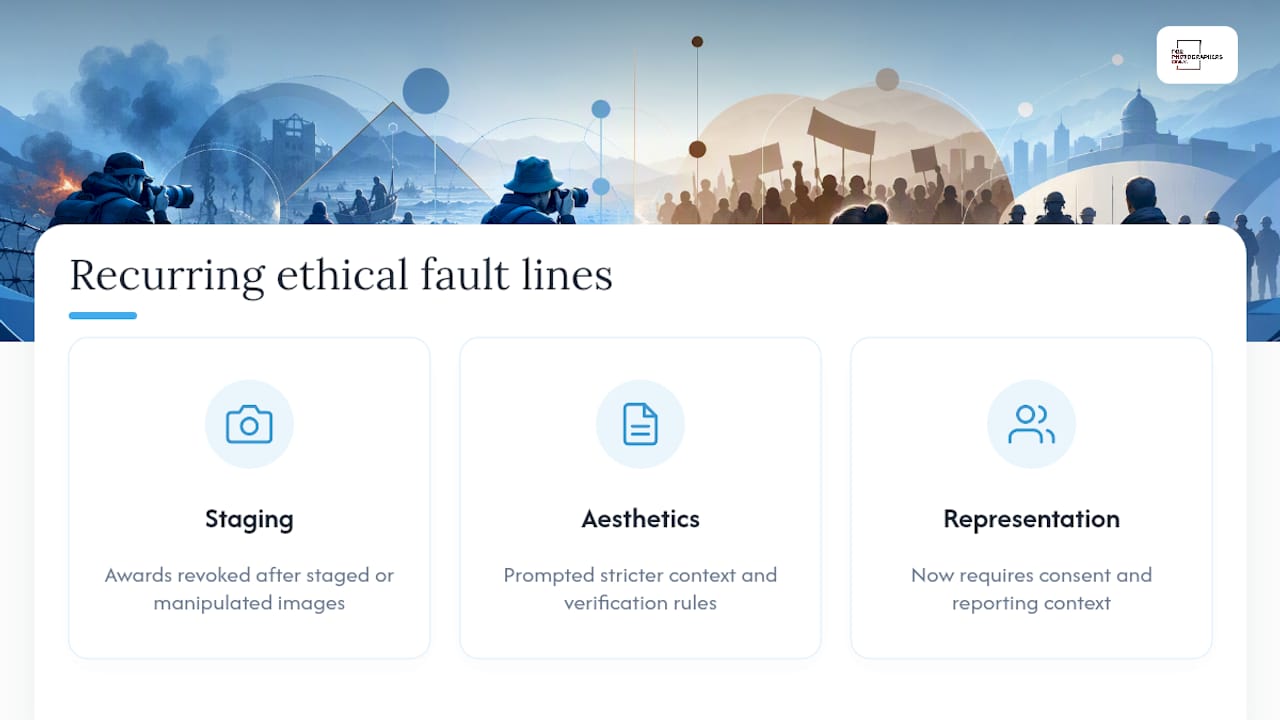
Every major award has weathered controversy, and the recurring flashpoints are worth understanding before you submit. Staging and manipulation accusations are the most common: several past winners across multiple competitions have had awards revoked after investigations found composited elements, staged scenes, or misleading crops that changed a photo’s apparent meaning. That’s why ethics verification sits alongside technical quality in nearly every judging rubric today.
A second fault line involves the tension between aesthetic power and documentary accuracy. Juries sometimes favor visually striking images that critics later argue oversimplify complex situations or lean into trauma imagery without enough context. World Press Photo has faced this criticism directly in past cycles, prompting the organization to add more explicit context requirements and verification steps to its judging process.
A third recurring debate concerns representation: who gets access to photograph certain communities, conflicts, or crises, and whether juries adequately weigh the ethics of that access alongside the resulting image’s impact. This has pushed several awards toward requiring more detailed reporting context and subject consent documentation as part of the entry itself, not just the caption.
None of this makes the awards less valuable. It makes the vetting process, published judging criteria, verification steps, jury transparency, worth taking seriously as you prepare your own entries, since ethics failures disqualify otherwise strong submissions every single year.
Building a portfolio that actually fits what award juries look for
A portfolio built for client work and one built for award submissions aren’t the same thing, even when they draw from the same archive. Award juries want depth over breadth: a tight, thematically coherent body of work outperforms a scattered greatest-hits collection almost every time.
Start by identifying two or three long-term threads in your archive, stories you’ve returned to more than once, rather than trying to represent every genre you’ve ever shot. Juries reward evidence of sustained access and reporting, which a single strong frame can’t demonstrate on its own no matter how striking it is.
Curate ruthlessly by category. A submission aimed at a Walkley news category should look different from one aimed at a Sony Open Portraiture entry, even if both images came from the same assignment. Match your selection and sequencing to the specific award’s stated priorities rather than submitting one generic set everywhere.
Keep a rotating “award-ready” folder separate from your client-facing portfolio, updated with your strongest recent work, high-resolution files, complete caption information, and signed releases already attached. That single habit shaves weeks off submission prep when a deadline appears. If you’re actively working the photojournalism competition circuit, our roundup of top photojournalism competitions is a useful cross-check for which categories fit which kind of project.
What separates lasting projects from one-off winners
The strongest projects I’ve watched move through award cycles share three traits: sustained reporting depth, transparent ethical sourcing, and sequencing that reads like a deliberate argument rather than a folder of good frames. Photographers who plan entries a year out, mapping production schedules to deadlines instead of scrambling in the final week, consistently outperform photographers relying on a single strong assignment. Treat your entry calendar with the same discipline you’d apply to a reporting project. It pays off the same way.
— DARIO
Track every deadline without the spreadsheet chaos
Forphotographersonly gives you one continuously updated page instead of a dozen browser tabs and a missed-deadline spreadsheet. For $6 a month, you get access to over 320 curated international competitions, including more than 100 free-to-enter listings, updated weekly so you’re never entering a contest with an outdated deadline or fee structure.
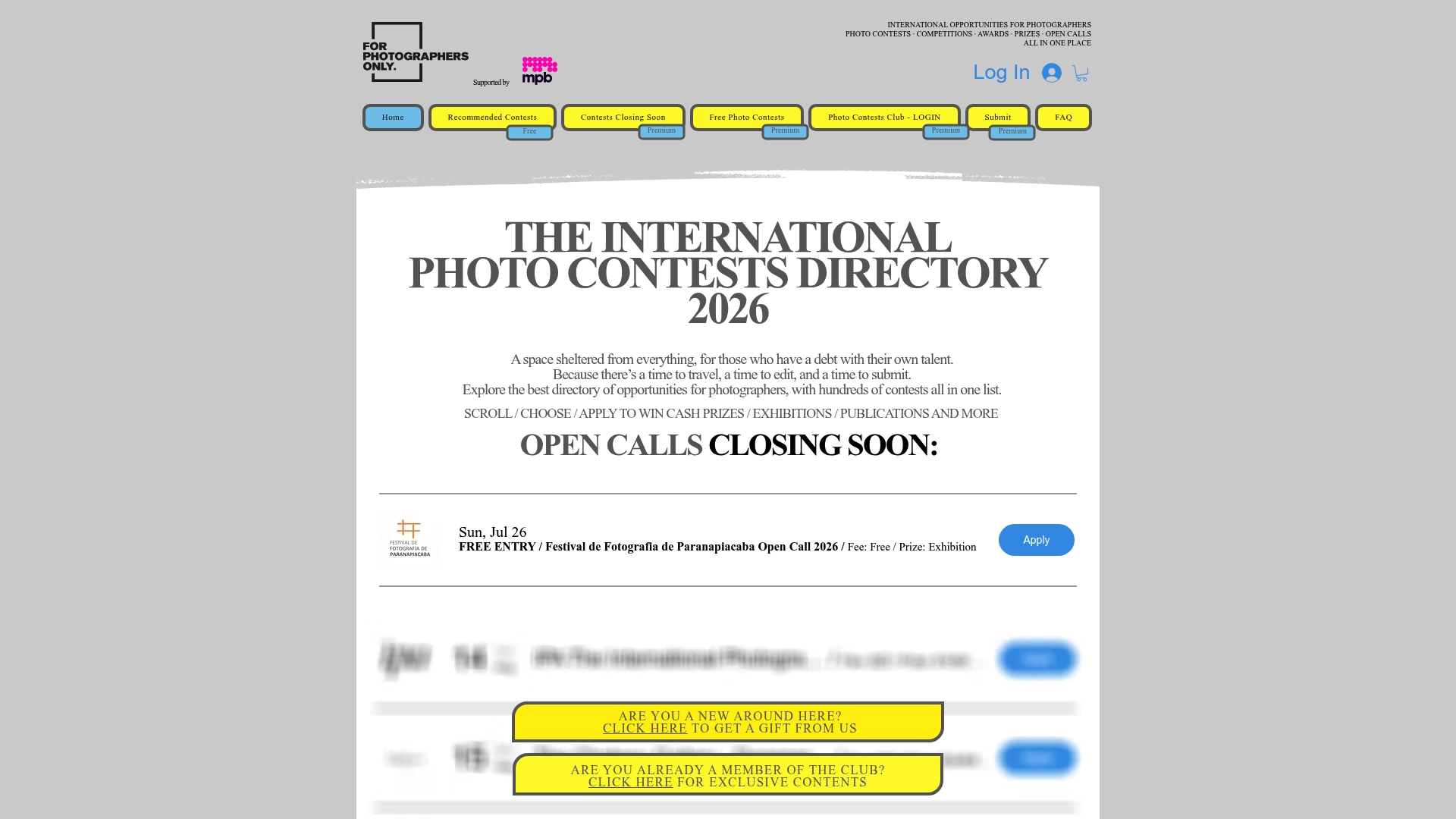
The directory covers everything from major photojournalism competitions down to niche calls you’d otherwise never find, like the Robert Giard Grant for Emerging LGBTQ+ Photographers, listed alongside deadlines, fees, and prize details so you can plan a full year of entries in one sitting. Once you’ve built a body of award-worthy work, visibility matters just as much as the trophy. Pairing a win with stronger photographer SEO helps editors and curators actually find you afterward. Start your subscription today and build your 2026 entry calendar before the next deadline closes.
Sources
Recommended