Photography Networking Events: A Practical Guide for Photographers
The most reliable places to find photography networking events in the United States are Eventbrite, Meetup, LinkedIn Events, local photo clubs, and your regional Chamber of Commerce. Forphotographersonly complements these channels as a curated resource for contest deadlines and curator contacts you can reference at every event you attend.
Start here, right now:
Search Eventbrite for “photography meetup [your city]” or “photowalk [your city]” and RSVP to one event this week.
On LinkedIn, filter Events by “photography” and your metro area, then send one connection request to an organizer.
Update your Instagram bio with a portfolio link before you attend anything.
Check your local Chamber of Commerce website for creative industry mixers open to photographers.
Bookmark Forphotographersonly to cross-reference contest deadlines with the curators and jurors you meet at events.
Pro Tip: Set a 20-minute timer right now. Open Eventbrite, search your city plus “photography,” and RSVP to the first free event that fits your schedule. That single action is worth more than any amount of planning.
Table of Contents
Where do photographers find networking events worth attending?
Discovery channels for U.S.-based photographers span both digital platforms and local institutions, each with a distinct audience mix and curation level.
Channel | Reach | Cost to Attend | Curation Level | Attendee Mix |
Eventbrite | National/local | Free to paid | Low (self-listed) | Mixed creatives |
Meetup | Local | Free to low | Medium (group-vetted) | Photographers, hobbyists |
LinkedIn Events | National | Free | Low | Industry professionals |
Local photo clubs | Hyperlocal | Free to low | High | Serious photographers |
Chambers of Commerce | Local | Free to moderate | Medium | Business owners, vendors |
Facebook Groups | Local/national | Free | Low | Mixed, casual |
PPA-affiliated associations | National | Member fee | High | Working professionals |
Eventbrite publishes detailed listings with leader bios and itineraries. The #Photowalk305 series in Miami, for example, lists route details, group size, and skill level so you can assess fit before committing. For paid conferences, register four to six weeks in advance; free meetups typically fill within a week of posting.
Pro Tip: When targeting non-photographer industry partners like wedding planners or venue managers, skip the photography-specific search terms. Search your Chamber of Commerce events calendar for “creative industry mixer” or “small business social” instead. These rooms are full of potential referral sources who rarely attend photography-specific events.
For university continuing-education listings, search “[your city] + continuing education + photography workshop.” These programs often attract working professionals rather than students, making them productive for peer connections.
Pro Tip: On Meetup, filter by group size. Groups with 200–500 members tend to run events with 15–40 attendees, which is the sweet spot for genuine conversation without the anonymity of a large conference.
Which event types actually move your career forward?
Not every photography community gathering serves the same purpose. Matching event type to your current goal saves time and produces better results.
Photowalks: Peer-focused, low-pressure, ideal for building technical friendships and overflow referral networks. Smaller events of 10–30 attendees consistently produce deeper connections than large conferences.
Portfolio reviews: Direct access to curators, jurors, and art directors. The highest-leverage event type for contest visibility and gallery submissions.
Workshops: Skill-building with embedded networking; attendees share a learning goal, which lowers social friction.
Conferences and trade shows: Best for brand and agency contacts; less effective for immediate peer relationships.
Gallery openings: Curator and collector access in a relaxed setting; excellent for building long-term visibility in the fine art space.
Shoot-and-greet events: Collaborative studio sessions like The Photo Event Shoot & Greet combine practice with peer connection.
Event Type | Primary Goal Served | Typical Attendees | Expected Takeaway |
Photowalk | Peer support, overflow referrals | Fellow photographers | 2–5 new peer contacts |
Portfolio review | Contest/curator visibility | Jurors, art directors | Feedback + curator introduction |
Workshop | Technical growth, peer network | Mixed levels | Skills + 1–3 collaborators |
Conference/trade show | Brand and agency contacts | Industry vendors, planners | Referral pipeline leads |
Gallery opening | Fine art visibility | Collectors, curators | Long-term relationship seeds |
Shoot-and-greet | Collaborative work, portfolio content | Photographers, models | Portfolio images + collaborators |
Pick two event types that match your stated goal. If you want contest visibility, prioritize portfolio reviews and gallery openings. If steady client referrals are the priority, segment your targets and attend trade shows and Chamber mixers where planners and vendors gather.
How to prepare before you walk into any photography event
Preparation in the 72–24 hours before an event determines whether you leave with contacts or just memories.
Curate 6–10 of your strongest, most recent images into a mobile portfolio. Use a link-in-bio tool or a PDF you can open offline.
Update your Instagram bio with your niche and a clear portfolio link.
Check your LinkedIn profile: current headshot, updated specialty, and at least three recent posts visible.
Prepare a digital contact method. An Instagram handle is faster and more memorable than a business card.
Research the event organizer and two or three speakers or attendees you want to meet.
Charge your phone fully and bring a portable charger.
For portfolio reviews specifically, show a tight narrative sequence. At in-person reviews, curators and jurors respond more to a concise story of 6–10 images than to a long slide deck. Open with your strongest image and close with your most distinctive frame.
Pro Tip: Replace business cards with an Instagram follow invitation. Say “I’ll follow you right now” and pull out your phone. It creates an immediate, mutual connection that a card in a pocket never guarantees.
For peer introductions, a 20-second pitch works: “I shoot [niche] in [city]. Lately I’ve been focused on [specific project or contest].” For industry partners: “I specialize in [niche] and work with [client type]. I’d love to learn more about what you look for in photographers.”
How to follow up and turn event contacts into real opportunities
Follow-up is where most photographers lose the value they created at an event.
Connect on LinkedIn or Instagram within 24–48 hours. Reference something specific from your conversation.
Send a personalized DM or email within seven days. Offer something: a relevant article, a contest deadline from Forphotographersonly, or a collaboration idea.
Check back in at three to six weeks with genuine value, not a pitch.
Prioritize your follow-up list:
Contact anyone who expressed interest in your work or mentioned a specific project first.
Next, reach out to industry partners (planners, venues, stylists) who could generate referrals.
Then follow up with peers for potential collaboration or second-shooting opportunities.
Pro Tip: When following up with a curator or juror you met at a portfolio review, share a specific contest listing or gallery call from Forphotographersonly that matches their stated interests. It positions you as a resource, not a petitioner.
Networking also buffers against social algorithm changes. A contact who knows your work personally will share it regardless of what any platform decides to suppress.
Building networking into a sustainable long-term habit
Consistency produces referrals. Showing up repeatedly to the same meetup or venue establishes you as the go-to photographer in that community far faster than attending many different events once each.
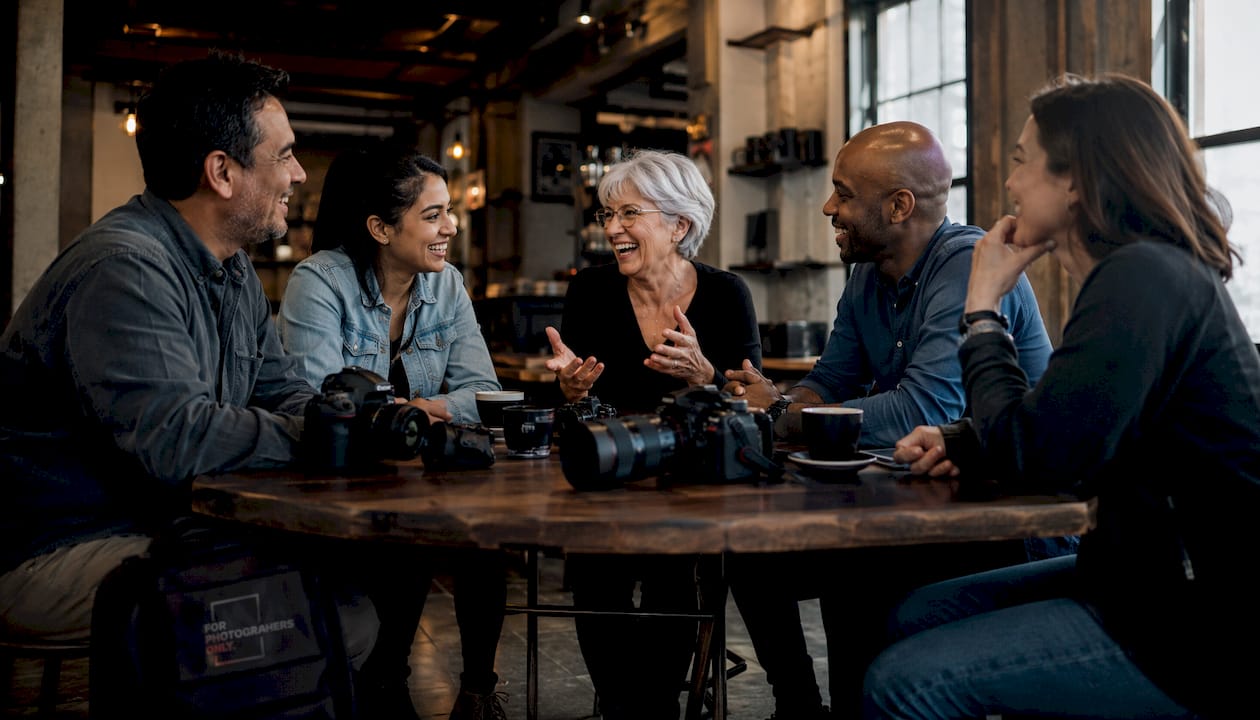
Weekly: Engage with two to three contacts on social media. Comment meaningfully, share their work, respond to stories. Monthly: Schedule one direct conversation, whether coffee, a video call, or a DM exchange with a specific goal. Quarterly: Attend at least one in-person photography industry event and one non-photography business mixer.
Track three metrics to measure real ROI: referrals attributed to specific events, bookings converted from event contacts, and curator or juror introductions made through networking that led to contest submissions.
Allocate roughly 60% of your outreach time to non-photographer partners (planners, venues, stylists, brand managers) and 40% to fellow photographers. The partner group drives consistent revenue; the photographer group provides technical support and overflow referrals.
Pro Tip: Volunteer to help organize a recurring meetup. Organizers are remembered by every attendee, every time.
Your 30-day plan to go from searching to connected
Week | Tasks |
Week 1 | Search Eventbrite and Meetup; RSVP to two events; update Instagram bio and LinkedIn profile |
Week 2 | Curate portfolio (6–10 images); prepare elevator pitch; research event attendees |
Week 3 | Attend both events; collect contacts; follow up within 48 hours on social |
Week 4 | Send personalized messages; track referrals and contacts; set next quarter’s event calendar |
Week-by-week tasks:
Week 1: Run searches on Eventbrite (“photography meetup [city]”) and Meetup (“photowalk [city]”). RSVP to two events. Update your bio and portfolio link.
Week 2: Select your 6–10 portfolio images. Write and practice both elevator pitches. Research two people you want to meet at each event.
Week 3: Attend. Collect contacts via Instagram follow or LinkedIn connection on the spot. Send follow-up messages within 48 hours.
Week 4: Send value-first messages to your top five contacts. Log referrals, bookings, and curator introductions in a simple spreadsheet.
Set one measurable goal before you start: two referrals, one collaboration, or one contest submission with a curator contact made through an event.
Key Takeaways
The most effective approach to photography networking is consistent, intentional presence at the right event types, followed by disciplined follow-up within 48 hours.
Point | Details |
Start with the right platforms | Search Eventbrite, Meetup, and LinkedIn Events using your city plus “photography meetup” or “photowalk.” |
Match event type to your goal | Portfolio reviews serve contest visibility; trade shows and Chamber mixers serve referral pipelines. |
Prepare a tight portfolio | Curate 6–10 images and a 20-second pitch before every event; update your Instagram bio with a portfolio link. |
Follow up within 48 hours | Connect on social immediately; send a personalized, value-first message within seven days. |
Forphotographersonly | Use the curated contest directory to share relevant deadlines with curators and jurors you meet at events. |
Why networking is really about presence, not pitching
The photographers who build the strongest networks are rarely the most aggressive self-promoters in the room. They are the ones who show up consistently, ask better questions, and leave people with something useful. That philosophy is not idealism. It reflects how referrals actually travel: through trust accumulated over repeated contact, not through a single impressive introduction.
What most guides underestimate is the compounding effect of small, recurring gestures. Sharing a contest deadline with a curator you met three months ago, tagging a planner in a relevant post, or showing up to the same monthly meetup for a year, these actions build the kind of recognition that generates unsolicited referrals. Hard selling at events, by contrast, tends to produce polite exits.
Intentionality is the word that matters most here. Attend with a specific goal. Offer value before you ask for anything. And when you follow up, make it about them first. The photographers who treat every event as a pitch opportunity are remembered as exhausting. The ones who treat it as a chance to learn something are remembered as worth knowing.
Forphotographersonly: a curated directory built for photographers who network with purpose
When you meet a curator at a portfolio review or a juror at a gallery opening, the conversation rarely ends at the event. What you do next, specifically what you share and when, determines whether that introduction becomes an opportunity.
[IMAGE:cta_image]
Forphotographersonly maintains a curated directory of more than 320 active international photography contests, awards, grants, and calls, updated every week. Listings include deadlines, entry fees, prize details, and genre filters, so you can identify the exact competition to mention when following up with a contact. Over 100 of the listed competitions are free to enter. The directory has been covered by outlets including The Washington Post and the BBC, reflecting the editorial credibility behind its curation.
A subscription costs €6 per month. Browse the full contest listings and start a free trial to see which opportunities align with the curators and jurors you meet at your next event.
Useful sources to get started
Eventbrite: Search your city plus “photowalk” or “photography meetup” for ticketed local events with full organizer details.
Meetup: Find recurring photography groups by location; filter by group size for intimate events.
LinkedIn Events: Best for industry-professional mixers and conference announcements; filter by metro area.
ASMP New York: Hosts structured mixers like “Conversations in Focus” that combine guided discussion with open networking.
Grace Costa: Networking for Photographers: Practical, practitioner-sourced advice on follow-up timing and conversation strategy.
PPA Networking Guide: Professional Photographers of America resource on intentional relationship-building.
434 Photo: Building Real Connections: Covers segmentation strategy and event-size recommendations for photographers.
Forphotographersonly Directory: Curated, weekly-updated list of 320+ international contests; use it to identify contest opportunities connected to curators you meet at events.
Bookmark two or three of these sources and set a quarterly calendar reminder to review new event listings. The photographers who treat discovery as an ongoing habit, not a one-time search, build the most durable networks.
Recommended