100+ Free Contests: Photo Awards Benefits, Checklist for Photographers
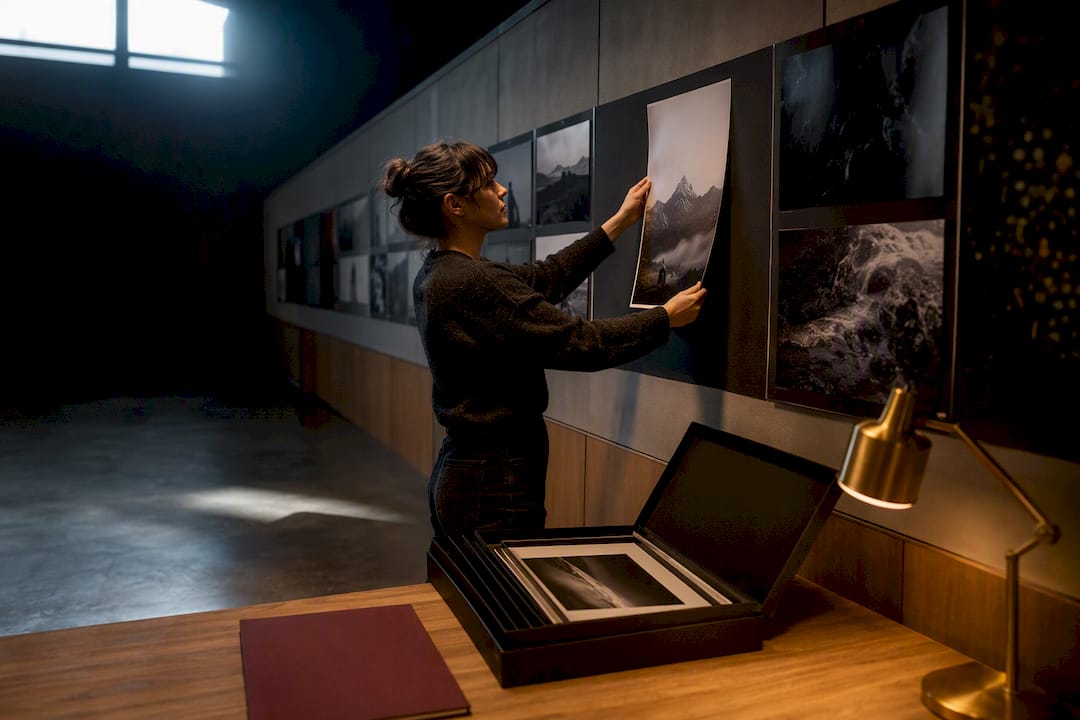
Yes, entering reputable photo awards is worth it for most photographers. The verdict holds when you choose contests carefully: sharper skills from working against deadlines and themes, real exposure through exhibitions and press, portfolio credentials that raise your perceived value, prize money or gear, and access to a network of judges, curators, and peers you would not otherwise reach.
TL;DR:
Entering reputable photo contests improves skills through structured practice and deadlines, leading to measurable technical and creative growth.
Major international awards provide financial prizes, exhibition placements, and inclusion in yearbooks, which often have longer-lasting career benefits than the prize money itself.
Carefully researching contests by checking judges, past winners, licensing terms, and media partners helps avoid fee-driven competitions with little real exposure.
Submitting only your strongest, thematically relevant images and focusing on story over polish increases the chances of winning or gaining recognition.
A strategic mix of free local competitions and selective, reputable international contests accelerates skill development and professional credibility more effectively than volume submissions.
Table of Contents
What Are the Real Photo Awards Benefits for Your Career?
Recognition is the benefit most photographers picture first, and it is the easiest to measure. A win or shortlist placement can land you in an exhibition, a printed yearbook, or a magazine feature. That kind of visibility compounds. Clients searching for a wedding photographer or an editorial contributor tend to trust a name they have already seen attached to a respected competition, and a publication feature does more for credibility in one line than a paragraph of self-promotion ever could.
Skill development is the quieter payoff, and arguably the more durable one. Reputable competitions force you to shoot against a fixed theme, hit a technical spec, and meet a hard deadline. That structure pushes photographers past their default habits. Consistent participation in serious contests encourages measurable skill improvement, largely because preparing work for jury review forces a level of self-criticism most photographers skip when shooting only for themselves.
A single award listed on a bio or artist statement functions as third-party proof that a client or gallery does not have to take on faith. That credibility has a habit of showing up later as opportunity: an award win commonly leads to exhibition invitations, publication, and higher client inquiry rates, and photographers often use that leverage to negotiate better fees.
The full range of benefits breaks down into five categories:
Exposure: press mentions, exhibition slots, inclusion in annual books
Skill growth: forced practice against themes, formats, and deadlines
Credentials: portfolio proof points that raise perceived value with clients and galleries
Prizes: cash, gear, publication, or festival passes
Network access: judges, curators, gallery contacts, and fellow finalists
Pro Tip: Treat every contest entry as a mini portfolio review. Even when you don’t place, the act of selecting your single strongest image against a stated theme sharpens your editing eye faster than months of casual shooting.
What Do Winners of Major Photo Awards Actually Gain?
The scale of the benefit tracks closely with the prestige of the award, and the major international competitions make that easy to see in concrete terms.
World Press Photo: Winners receive cash prizes, inclusion in worldwide exhibitions, and placement in the annual yearbook, plus promotion across World Press Photo’s own platforms. The Photo of the Year recipient gets additional recognition on top of the standard prize package.
Sony World Photography Awards: Category winners typically receive cash awards and camera equipment, alongside exhibition placement and publication that puts their work in front of an international audience of curators and editors.
Wildlife Photographer of the Year: The Natural History Museum’s competition offers monetary awards, a touring exhibition, and inclusion in the official portfolio book, with promotional exposure that reaches a genuinely global audience of nature and conservation media.
The pattern across all three is consistent: prize money is real, but the exhibition tour and yearbook placement often outlast the check in career value. A smaller regional or niche contest will not deliver the same reach, and that is fine. Results scale with a contest’s selectivity and reputation, so a free local competition builds a different kind of value than an internationally juried one, and both have a place in a working photographer’s strategy.
How Do You Pick Contests Without Getting Burned?
Not every competition asking for your images deserves your entry fee. Some contests exist primarily to collect fees, and separating those from genuinely valuable opportunities takes a few minutes of research per entry.
Run through this checklist before you submit:
Check the jury. Reputable contests publish their judging panel, often with working photographers, editors, or curators you can look up independently.
Look at past winners. If previous winning images are hard to find, or the winners have no visible online presence, treat that as a warning sign.
Weigh the prize against the fee. A $30 entry fee tied to a $150 prize and no exhibition is a poor trade. A $30 fee tied to gallery placement and press coverage is a different calculation entirely.
Read the licensing terms. Reputable competitions typically request a limited, non-exclusive license to display your work for promotional purposes. Anything asking for perpetual rights or broad commercial use without payment deserves a second look.
Confirm media partners. Contests backed by known publications or institutions tend to deliver the exposure they promise, since their credibility is also on the line.
A contest’s value depends heavily on its reputation, its partners, and how clearly it states its prizes and rights. Building a mix of free local competitions for practice alongside a smaller number of selective, reputable paid contests tends to outperform mass-submitting to every open call you find.
Pro Tip: If a contest’s rules page is vague about who owns the winning images after the competition ends, email the organizers and ask directly. A legitimate contest will answer clearly and quickly; a fee-driven one often won’t respond at all.
How Do You Prepare a Submission That Actually Wins?
Judges scanning a submission queue rarely give each image more than a few seconds on first pass. Winning entries are built for that reality, not against it.
Curate ruthlessly. Submitting one image that nails the theme beats submitting five that circle around it. Judges scanning thousands of entries respond to immediate, high-impact thumbnail appeal, which means your strongest single frame, not your most technically complex one, should go forward.
Edit for the small screen first. Crop tightly enough that the subject reads instantly at thumbnail size, push contrast so the image doesn’t wash out on a phone screen, and isolate your subject from background clutter that only becomes visible at full resolution.
Prioritize story over polish. Industry judges consistently say that creativity and storytelling beat technical perfection when they’re choosing a winner. A technically flawless but familiar composition loses to an imperfect frame that shows the judge something they have not seen before.
Handle the paperwork like it matters, because it does:
Export in the exact file format and resolution the rules specify
Strip or complete metadata fields as instructed, including captions and location data
Double check category eligibility before you pay an entry fee
Submit before the deadline, not at the deadline, in case of upload issues
How Forphotographersonly Helps You Find the Right Contests
Vetting contests one by one eats hours you could spend shooting. There are curated directories available online listing hundreds of active international photography competitions, including many free-to-enter contests, which are updated regularly to keep listings current.
Every contest in that directory has already been researched and organized chronologically, which means you skip the part where you dig through vague terms pages looking for red flags on licensing or fees. The listings include competitions run by recognized names alongside high-quality niche and independent opportunities that are easy to miss searching on your own, giving you a faster path from “I should enter more contests” to an actual submission calendar.
Why Entering Contests Changes How You Feel About Your Work
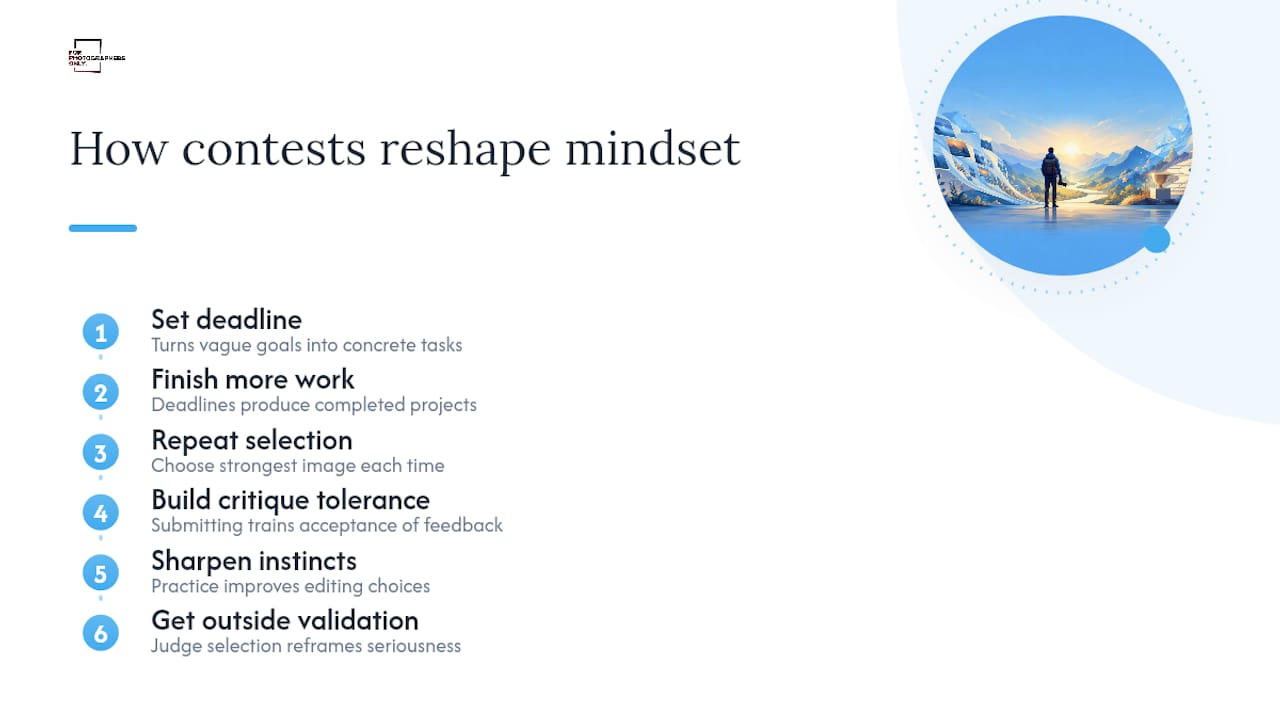
Motivation is harder to quantify than exhibition placements, but photographers who enter contests regularly describe a shift in how they approach their own work. A submission deadline turns a vague intention to “get better” into a concrete task with a due date, and that structure tends to produce more finished work than open-ended personal projects ever do.
Confidence builds cumulatively, not from a single win. Photographers who enter and don’t place still go through the process of selecting their strongest image, comparing it against a theme, and submitting it for outside judgment. That repetition builds a tolerance for critique that carries into client work, gallery submissions, and portfolio reviews. Photographers who treat entering contests as ongoing practice, rather than a one-time bet on a big prize, report the process itself sharpening their editing instincts over time.
There’s also a psychological reframe that happens the first time a stranger, specifically a judge with no personal stake in your success, selects your image from a pool of thousands. That validation lands differently than praise from friends or social media followers, because it comes from someone applying a consistent standard across every entry. For photographers working in isolation, without a studio or a team, that outside signal can be the difference between treating photography as a serious pursuit and treating it as a hobby that never quite gets prioritized.
Can You Learn From Judges and Other Photographers Through Contests?
Contests put your work in front of people you would rarely reach through cold outreach alone. Jurors at major competitions are typically working photo editors, curators, or established photographers, and some contests build in feedback sessions, artist talks, or portfolio reviews as part of the prize package.
Even without formal feedback, shortlisting near work by respected names gives you a direct benchmark. Seeing exactly which image beat yours, and understanding why, teaches lessons that generic critique never quite matches. Exhibition openings and awards ceremonies also put finalists in the same room as gallery owners, magazine editors, and fellow photographers, and those conversations have led to teaching invitations, follow-on assignments, and gallery representation for photographers who showed up and engaged rather than treating the event as a formality.
Peer learning matters just as much as access to judges. Finalist groups in ongoing competitions often stay in loose contact, trading notes on which contests are worth entering next and sharing feedback on new work. That informal network tends to outlast any single competition cycle.
What Actually Moves the Needle Here
Most advice on photo contests treats every entry as a lottery ticket: pay the fee, hope for the best, move on. That framing misses the actual return. The real value of entering reputable competitions isn’t the occasional win. It’s the compounding effect of repeated deadlines, juried feedback, and public exposure on a body of work that otherwise develops in private.
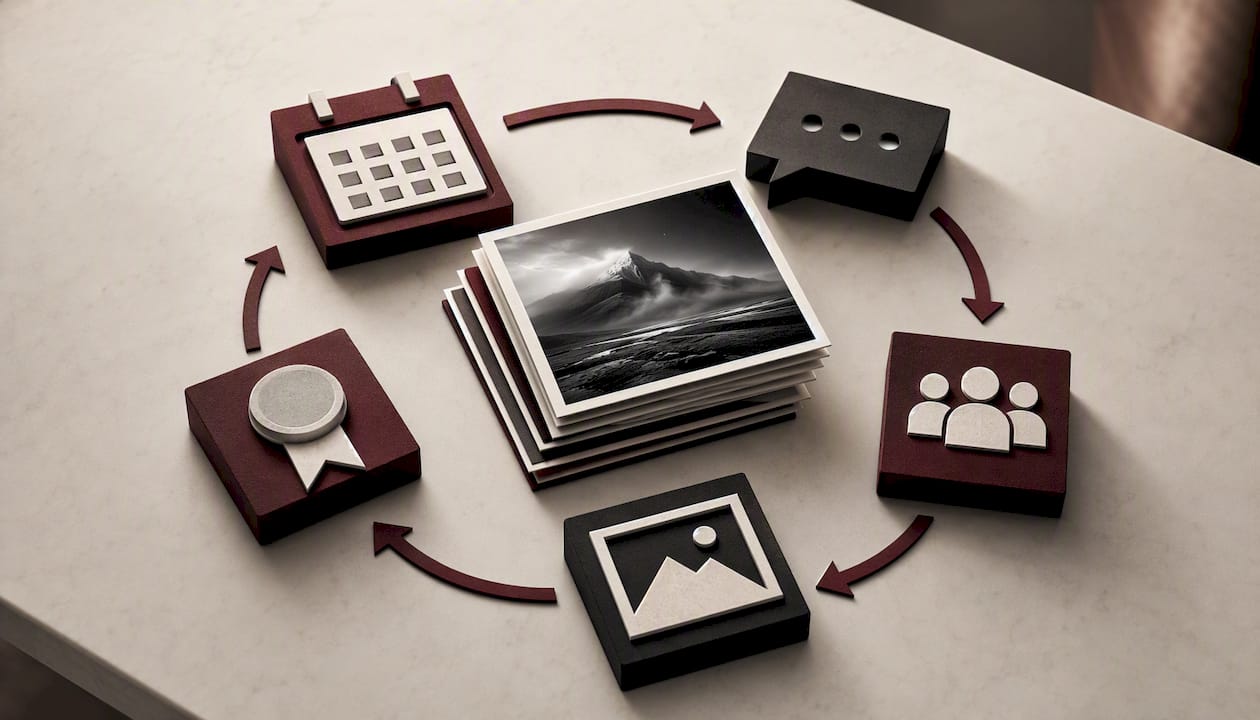
The conventional advice to “enter everything” is backwards. Mass-submitting to dozens of low-value contests wastes entry fees and dilutes your curation instincts, since you stop being selective about what represents your best work. A tighter strategy, mixing a handful of free contests for practice with a smaller number of selective, reputable competitions, builds both skill and credibility faster than volume ever does.
If you take one thing from this, take the checklist over the hype: verify the jury, check past winners, read the licensing terms, and only then decide the fee is worth paying. Prizes and exhibitions are real, but they follow from good selection, not from entering more often.
— DARIO
Find Your Next Contest Without the Guesswork
Every benefit covered here, from exhibition slots to skill-building deadlines to fee-driven traps, depends on finding the right contests in the first place, and that’s the one part of this process most photographers still do by hand, one browser tab at a time. Forphotographersonly turns that search into a single, continuously updated page: 320 to 330 active international competitions, more than 100 of them free to enter, refreshed every week so you’re never working off a stale deadline.
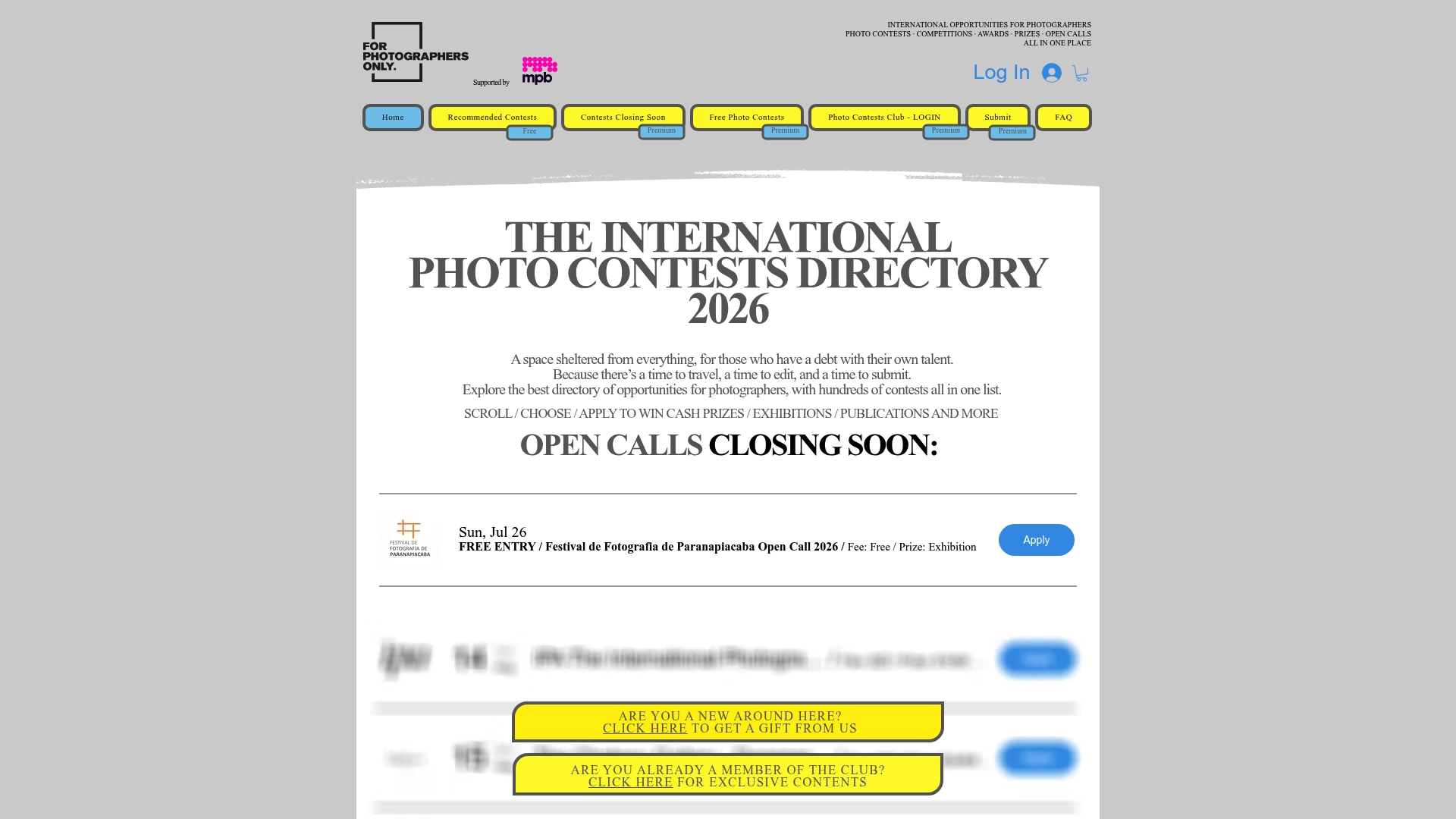
Instead of digging through vague terms pages and half-updated contest blogs, you get a pre-organized shortlist covering everything from major international awards to overlooked niche opportunities, alongside features like Photography Life that show what publication exposure actually looks like once you’ve placed. If a win does translate into client interest, photography-specific SEO support can help make sure that traffic finds you. Subscription prices vary; for the most up-to-date information, please visit the directory’s official website.
Sources
FAQ
What is the highest award for a photo?
There’s no single “highest” award across all photography, but World Press Photo’s Photo of the Year and the overall Wildlife Photographer of the Year title are widely regarded as among the most prestigious honors in photojournalism and nature photography respectively.
How many photographers earn over $300,000 a year?
Publicly available data on photographer income at that level isn’t reliably tracked or published, so no verified figure exists. What is well documented is that awards and credentials tend to correlate with higher client inquiry rates and stronger negotiating position on fees.
What is the 20-60-20 rule in photography?
This isn’t a standard, widely recognized framework in photography education, so definitions vary depending on the source. Rather than rely on an unverified rule, focus on the curation and thumbnail-impact principles covered above, which have direct backing from judging practices at major contests.
What are the rewards of being a photographer?
Beyond income, photographers commonly cite creative fulfillment, recognition through exhibitions and awards, and the chance to build a portfolio that opens doors to galleries and editorial work. Directories like Forphotographersonly exist specifically to make those reward pathways easier to find and act on.
Recommended