Where to Find Minimalist Photography Competitions Worth Entering
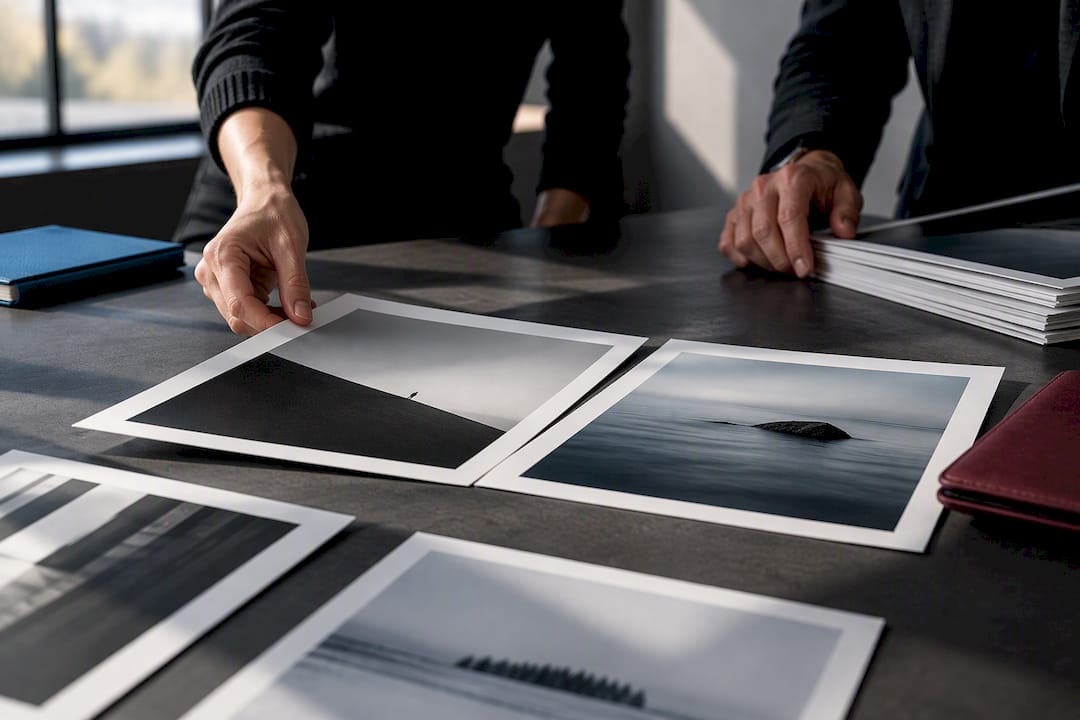
Curated directories and dedicated award sites remain the fastest way to find current minimalist photography competitions, but the listing itself matters less than what you do with it. Prioritize contests that pair exposure, publication, or exhibition with credible jury panels rather than chasing the largest headline cash figure. Before submitting anything, confirm the deadline and read the published rules in full.
TL;DR:
Prioritize contests that offer exposure, publication, or exhibition opportunities alongside credible judging panels rather than solely focusing on large cash prizes.
Check that contest categories align with your work, the jury members are named with real credentials, and the rules clearly state AI policies and usage rights before entering.
Submit a cohesive series of four to eight images that share a visual idea, rather than a single strong photo, to increase your chances of winning.
Use curated directories that update weekly to track active competitions, deadlines, fees, and prize structures, reducing time spent searching multiple sites.
Read the contest’s licensing agreement carefully to ensure you retain copyright and understand what rights you are granting, especially regarding publication and exhibition.
Table of Contents
What Minimalist Photography Competitions Typically Offer
Cash is only one line item in a well-built prize package. Most reputable minimalist photography awards structure their offerings across several channels, and the strongest ones stack them.
Cash prizes, often paired with a certificate or trophy for category winners
Publication in an annual winners book or a dedicated photography magazine
Physical or virtual gallery exhibition, sometimes tied to a photography festival
Press coverage through partner media outlets and photography blogs
Portfolio credibility that carries weight with future clients, galleries, and editors
The Minimalist Photography Awards 2026 illustrates the scale these programs can reach: the competition awarded a grand prize, published winners in its annual book and drew many images from photographers in numerous countries. That volume matters. A five-figure prize sounds appealing until you realize thousands of entrants are competing for it, while publication and exhibition slots often go to a wider circle of finalists. Coverage of the 2026 winners noted that prize packages commonly bundle cash with publication and exhibition, and that combination tends to deliver more career mileage than a check that clears once and gets forgotten.
Pro Tip: Read the winners’ bios on a contest’s past edition. If former winners mention gallery representation or magazine features that came after the win, the exposure claims are real, not marketing copy.
Categories, Eligibility, and Judging You Should Expect
Minimalist competitions typically organize entries by genre rather than judging everything as one pool. Common categories include:
Abstract
Aerial
Architecture
Conceptual
Fine art
Landscape
Long exposure
Night
Open/other
Photomanipulation
Portrait
Street
Black and white
Eligibility windows vary, but many contests restrict entries to images made within the last three to five years, and most welcome both amateurs and professionals in the same categories. Judging credibility comes down to a few trust signals worth checking before you pay an entry fee: named jury members with real photography credentials, a published winners gallery from prior years, a stated entry-count history, and a clear AI-generated content policy. Contests that hide these details, or recycle vague “renowned photographers” language without naming anyone, deserve more scrutiny.
Entry Fees, Deadlines, and File Specs to Expect
Fee structures for minimalist photo contests follow a predictable rhythm:
Early-bird period — lowest per-image fee, sometimes free for a limited window
Regular period — standard pricing, typically the longest stretch of the entry cycle
Final/late period — highest fee, often a last push before submissions close
Extended deadline — occasional grace window, usually at a premium rate
Fee tables published by contest organizers show single professional entries commonly landing in the $30 to $50 range, with bundle or credit packages that lower the per-image cost for photographers submitting a series. On the technical side, expect requirements for minimum pixel dimensions (often 3000 to 4000 pixels on the long edge), sRGB color profiles, JPEG files without visible watermarks, and a signed rights statement confirming you own the image. Series submissions usually cap at a set number of frames, so check that limit before you build a set.
How to Choose Which Minimalist Photography Contests to Enter
Not every contest deserves your entry fee. Weigh category fit, audience reach, and jury credibility above the size of the cash prize, since a $500 award with festival exhibition and magazine placement can outperform a $2,000 prize that ends at a certificate.
Before you submit, run through this checklist:
Does the category match your actual body of work, not just your best single frame?
Are usage rights limited to promotional use, or does the contest claim broader licensing?
Is there a stated AI-generated image policy, and does your work comply?
What happens if you win: exhibition, publication, or cash only?
How is prize money paid, and in what currency?
What is the eligibility window for image creation dates?
Pro Tip: Save the contest’s rules page as a PDF the day you enter. Organizers sometimes update policies between the entry deadline and the winners announcement, and you want a record of what you agreed to.
Photographers weighing prestige against accessibility might also look at how established international awards structure their prize tiers, since the same exposure-versus-cash calculation applies across genres beyond minimalism.
Preparing a Minimalist Submission That Actually Competes
Curation beats gear almost every time in this genre. Minimalist photography rewards restraint, negative space, and a clear idea, not sensor size.
Build a tight series first. When a contest accepts series entries, submit four to eight images that share a visual language, whether that is a consistent color palette, a recurring subject, or a single compositional idea carried across frames.
Cut ruthlessly. A seven-image series won the grand prize at the 2026 Minimalist Photography Awards, proof that coherence outperforms volume. Judges evaluate the set, not just the strongest frame in it.
Prioritize concept over camera. Pure Photography Awards accepts images from any camera, including phones, and judges there focus on originality and file quality rather than equipment. A well-composed phone shot beats a cluttered frame from a full-frame body every time.
Finalize technical details last. Export at the required pixel dimensions, embed correct metadata, strip identifying watermarks if the rules require it, and attach model releases for any recognizable person in frame.
Pro Tip: Shoot loosely, then edit to a theme after the fact. Some of the strongest minimalist series come from photographers who noticed a pattern across unrelated shoots months later, not from a single planned session.
Where to Track Current Calls for Entry
Chasing individual contest websites one by one wastes time you could spend shooting or editing. A curated directory that updates weekly solves that problem directly, and a few standing resources are worth bookmarking alongside it.
Minimalist Photography Awards publishes annual press releases with winner details and entry statistics.
The Artist Gallery and similar publication-driven contests run genre-specific calls with printed magazine placement.
DIYPhotography and My Modern Met report on winners and prize structures across major photo awards, useful for gauging how a given contest historically treats its winners.
Photographers early in their careers may also find it worth reviewing emerging photographer award programs, which tend to weight portfolio growth over prize size.
Copyright, Model Releases, and What Contest Rules Actually Sign Away
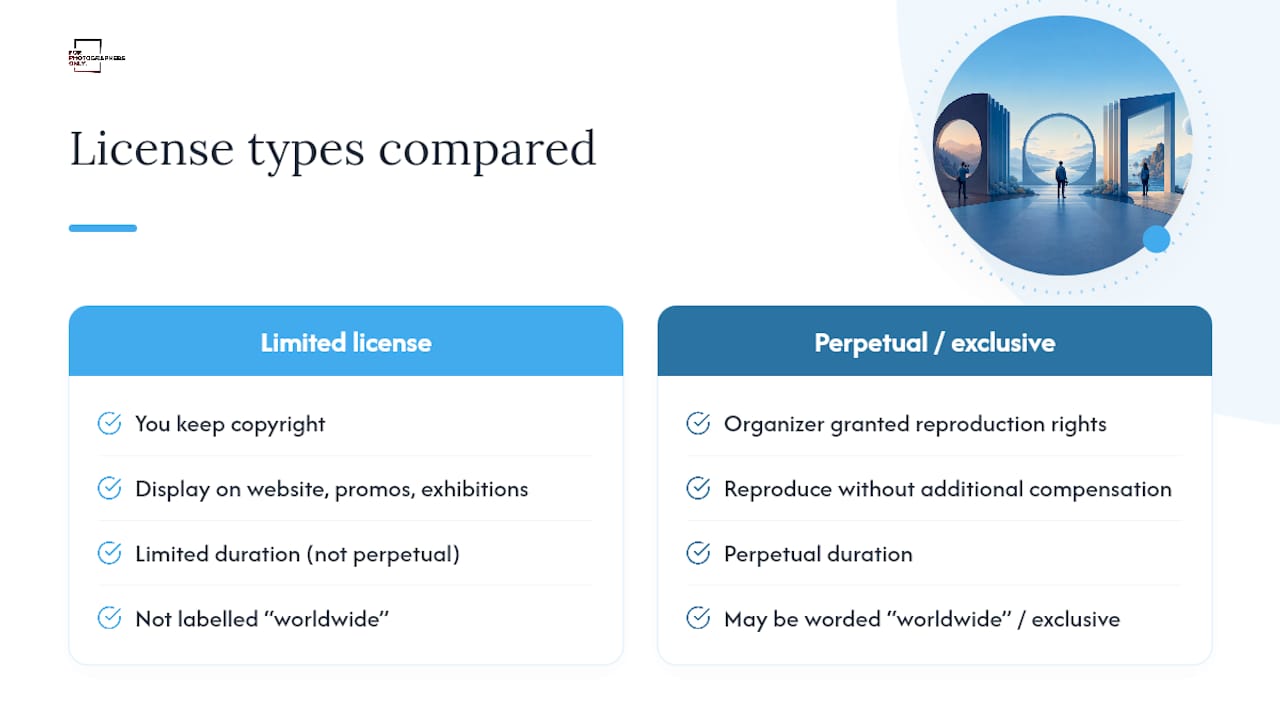
Entering a contest does not mean surrendering your copyright, but the fine print in some entry agreements comes close. Read the licensing clause before you submit, not after you win.
Most reputable organizers request a limited, non-exclusive license: the right to display your image on their website, in promotional materials, and in an exhibition or publication tied to the contest. You keep ownership and can still sell, license, or exhibit the same image elsewhere. Some contests, though, use broader language granting themselves perpetual or exclusive rights to reproduce your work without additional compensation. That distinction is the single most consequential line in any entry form, so search the rules for words like “exclusive,” “perpetual,” and “worldwide” before you click submit.
Model releases matter just as much in minimalist work as in portrait photography, even when the human subject is reduced to a silhouette or a single gesture against negative space. If a person is identifiable, even partially, most contests require a signed release on file, and some request it at the time of submission rather than after a win is announced. Street photography entries carry particular risk here since minimalist compositions often isolate a single figure against an empty frame, making that person’s identity more prominent, not less.
Currency and payment terms deserve a second look too. A prize quoted in one currency can lose value after conversion fees or PayPal deductions, and a BNW Minimalist Photography Prize rules page is a good example of how these administrative clauses get buried below the more exciting category descriptions.
Why Exposure Should Outrank the Prize Check
The conventional advice to photographers entering competitions still leans too heavily on chasing the largest cash figure, and that advice ages poorly. A €2,000 grand prize against 6,200 competing images is a lottery ticket. A guaranteed feature in an annual winners book, or a slot in a festival exhibition, compounds. Editors, gallery curators, and future clients respond to a body of recognized work far more than they respond to a number you won once.
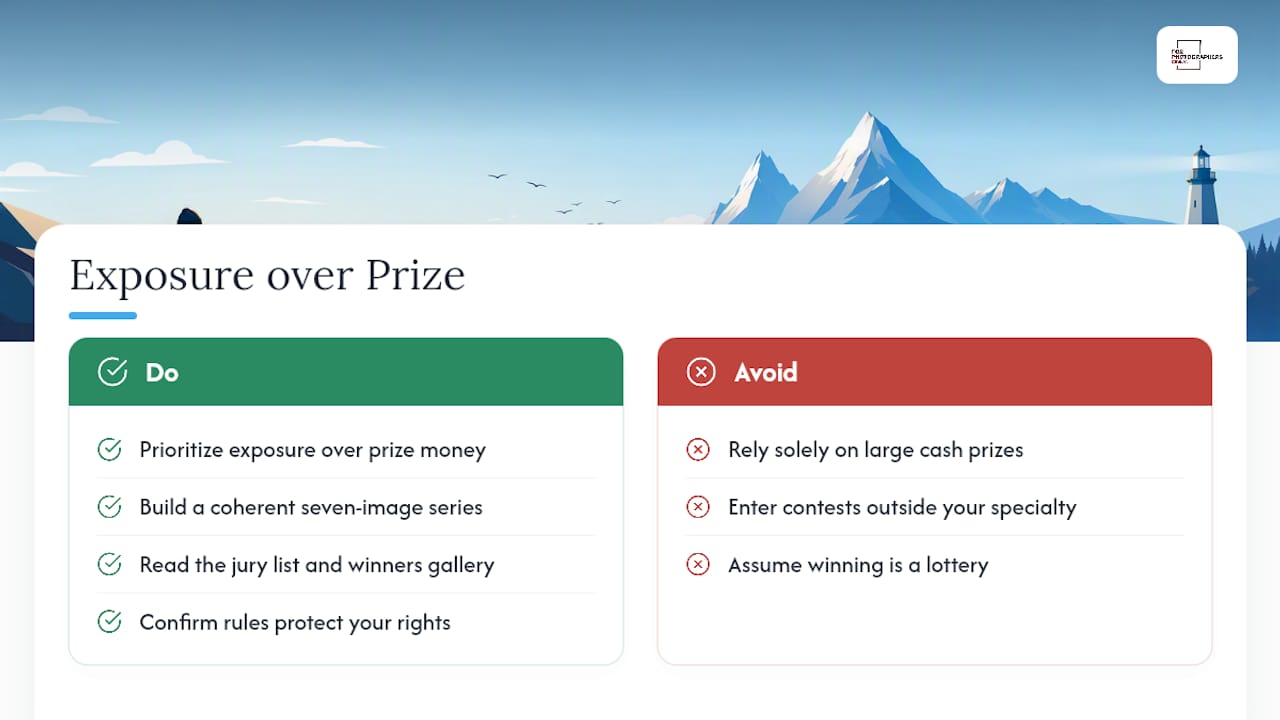
What gets underestimated is how much the entry itself teaches you. Building a coherent seven-image series, the kind that actually wins these contests, forces a discipline most photographers skip: editing down to a single idea and defending it across multiple frames. That skill transfers to client work, to gallery pitches, to every portfolio review you’ll ever sit through.
Prioritize fit first. A landscape specialist entering a street-focused minimalist contest is fighting an uphill battle no editing trick fixes. Read the jury list, check last year’s winners gallery, and confirm the rules protect your rights before your camera work even enters the conversation.
— DARIO
PhotoContestsClub: Track Minimalist Contests Without the Endless Search
Photo contest directories that refresh continuously can replace the need to hunt down individual contest websites or bookmark multiple award pages for deadline updates, by offering a single source tracking hundreds of active photography competitions worldwide, including many free-to-enter options.
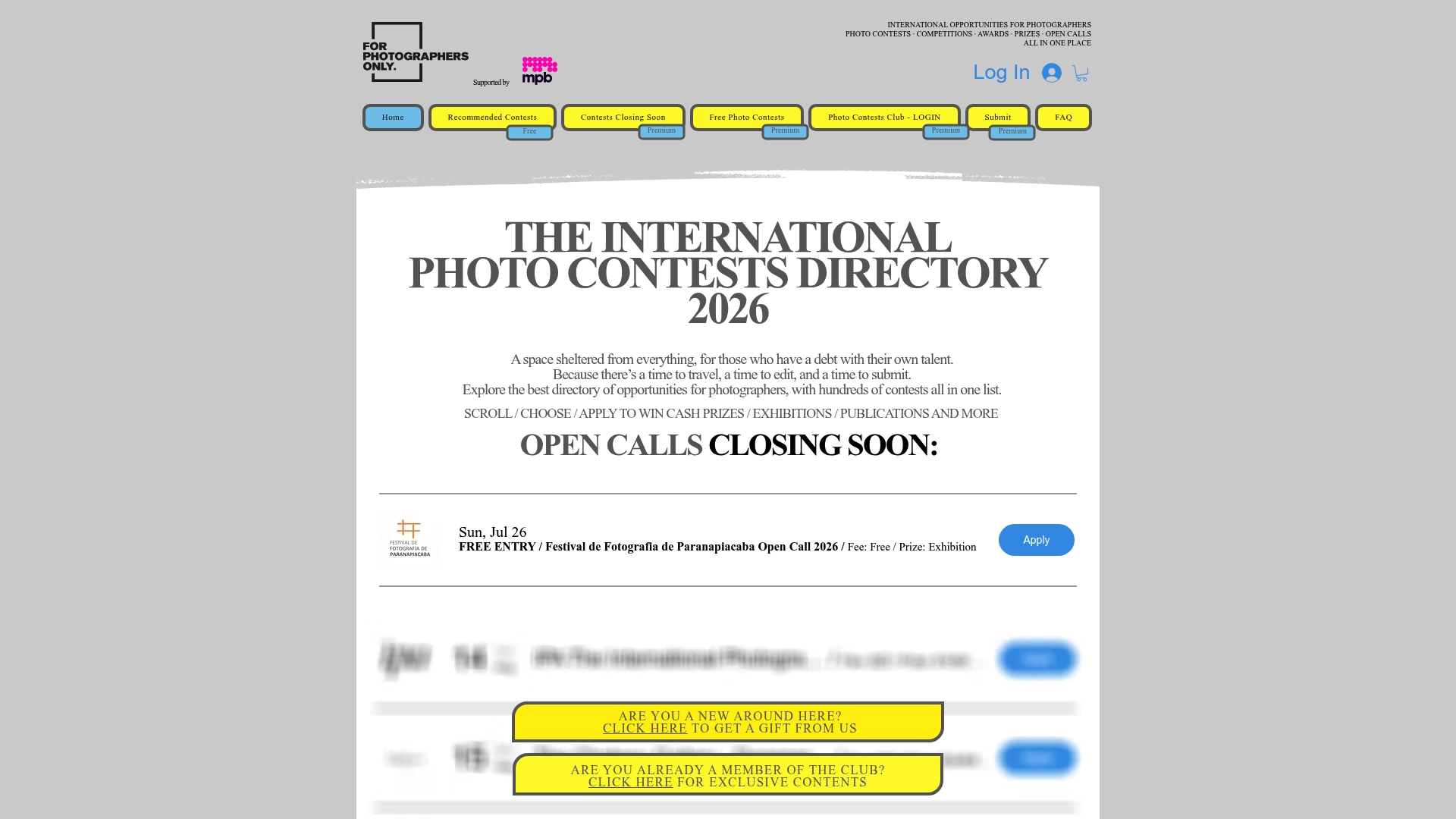
The directory refreshes weekly, so you see new minimalist photography competitions, deadline extensions, and fresh calls for entry as they appear, rather than discovering a contest closed its submission window three weeks ago. Every listing includes the details that actually matter for the decisions covered above: fees, deadlines, prize structure, and genre categories, so you can compare exposure potential against entry cost before committing your images or your money. Photographers who also want their contest wins to translate into bookings might pair that visibility with SEO support built for photographers, turning an award mention into actual client inquiries.
Access runs 6 € per month or 40 € per year on the PhotoContestsClub contest directory. Visit the page, start with a free trial, and set a personal reminder for the next early-bird deadline that fits your portfolio.
Sources
FAQ
Are Minimalist Photography Competitions Free to Enter?
Some are, but most charge a fee that rises across early-bird, regular, and final entry periods, typically landing between $30 and $50 per image at standard rates. Forphotographersonly’s directory tracks more than 100 free-to-enter contests among its 320 to 330 active listings if budget is a concern.
Can I Enter a Minimalist Photo Contest With a Phone Photo?
Yes, many organizers accept images from any camera, including smartphones, and Pure Photography Awards explicitly judges on originality and file quality rather than equipment. Confirm the minimum resolution requirement before submitting, since phone files sometimes fall short of print-ready dimensions.
How Many Images Should I Submit to a Minimalist Contest?
When a series option exists, four to eight cohesive images tend to outperform a single strong frame. The 2026 Minimalist Photography Awards grand-prize winner submitted a seven-image series built around one consistent visual idea.
What Should I Check Before Paying an Entry Fee?
Verify the usage-rights clause, the stated AI policy, the prize payment method and currency, and whether past winners actually received the publication or exhibition promised. Contests that publish a jury list and a prior winners gallery are generally more trustworthy than ones that don’t.
Where Can I Find Updated Lists of Minimalist Photography Contests?
Forphotographersonly’s contest directory updates weekly and covers hundreds of active competitions across genres, including minimalist categories. Contest organizer press releases and photography news outlets like DIYPhotography also report on new calls and winners as they happen.
Recommended