Macro Photography Competitions: Best Contests to Enter Now
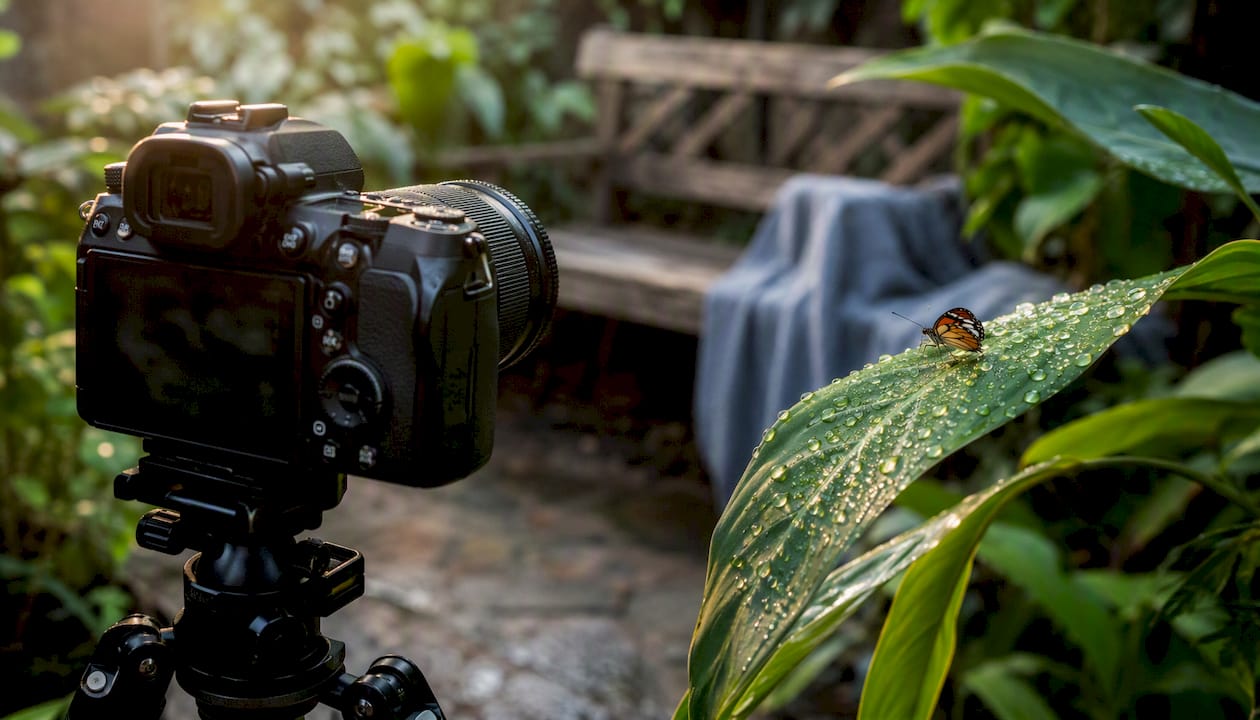
The strongest macro photography competitions open to US entrants right now are Close-Up Photographer of the Year (CUPOTY), Nikon Small World, IGPOTY Macro Art, Wildlife Photographer of the Year (macro sections), IPA Macro, NPOTY Plants & Fungi/Insects, BWPA Close-Up, and the Nature Photography Contest. Together, these eight contests cover every major subject area in close-up photography, from scientific photomicrography to botanical fine art, and most accept international entries. CUPOTY alone drew 155,557 entries in its 2025 edition, making it the world’s largest competition dedicated entirely to this genre, with a grand prize of £2,500.
Your immediate next step: identify which contest deadline falls soonest for your subject matter, then add it to your submission checklist today.
Top macro photo contests to consider:
CUPOTY — dedicated close-up, macro, and micro competition; accepts microscope work; cash prizes and Top 100 gallery publication
Nikon Small World — the global benchmark for scientific and artistic photomicrography
IGPOTY Macro Art — specialized category for botanical, floral, and garden macro photography
Wildlife Photographer of the Year — prestigious macro sections judged by the Natural History Museum of London
IPA Macro — close-up detail category within the International Photography Awards
NPOTY Plants & Fungi / Insects — international contest with dedicated small-organism categories
BWPA Close-Up — British Wildlife Photography Awards category focused on flora and fauna at close range
Nature Photography Contest — includes a dedicated macro section alongside broader nature categories
Forphotographersonly tracks all of these in one continuously updated directory, so you can monitor deadlines without hunting across eight separate websites.
Table of Contents
What do judges look for, and how do prizes vary between contests?
What rules, fees, and rights should you check before entering?
Where are winning macro images shown, and who has won before?
How does entering competitions build your network and community?
Why the “best contest” question is usually the wrong one to ask first
Forphotographersonly: your directory for tracking every macro contest deadline
How do the top macro photo contests compare at a glance?
The table below covers the core selection dimensions. Fees and deadlines shift annually; always verify on each contest’s official rules page before submitting.
Competition | Typical entry window | Entry fee | Open to | Macro/close-up categories | Prizes | Image specs (typical) | Exposure |
CUPOTY | Spring–Summer (verify) | Low fee (verify) | International | Close-Up, Macro, Micro, Photomicrography | £2,500 grand prize; cash per category | JPEG, min. 3 MB (verify) | Top 100 gallery, press, exhibition |
Nikon Small World | Jan–April (verify) | Free | International | Photomicrography (all subjects) | Cash + Nikon gear | High-res TIFF/JPEG | Museum exhibition, book, press |
IGPOTY Macro Art | Autumn–Winter (verify) | Low fee (verify) | International | Macro Art (botanical, floral, garden) | Cash prizes | JPEG (verify specs) | Exhibition, publication, press |
Wildlife Photographer of the Year | Oct–Nov (verify) | Fee per image (verify) | International | Invertebrates, Plants & Fungi, Behaviour | — | High-res JPEG | NHM exhibition, book, global press |
IPA Macro | Spring–Summer (verify) | Per-entry fee (verify) | International | Macro (nature, abstract, scientific) | Cash + publication | JPEG, 1 MB min. (verify) | IPA book, gallery, press |
NPOTY Plants & Fungi / Insects | Varies by year (verify) | Low fee (verify) | International | Plants & Fungi, Insects | Cash + exhibition | JPEG (verify) | Exhibition, publication |
BWPA Close-Up | Jan–March (verify) | Free | UK-based (verify) | Close-Up (flora, fauna) | Cash + exhibition | JPEG (verify) | Exhibition, book, press |
FAPA Macro | Varies (verify) | Varies (verify) | International | Macro as conceptual/visual art | Cash + publication | JPEG (verify) | Gallery, publication |
RMS Competition | Varies (verify) | Low/free (verify) | International | Macro, Micro, Photomicrography | Awards + publication | High-res (verify) | Scientific publication, exhibition |
Nature Photography Contest | Varies (verify) | Varies (verify) | International | Macro/Close-Up section | Cash + publication | JPEG (verify) | Online gallery, press |
Key notes before you enter:
Fee structures and deadlines change each cycle. Treat every “verify” above as a hard requirement, not a suggestion.
CUPOTY explicitly accepts microscope-based imagery in most categories, making it one of the few competitions where photomicrography and traditional macro sit side by side.
Wildlife Photographer of the Year carries the highest global press reach of any nature photography award, with its Natural History Museum exhibition drawing hundreds of thousands of visitors annually.
What are the upcoming entry windows you can act on?
Entry windows shift each year, so the sequence below reflects typical seasonal patterns. Confirm exact closing times, time zones, and any late-fee thresholds on each official page before you submit.
Typical annual sequence (verify all dates on official pages):
January–March: — BWPA Close-Up entries typically open; Nikon Small World submissions usually begin in January and close in April
March–May: CUPOTY entry window often runs through spring; confirm the exact closing date and time zone on the CUPOTY official site
Rolling / recurring: Viewbug runs recurring macro-themed contests such as Macro Moments throughout the year, with both jury and people’s-choice prizes; these are ideal for building submission confidence between major annual contests
Youth and age-specific windows: The Royal Entomological Society competition includes dedicated age categories; its 2025 edition drew over 3,000 entries from more than 110 countries, confirming strong global participation
Before you submit to any contest: confirm the closing time (many use midnight GMT or the organizer’s local time, not your local time), check whether a late-entry fee applies in the final 48 hours, and download the current rules PDF rather than relying on last year’s version.
How do you choose which competitions to enter?
Not every contest rewards the same strengths. A technically precise photomicrograph that wins Nikon Small World may not resonate with IGPOTY’s botanical art judges. Work through this checklist before committing entry fees.
1. Define your primary goal. Cash prizes, gallery exhibition, editorial publication, and portfolio credibility each point to different contests. Wildlife Photographer of the Year delivers unmatched press reach; CUPOTY delivers the largest dedicated close-up audience; Nikon Small World delivers scientific prestige.
2. Match your subject matter. Insects and invertebrates fit NPOTY, BWPA, and the RES competition. Botanical and floral work fits IGPOTY Macro Art. Scientific photomicrography fits Nikon Small World and the RMS Competition. Abstract or conceptual close-up work fits FAPA Macro and IPA.
3. Confirm the technical category. “Macro,” “close-up,” and “micro” are not interchangeable across contests. Some competitions define macro as 1:1 or greater magnification; others accept any close-focus image. Read the category definitions carefully before selecting where your image belongs.
4. Check your budget and timeline. Free-entry contests (Nikon Small World, BWPA) remove financial risk. Fee-based contests often offer early-bird pricing. If you plan to enter three or more contests in a season, map out the total cost and submission dates before you start.
5. Study past winners before you enter. A contest’s winner gallery reveals far more about judging preferences than the written criteria. If the last three CUPOTY grand-prize winners all feature extreme depth of field and scientific precision, a soft-focus impressionistic image is a poor fit regardless of its artistic merit.
Questions to ask before paying an entry fee:
Does the contest request a non-exclusive or exclusive license to your image, and for how long?
Are there geographic restrictions? (BWPA, for example, has historically been UK-focused.)
Does the contest allow AI-generated or AI-composited elements? Most nature contests explicitly prohibit them.
Is the judging panel publicly named, and do their credentials align with your subject matter?
Red flags that warrant extra scrutiny:
Vague or absent rights language in the terms and conditions
No named judges or judging criteria published
Prize descriptions that change between the announcement and the rules page
A winner gallery whose aesthetic bears no resemblance to the stated category theme
How do you prepare and submit macro images for competition?
Technical excellence is the baseline. What separates shortlisted images from the rest is usually the combination of technical precision and a clear visual narrative. Work through both checklists before you upload.
Technical checklist
Focus stacking: For subjects with shallow depth of field, use Zerene Stacker or Helicon Focus to merge multiple focus planes into a single sharp composite. Most competitions accept stacked images; confirm this in the rules.
Noise reduction and sharpening: Apply targeted noise reduction with Topaz Photo AI or Lightroom’s Denoise before final export. Over-sharpening is one of the most common technical disqualifiers in close-up work.
Submission checklist
Download and re-read the current rules PDF on the day you submit, not the day you start preparing.
Confirm file format (JPEG is standard; some scientific contests accept TIFF).
Check maximum file size and maximum pixel dimensions separately; both limits apply.
Do not submit the same image to two categories within the same contest unless the rules explicitly permit it.
Pay the entry fee and save the confirmation email or receipt.
Pro Tip: Judges at major macro contests report that the single most common reason a technically excellent image fails to place is that it lacks a clear subject hierarchy. Before submitting, ask yourself: where does the eye land first, and does that landing point tell the story you intend?
What do judges look for, and how do prizes vary between contests?
Judging priorities differ meaningfully between art-focused and science-focused competitions, and understanding that distinction shapes which images you enter where.
Art-focused contests like IGPOTY Macro Art and FAPA Macro weight aesthetic composition, color relationships, and emotional resonance. Scientific competitions like Nikon Small World and the RMS Competition weight biological accuracy, magnification clarity, and the revelation of structures invisible to the naked eye. CUPOTY sits deliberately between the two, accepting both artistic and scientific close-up work across its categories.
What exposure looks like across the major contests:
Museum exhibition: — Wildlife Photographer of the Year (Natural History Museum, London); Nikon Small World (traveling exhibition)
Printed book: — Wildlife Photographer of the Year annual; Nikon Small World annual book; CUPOTY publication
People’s choice / community vote: — Viewbug’s Macro Moments contest adds a people’s-choice dimension alongside jury selection, giving photographers additional paths to recognition
The practical implication: if your goal is editorial visibility and press coverage, CUPOTY and Wildlife Photographer of the Year deliver the broadest reach. If your goal is scientific credibility, Nikon Small World and the RMS Competition carry more weight with academic and institutional audiences.
What rules, fees, and rights should you check before entering?
Rights language is where photographers most often make costly mistakes. Read the licensing terms before you pay the entry fee, not after.
Rights checklist:
Most reputable contests request a non-exclusive license for promotional use (website, social media, press releases) for a defined period, typically one to three years.
Avoid contests that request exclusive rights or all rights without compensation beyond the prize.
Check whether the license applies to shortlisted images only or to all submitted images.
Keep your original RAW files and any stacking source files. If a dispute arises about image authenticity or manipulation, originals are your primary evidence.
Confirm the AI policy. Most nature and wildlife contests explicitly prohibit AI-generated elements and require that the image represent a real moment captured in the field or laboratory.
Fee patterns:
Free entry: Nikon Small World, BWPA (verify current cycle)
Low single-entry fee: CUPOTY, IGPOTY, NPOTY (typically under $30 per entry; verify)
Per-image or per-category fee: IPA, Wildlife Photographer of the Year (fees increase with number of entries)
Tiered / early-bird pricing: Many contests offer reduced fees for submissions made several weeks before the closing date
Fee type | Typical range | Best for |
Free | Free | Budget-conscious entrants; high-volume practice |
Low flat fee | — | Serious hobbyists entering 1–3 images |
Per-image tiered | — | Professionals selecting their strongest 1–2 images |
Early-bird discount | early-bird discounts often apply | Photographers who plan submissions in advance |
Eligibility notes to confirm:
Age categories exist in contests like the RES competition and NPOTY; youth entrants may have separate submission rules.
Geographic restrictions vary. BWPA has historically prioritized UK-based photographers; most others are fully international.
Equipment rules differ. CUPOTY accepts microscope-based imagery in most categories; other contests restrict entries to camera or smartphone captures only.
Where are winning macro images shown, and who has won before?
The exposure that follows a win or shortlist placement often exceeds the prize itself in long-term career value.
Notable outcomes for winners and shortlisted photographers:
CUPOTY Top 100: — Published online with significant press pickup; shortlisted photographers are regularly featured in Digital Camera World and international photography media. The 2025 edition processed 155,557 entries, making a Top 100 placement statistically meaningful.
Nikon Small World: — Winners are exhibited in a traveling museum exhibition and included in the annual printed book, reaching scientific and art audiences simultaneously.
RES Photography Competition 2025: — Over 3,000 entries from more than 110 countries; winners are published on the Royal Entomological Society’s platform and distributed to entomology and science media.
Viewbug Macro Moments: — Winners receive gear prizes (a macro lens in recent editions) and are featured in Viewbug’s online gallery, which combines jury selection with a people’s-choice vote.
What winning images tend to have in common: across art-focused and science-focused contests alike, the images that reach the top of shortlists share one quality: they show something the viewer has never seen before, or show a familiar subject from an angle that makes it unrecognizable. Technical perfection supports that revelation; it does not replace it.
Reviewing winner galleries from the past two or three cycles of any contest you plan to enter is one of the highest-return preparation activities available. The CUPOTY gallery and the Nikon Small World archive are both publicly accessible and worth studying in depth.
How does entering competitions build your network and community?
Competitions do more than distribute prizes. They create meeting points within the global photography community that persist long after the results are announced.
Shortlist placement in a major contest like CUPOTY or Wildlife Photographer of the Year introduces your work to curators, editors, and fellow photographers who follow those competitions closely. Many photographers report that exhibition invitations, magazine commissions, and collaborative projects trace back to a single shortlist appearance rather than a direct outreach effort. The community that forms around a contest’s annual cycle, its social media channels, and its winner events functions as an informal professional network.
Recurring contests with active communities, such as Viewbug’s Macro Moments, add a participatory dimension. People’s-choice voting draws other photographers to your work and creates genuine engagement rather than passive viewing. Monthly or frequent-entry contests like Shoot the Frame offer a lower-stakes environment to build submission habits and connect with photographers at a similar stage of development.
For photographers at the early stages of their careers, the community benefit often outweighs the prize. Being part of a shortlist cohort means your name appears alongside established photographers in press coverage, winner galleries, and exhibition catalogs, which carries credibility that a solo portfolio page cannot replicate.
Can competitions give you useful feedback on your work?
Most major competitions do not provide individual feedback to entrants. That is a deliberate choice, not an oversight. When a contest receives 155,000 entries, individualized critique is logistically impossible.
The feedback that competitions do provide is indirect but genuinely useful. A shortlist placement tells you that your image met the judging panel’s threshold for technical and artistic quality. A consistent pattern of not placing, despite strong technical execution, usually signals a mismatch between your subject matter or aesthetic and the contest’s judging priorities. Studying the winner gallery after results are announced is the most direct form of feedback available.
Some smaller or community-driven contests offer more direct engagement. Viewbug’s people’s-choice mechanism generates comment-level feedback from other photographers. Fellowship programs, such as those listed through the Houston Center for Photography, often include mentorship or critique as part of the award. Fine-art focused calls, like those at the Center for Fine Art Photography, sometimes pair exhibition with curatorial feedback for selected entrants.
If critique is your primary goal, entering monthly competitions and workshop-based contests will serve you better than submitting to large annual awards and waiting for results.
Key Takeaways
The most effective approach to macro photography competitions is to match your subject, technical method, and career goal to the right contest before you invest time or entry fees.
Point | Details |
Match subject to contest | Botanical work fits IGPOTY; scientific photomicrography fits Nikon Small World; broad close-up fits CUPOTY. |
Verify deadlines and fees | Entry windows and fee structures change annually; always download the current rules PDF before submitting. |
Rights language matters | Confirm the license scope before paying; reputable contests request non-exclusive promotional use only. |
Top 100 placement has real value | CUPOTY’s 2025 edition drew 155,557 entries; a shortlist appearance generates press coverage and curatorial attention. |
Forphotographersonly tracks it all | The directory lists 320+ active contests with weekly updates, so you can monitor every deadline in one place. |
Why the “best contest” question is usually the wrong one to ask first
The conventional advice in photography circles is to find the most prestigious competition and enter it. That logic is understandable, but it misses the more productive question: which contest is the best fit for this image and this goal?
Wildlife Photographer of the Year is the most globally recognized nature photography award in existence. It is also, for that reason, extraordinarily competitive in its macro and invertebrate categories. A photographer who enters it with a technically strong but narratively thin image of a common garden insect is not competing for the prize; they are paying an entry fee for a lesson they could have learned by studying the winner gallery for free.
The contests that tend to deliver the most meaningful outcomes for macro photographers are not always the largest ones. The RES Photography Competition, with its insect-specific categories and age divisions, rewards subject knowledge and patience in a way that generalist contests cannot. FAPA Macro rewards conceptual vision over documentary precision. These are not consolation prizes. They are the right venues for specific kinds of work.
The most honest piece of advice for any photographer building a competition strategy: spend as much time studying past winners as you spend editing your submission. The gap between a shortlisted image and a non-placing image is rarely technical. It is almost always about understanding what a specific panel of judges finds compelling, and then asking whether your image genuinely offers that.
Forphotographersonly: your directory for tracking every macro contest deadline
Keeping up with ten or more macro photo contests across different organizations, time zones, and annual cycles takes real effort. Forphotographersonly removes that friction entirely.
[
The directory lists more than 320 active photography competitions, including every major macro and close-up contest covered in this article, updated every week so you never miss a new entry window or a fee change. The chronological format means you can see at a glance which deadline is approaching next, filter for free-to-enter opportunities, and track multiple contests simultaneously without maintaining your own spreadsheet. Members also gain access to an exclusive monthly internal competition, adding a low-stakes, high-feedback submission opportunity between major annual deadlines.
For €6 per month, you get a single, continuously updated page covering the world’s best photography contests, from CUPOTY and Nikon Small World to lesser-known niche awards that rarely appear in mainstream photography media. View the subscription plans and start tracking every deadline that matters to your work.
Official competition pages and further reading
Verify current rules, deadlines, and winner galleries directly on each official page before submitting.
CUPOTY (Close-Up Photographer of the Year) — official rules, category definitions, closing dates, prize details, and the publicly accessible Top 100 and shortlist gallery
Nikon Small World — official entry portal, rules, magnification requirements, and the annual winner archive (search “Nikon Small World” on nikonsmallworld.com)
IGPOTY (International Garden Photographer of the Year) Macro Art — category rules, entry fees, and past winner galleries at igpoty.com
Wildlife Photographer of the Year — entry rules, category list, prize structure, and the Natural History Museum exhibition details at nhm.ac.uk/wpy
IPA (International Photography Awards) Macro — category definitions, entry fees, and publication details at photoawards.com
NPOTY (Nature Photographer of the Year) Plants & Fungi / Insects — category rules and winner galleries at naturephotographeroftheyear.com
BWPA (British Wildlife Photography Awards) Close-Up — eligibility rules, entry window, and exhibition details at bwpawards.org
FAPA Macro — conceptual macro category rules and past winner examples (verify current URL on official FAPA channels)
RMS (Royal Microscopical Society) Competition — scientific and biological macro/micro rules and submission standards at rms.org.uk
Nature Photography Contest — macro section rules and entry details (verify current URL on the official contest page)
Viewbug Macro Moments — recurring community macro contest with jury and people’s-choice prizes; useful for practice submissions between major annual deadlines
Royal Entomological Society Photography Competition — insect-specific macro contest with youth categories and international reach; 2025 results and winner images published on the RES website
Recommended