How to Win Photo Contests: A Judge-Backed Strategy Guide
To win photo contests, submit one ruthlessly chosen, perfectly prepared image that matches the brief and the judges’ demonstrated taste. That single decision, choosing the right contest, picking your strongest image, and presenting it flawlessly, does more for your placement than entering a dozen mediocre frames.
Your 3-step action plan: Choose a contest that fits your genre → select one on-theme image → perfect every technical and presentation detail before you upload.
Three things the evidence keeps confirming:
Experienced judges advise that one strong, perfectly on-theme image consistently outperforms a stack of “maybe” entries.
Matching the brief is the most common reason an entry succeeds or fails, ahead of technical quality or creative ambition.
Forphotographersonly tracks more than 320 active international photography contests, including over 100 free-to-enter opportunities. This way, you can find the right contest without spending hours searching.
Key Takeaways
Winning photo contests consistently comes down to three disciplines: choosing the right contest for your genre, submitting one technically flawless and on-theme image, and building a feedback loop that improves every subsequent entry.
Point | Details |
Choose contests strategically | Match genre, judging panel, and rights terms before paying any entry fee. |
Submit one strong image | One ruthlessly chosen, on-theme image outperforms multiple mediocre entries in juried awards. |
Run the submission checklist | Verify file format, color space, naming, watermark rules, and deadline before every upload. |
Build a feedback loop | Study winning galleries, get peer critique, and track results to improve each submission cycle. |
Use Forphotographersonly | The directory surfaces 320+ active contests, including 100+ free-to-enter, updated weekly, saving hours of research. |
Table of Contents
How to win photo contests by choosing the right competition first
Most photographers lose before they upload a single file. They enter contests that don’t fit their genre, their career stage, or their creative voice, and then wonder why a technically excellent image goes unplaced. Contest selection is strategy, not luck.
Match the contest to your genre and career goals
Start with genre fit. A street photographer entering a Fine Art Photo Awards category built around studio portraiture is fighting the wrong battle. The same image submitted to a street-specific category, or to a contest like those curated for street photography contests, lands in front of judges who already value what you do.
Then consider scale. High-prestige international awards like National Geographic’s photography competitions or the Natural Landscape Awards attract thousands of entries from professionals with decades of experience. If you are building your contest record, a niche monthly society award or a juried open call often offers better odds, real feedback, and meaningful publication credits. The Natural Landscape Awards, for instance, publishes a detailed judging commentary that is worth studying even if you never enter.
Rights and licensing terms matter as much as prize money. Some contests claim broad commercial rights to every entry, not just winners. Read the licensing clause before you pay the fee.
Research judges and reverse-engineer winner galleries
Judging is subjective, and the fastest way to understand a contest’s taste is to study its recent winners. Look at the winning gallery from the last two or three years and ask: What processing style dominates? Are the compositions graphic and minimal, or layered and complex? Does the panel reward quiet, contemplative work or high-drama light?
Then look up the judges themselves. A panel of photojournalists will read an image differently than a panel of fine-art curators. Nikon and Canon both sponsor contests where the judging panels skew toward technical excellence and commercial appeal. Tamron Americas, which publishes practical contest entry advice, tends to favor images that demonstrate lens performance alongside creative vision. Knowing that context shapes which image you pull from your archive.
Decision criteria to run through before entering any contest:
Genre fit: does this contest actively celebrate your type of work?
Competition scale: local, national, or international, and what does that mean for your odds?
Judging panel credibility: are the judges named, and can you research their work?
Rights and licensing: what does the organizer claim over non-winning entries?
Entry fee versus expected exposure: is the prize or publication credit worth the cost?
Category suitability: is there a specific category where your image is the strongest fit?
Pro Tip: Before paying any entry fee, spend 20 minutes on the contest’s winner gallery from the previous year. If your work looks nothing like what won, that is useful information, not discouragement.
Read the rules: your pre-submission checklist
Disqualification is painfully common, and almost always avoidable. A technically brilliant image gets rejected because the file was named incorrectly, the color space was wrong, or the photographer missed a post-processing restriction buried in paragraph four of the rules. Run this checklist before every submission.
Submission checklist
Eligibility: confirm your nationality, age, and professional status meet the contest’s requirements
Category match: verify your image fits the stated category definition, not just the category name
File format: most contests require JPEG; some accept TIFF or RAW, but never assume
Color space: sRGB is the standard for online judging; AdobeRGB is sometimes required for print-based awards
Pixel dimensions: check minimum and maximum pixel counts on the longest edge
File size: typical caps run from 5 MB to 20 MB depending on the contest
File naming: follow the exact convention specified (LastName_Title_Category is common)
Metadata and EXIF: some contests require embedded EXIF; others require it stripped for blind judging
Watermarks: almost universally prohibited, even subtle ones
Per-entry limits: note the maximum number of images per category and per photographer
Deadline and time zone: confirm whether the deadline is midnight in your time zone or the organizer’s
Typical file specification reference
The Viewbug pre-submit workflow recommends shortlisting three images, choosing the one that reads best as a thumbnail, performing a clean edit, getting peer feedback, and then submitting the strongest result. That sequence catches most technical errors before they cost you an entry fee.
Pro Tip: *Upload your image to the contest’s preview tool, if one exists, and view it at the display size judges will use.
What do judges actually look for in photos?
Technical quality is the floor, not the ceiling. Judges commonly discard images for poor sharpness, blown highlights, or heavy-handed processing before they ever consider the creative merit. Once an image clears that threshold, the evaluation shifts to impact, originality, and emotional resonance.
The five axes judges use
Immediate impact is the first filter. In a large contest, judges may review hundreds of thumbnails before opening a single full-resolution file. An image that doesn’t stop the scroll at thumbnail size rarely gets a second look. Strong graphic contrast, a clear subject, and deliberate negative space all help here.
Composition clarity separates images that feel intentional from those that feel accidental. Judges who have spent years looking at photographs can sense when a composition was chosen versus when it happened. Leading lines, deliberate placement of the subject within the frame, and controlled backgrounds signal craft.
Technical execution covers sharpness, exposure, and color accuracy. These are baseline expectations at any serious award, whether it’s a Nikon-sponsored competition or the Fine Art Photo Awards.
Creativity and originality matter most in open-theme categories. A technically perfect image of a well-photographed subject in a predictable way rarely wins. Judges at the Natural Landscape Awards, for example, have noted that they see thousands of golden-hour mountain shots and that the ones that place show an unexpected perspective or a moment of genuine surprise.
Theme fit and storytelling close the loop. An image can be technically excellent and visually striking and still fail if it doesn’t answer the brief. Judges read images against the stated theme, and a strong emotional hit that also fits the brief is the combination that wins.
Self-review checklist before submitting
Does the image stop you at thumbnail size?
Is the subject immediately clear, or does the eye wander?
Are sharpness and exposure clean at 100% zoom?
Does the composition feel chosen, not accidental?
Does the image answer the contest’s stated theme?
Is there an emotional or narrative hook a stranger would feel?
How to make the image judges remember
Winning images share a quality that is easier to recognize than to manufacture: they feel inevitable. Every element, the light, the composition, the moment, seems like it could not have been arranged any other way. Getting there consistently requires deliberate technique, not luck.
Composition patterns that create instant impact
The most durable competition compositions share a few structural qualities. A strong anchor, usually the primary subject, sits in a position that creates visual tension rather than dead-center symmetry. Leading lines draw the eye through the frame rather than out of it. Negative space gives the subject room to breathe and forces the viewer’s attention exactly where you want it.
Deliberate asymmetry tends to outperform symmetry in judged competitions because it creates a sense of energy and movement. A perfectly centered subject can read as static. Shift the horizon, place the subject at the intersection of thirds, or let a shadow cut diagonally across the frame, and the image starts to feel alive.
Light and timing
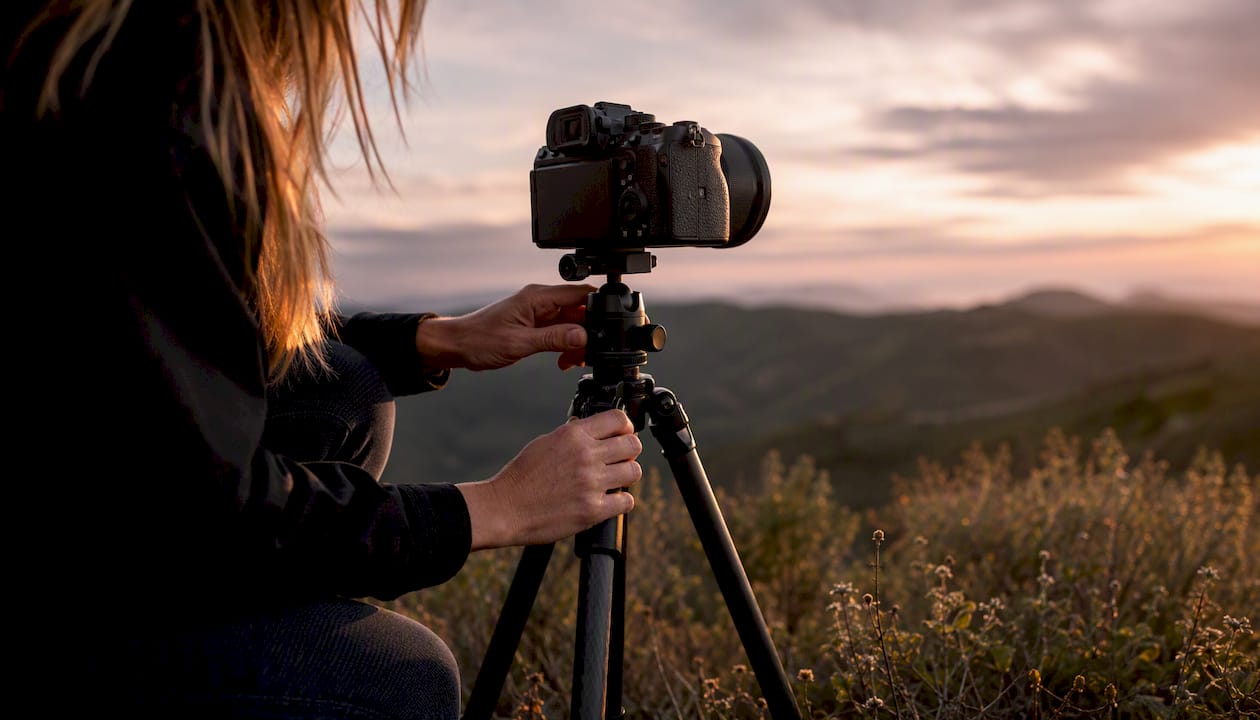
Edge light and backlight consistently produce images with more drama and depth than flat front light. The quality of light at the margins of the day, the first 30 minutes after sunrise and the last 30 before sunset, gives photographers a natural advantage in landscape and nature categories. In portrait and street work, window light with a strong directional quality creates the same effect indoors.
Controlled highlights matter more than photographers often realize. A blown-out sky or a specular highlight that clips to pure white draws the eye immediately and signals a technical failure to judges. Expose to protect the highlights, then recover shadow detail in post.
Editing discipline
The most common creative mistake in contest submissions is over-editing. Heavy clarity boosts, aggressive local adjustments, and oversaturated skies have become so recognizable that experienced judges flag them immediately. The goal of post-processing in a contest context is to make the image look like the best version of what the camera captured, not a different image entirely.
Stay within the contest’s stated post-processing limits. Many wildlife and nature contests, including those affiliated with Natural Landscape Awards, prohibit compositing and significant object removal. Violating those rules disqualifies the entry regardless of how strong the image is.
Pro Tip: Calibrate your monitor monthly and use soft-proofing in Lightroom or Photoshop before exporting. For print-required contests, produce a test print on the same paper the contest specifies to check for color and density shifts that won’t show on screen.
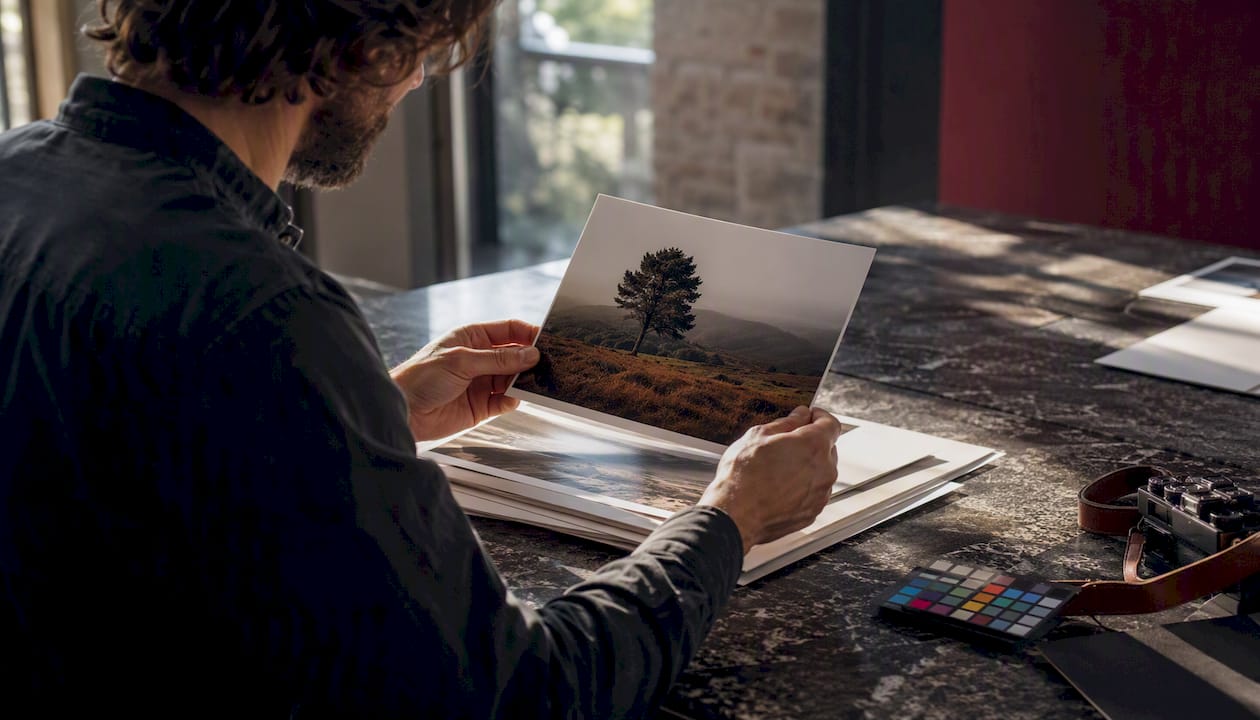
Pro Tip: To remove emotional attachment from your shortlist, print your top five candidates as 4x6 prints and lay them on a table. The image that holds up physically, without the glow of a backlit screen, is usually the one to submit.
How titles, captions, and metadata influence judges
A title is not decoration. When contest rules permit captions and titles, they become part of the submission, and judges read them. A well-chosen title can shift how an ambiguous image is interpreted. A clumsy one can undercut an otherwise strong photograph.
Descriptive versus poetic titles
Descriptive titles work best for documentary and photojournalistic categories, where context and accuracy matter. “Flood Evacuation, Dhaka, 2025” tells a judge exactly what they are looking at and signals that the photographer was present and paying attention.
Poetic titles work better in fine-art and open categories, where the image’s emotional register is the point. A single evocative word or a short phrase that resonates with the image’s mood can deepen the judge’s experience without explaining it to death. The rule is to suggest, not narrate.
Caption formulas that add context without leading
Concise, intent-driven captions help judges read ambiguous images the way you intend. A useful structure: one sentence of factual context (where, when, what) followed by one sentence of intent (why this moment, what you wanted to convey). That’s it. Captions that run to three or four sentences start to feel like the photographer doesn’t trust the image.
Caption and metadata checklist:
Title: 2–6 words, either descriptive or poetic depending on the category
Caption: maximum two sentences, one factual and one intentional
Keywords: embed relevant terms in EXIF/IPTC metadata where the platform reads them
Location and date: include when the contest requires provenance
Submission title field: match exactly what the rules specify, including capitalization and punctuation
How to budget your entries and build a smart submission plan
Entry fees add up fast. A photographer who enters six contests per year at $30–$50 per entry, across multiple categories, can spend several hundred dollars annually with no clear return. A deliberate entry strategy changes that math.
Two approaches: curated focus versus volume
For juried awards with named judges and public winner galleries, the curated single-entry approach almost always wins. Submitting one strong, perfectly on-theme image outperforms multiple “maybe” entries because judges remember the best image in a portfolio, not the average. Entering three images where one is clearly your strongest dilutes the impression you make.
Volume entry makes more sense in open community contests or monthly member competitions where the judging is algorithmic or crowd-sourced, and where the cost per entry is low or free. In those contexts, more entries increase your statistical exposure without the same risk of diluting a strong impression.
Category selection tactics
Enter the category where your image is the strongest fit, not the category with the fewest entries.
Avoid submitting near-duplicate frames across multiple categories; judges who see the same composition twice in one contest remember it negatively.
In large contests with many subcategories, research which categories attracted the fewest entries in previous years. A strong image in a less-contested category often places higher than the same image lost in the most popular one.
For photographers building a contest record, wildlife photography competitions and niche genre awards often offer better placement odds than open-theme international contests.
Mini budget template
Entry fee per image: note the base fee and any per-category surcharges
Expected exposure: publication credit, exhibition, prize money, or portfolio recognition
Print or travel costs: for contests requiring physical prints or finalist attendance
Estimated ROI: weigh the fee against the career value of the credit, not just the cash prize
Annual cap: set a total annual contest budget and allocate it to your highest-priority entries first
Common mistakes that cost photographers placements
Most contest failures are preventable. The errors below appear repeatedly across judge commentary and contest educator guides.
Administrative red flags:
Wrong file format or color space for the submission platform
Watermarks, visible or subtle, anywhere in the frame
Missing the deadline by hours because of time zone confusion
Entering the wrong category because the title sounded right but the definition didn’t match
Submitting images that violate post-processing rules (compositing, sky replacement, object removal) in contests that prohibit them
Creative red flags:
Over-editing: heavy clarity, aggressive HDR, or oversaturated colors that signal processing rather than photography
Busy, distracting backgrounds that compete with the subject
An unclear primary subject that leaves the judge’s eye wandering
Submitting two or three similar frames across categories, which signals indecision rather than confidence
An image that is technically excellent but doesn’t answer the stated theme
Before you hit submit, run through this:
Does the file meet every technical specification in the rules?
Is there any watermark, logo, or identifying mark in the image?
Does the image fit the category definition, not just the category name?
Have you checked the deadline in the organizer’s time zone?
Does the image answer the brief?
A 6–8 week practice plan to raise your contest readiness
Entering contests without a deliberate practice loop is like submitting a first draft without editing. The photographers who place consistently treat contest preparation as a repeatable process, not a one-time event.
Week-by-week schedule
Weeks 1–2: Shoot with the contest theme in mind. Set a specific goal for each session (one strong anchor composition, one backlit portrait, one graphic minimal frame). Review the contest’s winner gallery at the start of each week.
Week 3: Edit your session selects. Apply the technical checklist: sharpness at 100%, exposure, color accuracy, and processing restraint. Soft-proof for the submission color space.
Week 4: Shortlist three images. Print them as 4x6 prints and evaluate without a screen. Ask one trusted peer to rank them without context.
Week 5: Research the judges. Look at their published work, their previous contest selections, and any public statements about what they value. Adjust your shortlist if the evidence points clearly to one image over another.
Week 6: Write the title and caption for your chosen image. Test two versions on a peer and ask which one changes how they read the photograph.
Weeks 7–8: Final technical check against the submission rules. Upload to the preview tool if available. Submit. Then start the next cycle.
Journal template: what to note after each submission
Contest name, category, and deadline
Image chosen and why (one sentence)
Technical changes made from the original capture
Peer feedback received and whether you acted on it
Result (placed, shortlisted, not placed)
What the winning image had that yours didn’t (note after results are published)
Use open calls photography sources to build a rolling 12-month contest calendar so you always have a next entry to prepare for.
How to prepare your portfolio for multiple contests
A contest-ready portfolio is not the same as a personal archive. It is a curated, organized set of images grouped by theme, genre, and technical standard, ready to be pulled from quickly when a relevant contest opens.
Start by organizing your archive into contest-relevant folders: landscape, portrait, street, wildlife, abstract, and so on. Those starred images are your contest pool. When a new contest opens, you go to the relevant folder, not the entire archive.
The portfolio curation process matters as much as the images themselves. A well-curated portfolio shows a consistent visual voice across images, which signals to judges that your work is intentional rather than accidental. Consistency of style, processing, and subject matter within a genre makes individual images stronger by association.
Avoid posting your strongest contest-bound images publicly before submission. Premature exposure can reduce the novelty factor when judges encounter the image for the first time. Hold your best work back until after judging closes.
Update your contest pool after every major shoot and after every contest cycle. Remove images that have been entered multiple times without placing. Add new work that reflects your current technical level. The pool should feel alive, not like a museum of your past work.
Developing a feedback loop that actually improves your submissions
Critique is the fastest accelerant in a photographer’s contest development, and most photographers avoid it. The discomfort of hearing that a favorite image doesn’t work is exactly the signal that makes the next submission stronger.
Build a small, trusted review group: two or three photographers whose work you respect and who will tell you the truth. Share your shortlist before every major submission and ask one specific question: “Which image would you enter, and why?” That single question generates more useful feedback than a general “what do you think?”
After results are published, study the winning gallery with the same rigor you’d apply to a technical problem. Studying winning galleries and the judges’ own bodies of work is the most direct way to understand a contest’s evolving taste. Note what the winners share: processing style, compositional approach, subject matter, emotional register. Then compare your submitted image against those qualities honestly.
If the contest offers judge feedback as part of the entry fee, pay for it. Written judge commentary, even a single sentence, is worth more than a year of self-critique because it tells you exactly where your image failed to communicate. Apply that note to your next submission, not just your next entry in the same contest.
Storytelling techniques that create emotional impact
The images that win consistently are not always the most technically perfect ones. They are the ones that make a judge feel something in the first three seconds. Storytelling is the mechanism behind that response.
A strong contest image usually contains a tension: something unresolved, something about to happen, or something that has just happened. That tension is what holds the viewer’s attention after the initial visual impact fades. A landscape with a single figure walking away from the camera creates a question. A portrait where the subject’s gaze is slightly off-axis creates unease. A wildlife image caught at the exact moment of action creates suspense. These are not accidents; they are choices.

For series submissions, pacing matters as much as individual image quality. Each frame should advance the narrative and avoid redundancy. Write a one-sentence intent statement for each image in the series before you finalize the sequence. If two images have the same intent statement, one of them is redundant.
Color and light carry emotional weight that composition alone cannot. Warm, low-contrast light reads as nostalgic or intimate. High-contrast, cool-toned images read as tense or alienating. Neither is better; both are tools. The question is whether the emotional register of your light matches the emotional register of your subject.
The JFPhotos blog covers specific storytelling techniques for nature and landscape entrants that are worth reading alongside winner gallery analysis.
How to track your submissions and refine your strategy
A photographer who enters contests without tracking results is repeating experiments without recording the data. A simple tracking system turns a series of individual entries into a body of evidence you can learn from.
Keep a spreadsheet with one row per submission. Columns should include: contest name, organizer, category, entry fee, image submitted, submission date, result (placed, shortlisted, not placed), and notes on what the winning image looked like. After six months, patterns emerge. You’ll see which genres you place in most consistently, which contest types return the most value for the fee, and which images you keep entering without success.
That last point is important. An image that has been entered in five contests without placing is telling you something. Either the image isn’t as strong as you think, or you’re entering it in the wrong contests. The tracking system makes that pattern visible before you spend another entry fee on it.
Set a quarterly review date. Pull up the spreadsheet, look at your placement rate by genre and by contest type, and adjust your entry calendar for the next quarter accordingly. This is how contest strategy compounds over time: each cycle informs the next, and the gap between your submissions and the winning standard narrows.
Post-processing within contest rules: maximizing quality without disqualification
The line between professional post-processing and rule violation is narrower than most photographers assume. Understanding exactly where that line sits for each contest you enter is non-negotiable.
Start by reading the post-processing rules before you edit, not after. Many contests specify what is permitted: global adjustments (exposure, contrast, color balance, sharpening, noise reduction) are almost universally allowed. Local adjustments are permitted in most contests but prohibited in some wildlife and nature categories. Compositing, sky replacement, and significant object removal are prohibited in the majority of serious juried awards.
Within those permitted adjustments, the goal is to make the image look like the best version of what the camera captured. In Lightroom, work the tone curve before reaching for the clarity or texture sliders. In Photoshop, use luminosity masks for targeted exposure corrections rather than heavy-handed dodge and burn. The result should look like a photograph, not a render.
Noise reduction deserves specific attention. Heavy noise reduction at high ISO creates a plastic, smeared quality that judges recognize immediately. Use a tool like Lightroom’s Denoise, DxO DeepPRIME, or Topaz DeNoise AI at a moderate setting rather than pushing it to maximum.
For contests that require physical prints, the screen-to-print workflow is where many photographers lose quality they worked hard to achieve in editing. Soft-proof in your editing software using the paper profile the contest specifies. Then produce a test print before committing to the final submission print. Color and density shifts between screen and paper are common and correctable, but only if you check before the deadline.
What most contest advice gets wrong
Most guides on how to win photo contests treat the process as a technical problem: get the file specs right, compose well, edit cleanly, and the wins will follow. That framing is useful but incomplete, and it quietly sets up a frustration that derails a lot of talented photographers.
The deeper truth is that judging is irreducibly subjective. A panel of three judges will sometimes disagree on the same image. A photograph that wins one contest will be passed over in another with a different panel and a different year’s aesthetic mood. Accepting that reality is not defeatism; it’s the foundation of a sustainable contest practice.
What persistence actually looks like in this context is not entering more contests or spending more on fees. It’s building a tighter feedback loop: studying winners honestly, getting real critique, tracking what works, and improving the craft between entries. The photographers who accumulate contest credits over time are not the ones who got lucky once. They are the ones who treated each entry as a data point and adjusted accordingly.
There is also a creative cost to over-optimizing for contest taste. If every image you make is designed to appeal to a hypothetical judge panel, your work starts to lose the personal quality that makes it distinctive. The best contest images tend to be the ones where the photographer was fully committed to their own vision and happened to find a contest where that vision resonated. Protect your creative practice from becoming a contest-optimization exercise.
Enter with intention. Submit with confidence. Learn from every result, placed or not. That cycle, repeated consistently, is what actually moves the needle.
The fastest way to find contests worth entering
Searching for photography contests individually, checking deadlines, comparing fees, and verifying rules across dozens of organizer websites takes hours that most photographers don’t have. Forphotographersonly is built to eliminate that friction.
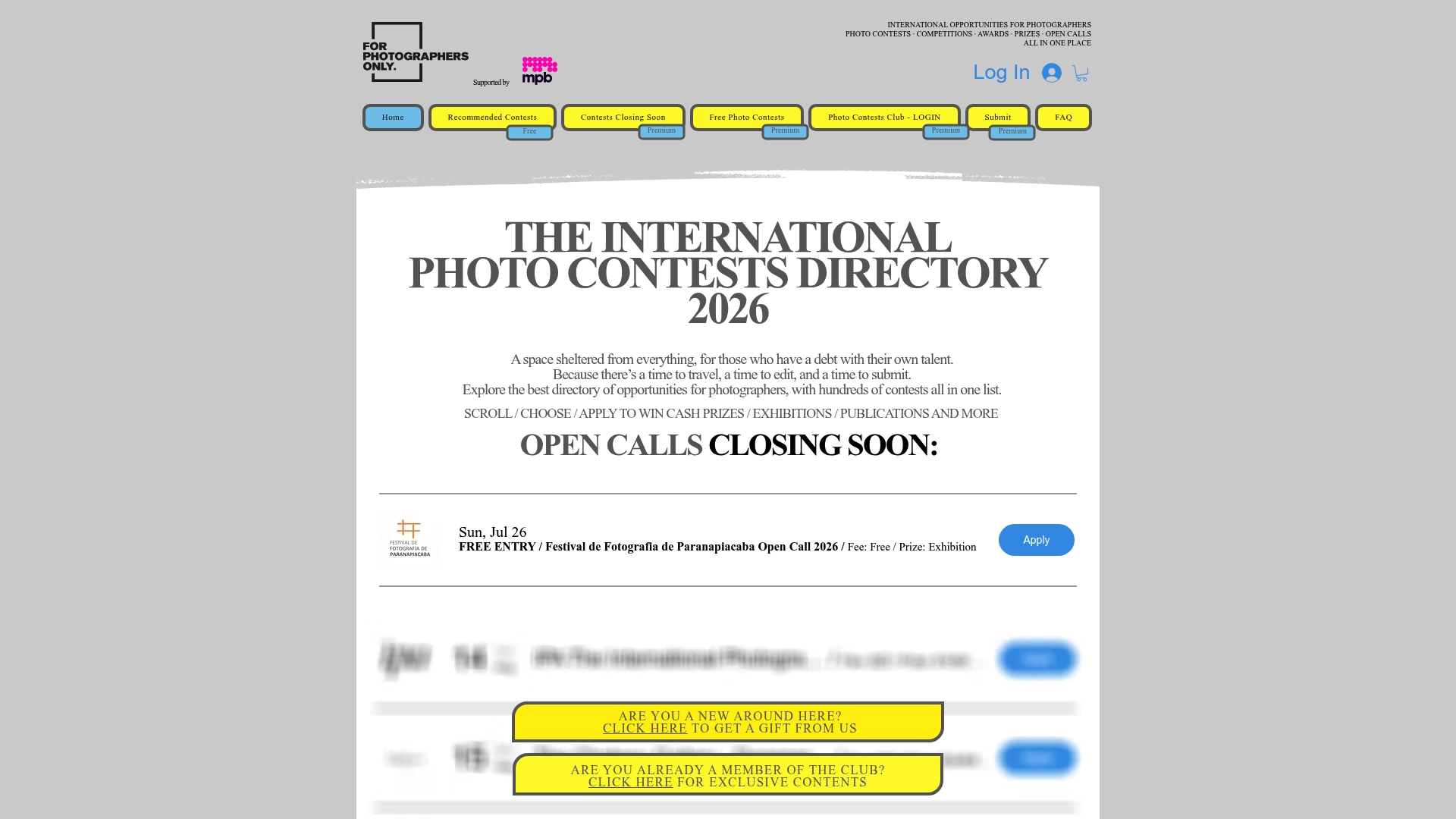
The directory tracks more than 320 active international photography contests, including over 100 free-to-enter opportunities, updated every week. Listings cover competitions from organizers including Nikon, Canon, and National Geographic, alongside high-quality niche awards and open calls that rarely surface in a standard search. Each listing includes the deadline, entry fee, prize details, and genre, so you can match a contest to your work in seconds rather than minutes.
For photographers ready to apply the strategies in this guide, the Creative Quarterly Competition and the Nature Photography Contest are strong starting points, both curated and currently active. Browse the full contest directory to find the opportunities that fit your genre and timeline. A subscription costs €6 per month, and a free trial is available. Always verify the rights terms and eligibility rules directly with each organizer before submitting.
Sources
Recommended