Beat Panels, Win More: Grant vs Award Photography for Photographers
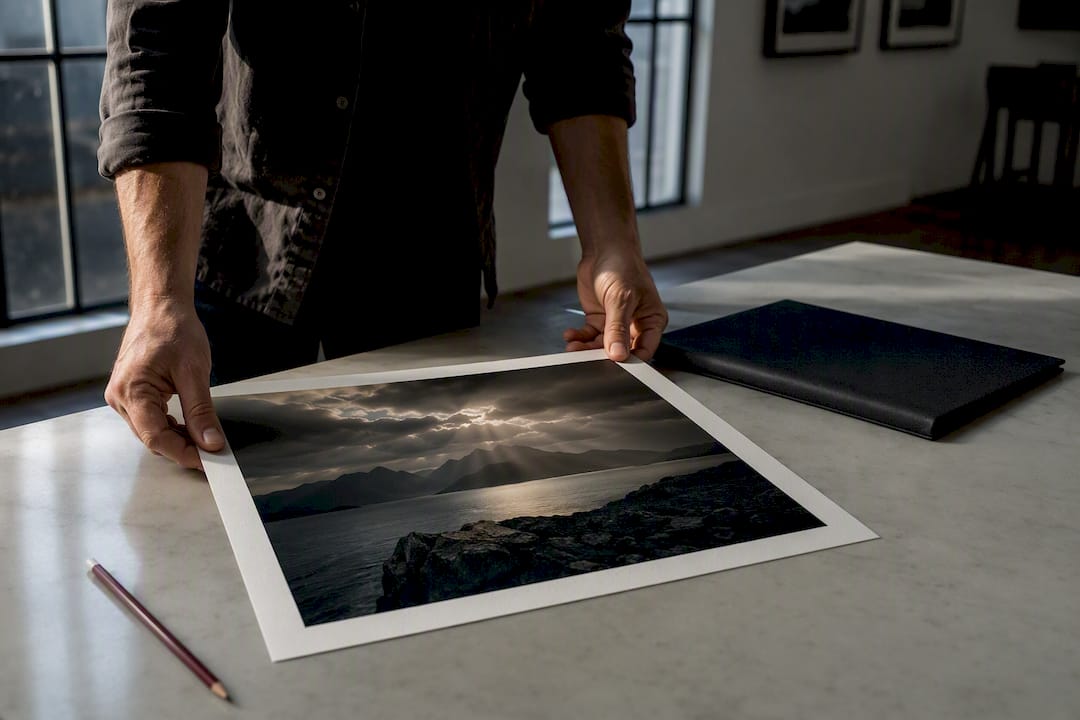
Grants fund photography that does not exist yet. Awards recognize photography that already does. If you need money to shoot, travel, or edit a project, apply for a grant. If you have finished work worth showcasing, enter an award or competition instead. Most working photographers eventually pursue both, on different timelines, for different reasons.
TL;DR:
Most grant applications are rejected, but maintaining reusable materials and reapplying sharply increases chances of success over time.
Grants fund project development stages like travel and editing, while awards recognize finished work, often with broader eligibility requirements.
Properly understanding evaluation criteria involves knowing that panels review proposals step-by-step, whereas judges focus on visual impact and series coherence.
Building a focused, step-by-step application process, including a clear project summary and realistic budget, improves your chances of securing funding.
Using a curated directory and tracking deadlines systematically can help photographers efficiently find suitable opportunities and avoid missed offers.
Table of Contents
Grant vs Award Photography: The Core Differences That Matter
The grant vs award photography question comes down to timing and intent. A grant is production money, handed over before the work is finished, on the strength of a proposal. An award is recognition, handed over after the work is finished, on the strength of the images themselves. That single distinction shapes everything else: who funds each, what they ask you to submit, and what you owe them afterward.
Funders differ by category, too. Grants typically come from foundations, non-profits, and mission-driven institutions, such as the Smith Fund, the National Geographic Society, and university or government exchange programs like Fulbright. Awards more often come from camera brands, magazines, galleries, and photography festivals running annual competitions with entry fees and cash prizes.
Deliverables split cleanly along the same line:
Grants require a written project description, a proposal explaining what you intend to make, a detailed budget, a timeline, work samples showing your style and access to the subject, and a CV.
Awards require the finished images themselves, usually as a single standout frame or a tightly edited series, plus a short caption or artist statement.
Grants rarely charge application fees; awards frequently do, ranging from free entry to $50 or more per submission depending on prestige.
Eligibility for grants often narrows by nationality, career stage, or subject matter; award eligibility is usually broader but restricted by genre or capture date.
Rights and licensing diverge in ways that surprise first-time applicants. According to a widely cited breakdown on Academia Stack Exchange, grant recipients typically retain full creative control and copyright over the finished work, since the funder’s interest is in seeing the project completed, not in owning it. Award organizers, by contrast, sometimes require a license to publish, exhibit, or promote winning images, occasionally for years after the win. Read that clause before you enter. A $500 prize that comes with an exclusive multi-year licensing grab is a worse deal than it looks, especially if the image later becomes a portfolio centerpiece you cannot freely relicense.
Who Funds Photography Projects and What They Actually Pay For
Grants rarely fund gear, and they almost never fund work you have already shot. What they pay for is the gap between an idea and a finished project: travel to a subject, weeks of production time, editing and sequencing, printing for exhibition, and sometimes a modest artist fee to cover living costs while you work.
Funder types break down roughly like this:
Photography-specific foundations (the Smith Fund, Alexia Foundation) fund humanistic documentary and photojournalism projects, often with a strong preference for social relevance.
Media and journalism institutions (National Geographic Society, the Pulitzer Center) fund reporting-driven visual work tied to a story or investigation.
Government and exchange programs (Fulbright) fund research or cultural exchange projects where photography is the method, not necessarily the subject.
State and regional arts councils fund local or resident artists, often with lower competition than international programs.
Camera and lifestyle brands occasionally run project grants alongside their award programs, usually tied to a marketing theme.
One underused move: map your subject to funders outside photography entirely. A project on coral bleaching can pit you against thousands of photographers for a photo grant, or you can apply to an environmental NGO whose mission matches your subject and whose applicant pool has never heard of you. That second path often has far less competition.
Pro Tip: Before you pay an application fee, check for a fee waiver. Many foundations quietly waive fees for applicants from lower-income countries or early-career artists who ask directly.
How Grant Panels and Award Judges Read Your Submission Differently
Grant panels and award judges are not evaluating the same thing, and treating them the same is the single most common reason strong photographers lose both.
Grant panels read in a fixed order, and each element has to prove something specific. Panels typically move through the project description first, then the full proposal, then the budget, then the portfolio, then the CV, according to guidance from Firecracker. The description proves the project matters. The proposal proves you have a plan. The budget proves the plan is realistic. The portfolio proves you can execute it. The CV proves you can be trusted with the money.
Award judges start with the image, not the pitch. Competitions weigh visual impact, technical execution, originality, and how well a series holds together as a sequence, closer to how a contest judging rubric scores finished entries than how a funder scores a proposal.
The most common grant mistake is submitting a finished project dressed up as a proposal. Grant programs frequently disallow funding completed work outright, and a proposal that describes a project in past tense reads as already funded, which panels read as a request for free money rather than production support.
The second most common mistake is a vague or padded budget. Line items like “miscellaneous expenses: $2,000” signal you have not thought through the shoot, and panels notice.
Apply the decision rule before you write a word: if you could publish the project tomorrow, it belongs in an award. If it needs another six months, another country, or another round of access you do not yet have, it belongs in a grant.
How to Build a Competitive Grant Proposal Step by Step
A grant-ready application is not one document. It is five coordinated pieces that all point back to the same story, and building them in the right order saves you from rewriting everything twice.
Write a one-paragraph summary with urgency built in. State what the project is, why it needs to happen now, and what stage of the work the grant money unlocks. Panels reportedly respond well to proposals that name a concrete next stage rather than a vague ongoing mission.
Write the full project proposal around outcomes, not intentions. Describe where the work will be shown or published, who the audience is, and what changes because the project exists. A proposal that ends with “and then I will see what happens” reads as unfinished thinking, not an open-ended process.
Build a budget with real line items and a visible contingency. Break costs into travel, lodging, equipment rental, local guides or fixers, editing time, and printing, then add a 10% contingency line. Include a modest artist fee. Reviewers expect one and its absence reads as inexperience, not humility.
Sequence a portfolio that proves access, not just skill. Most guidance points to 15 to 20 images that show you can already get close to the subject, arranged to demonstrate a visual arc rather than a greatest-hits reel. Caption each image briefly with location and context; unexplained images cost you credibility points.
Assemble a submission checklist before you touch the portal. Confirm word and character limits, image file specs, reference or CV format, and the specific attachments requested, since incomplete submissions are disqualified before a panel ever reads the pitch.
Keep a master version of your CV, artist statement, and budget template on hand at all times. Tailoring reusable materials to each funder, rather than starting from a blank page every time, is what separates photographers who apply to ten programs a year from those who manage two, according to a practical step-by-step guide from Ziip Foundation.
Pro Tip: Have someone outside photography read your proposal summary. If they cannot explain your project back to you in one sentence, a panel member skimming forty applications will not either.
Choosing and Preparing a Strong Award Entry
Award entries live or die on editing, not effort. The photographer who submits their single strongest frame usually beats the one who submits an uneven ten-image series padded with filler.
Choose a single image when the work’s strength is one decisive moment; choose a series only when the images build meaning together and each one earns its place.
Keep captions and artist statements short. Judges read hundreds of entries in one sitting, and a caption that takes thirty seconds to parse works against you.
Weigh entry fees against the competition’s actual reach. A $30 fee for a competition with gallery placement, press coverage, or a National Geographic-style platform is a different bet than the same fee for an unknown contest with no distribution.
Check for free-to-enter options before assuming fees are unavoidable; plenty of reputable competitions charge nothing.
Treat wins as visibility infrastructure, not endpoints. A placement in a well-known award like the Form Photography Photo Award becomes a credential you cite in every future grant CV.
What Happens After You Win: Payments, Rights, and Taxes
Winning is the easy part to imagine and the hard part to manage. Grants and awards both come with obligations that outlast the celebration.
Grants often pay in stages tied to deliverables, not as one lump sum. The W. Eugene Smith Grant paid a $30,000 main award for 2026, released against a project timeline that requires final deliverables within 18 months, with staged payments contingent on progress reports.
Missed stages can delay or forfeit remaining payments, so build your shooting and editing schedule around the funder’s stages, not your own optimism.
Read licensing clauses before you sign, not after. Some awards claim promotional rights to winning images for a set period; some grants claim none at all beyond a credit line.
Grant and award income is generally taxable in the United States as self-employment or miscellaneous income, and a qualified tax preparer familiar with creative-industry finances can tell you how a specific award applies to your situation.
Keep receipts from day one. Travel, gear rental, and production costs tied to a funded project are often deductible business expenses, but only with documentation.
Real Grants and Awards Worth Studying Before You Apply
Studying how established programs structure their calls teaches you more about grant vs award photography than any general advice can.
W. Eugene Smith Grant: A humanistic documentary photography grant administered by the Smith Fund, paying a $30,000 main award for 2026 in staged payments against a proposal, budget, and portfolio submission. It is the clearest working example of a pure production grant.
National Geographic Society funding: Runs RFP-based funding cycles for reporting and exploration projects, with eligibility and formats that shift by cycle, so applicants need to check the live request for proposals rather than assume a standing template.
U.S. Fulbright grants: Institutional research and exchange funding where photography is often the method rather than the stated subject, worth exploring for project-based international work.
Alexia Foundation grants: Support documentary and photojournalism projects with a strong emphasis on social impact, typically requiring a written proposal alongside sample images.
Pulitzer Center reporting grants: Fund journalism projects, including visual reporting, tied to a specific story with clear public-interest framing.
Every one of these publishes its own deadlines and eligibility rules, and those change year to year, so treat this as a starting map rather than a final answer.
How Forphotographersonly Helps You Track Grants and Awards
Finding the right call is half the battle, and it is the half most photographers underinvest in. Forphotographersonly maintains a directory of 320 to 330 active international photography opportunities at any given time, including more than 100 free-to-enter competitions, updated weekly so a deadline never quietly expires while you were not looking.

Rather than searching a dozen foundation and brand websites individually, you scan one continuously updated list and match projects to funders by genre, deadline, and entry cost. Photographers weighing grants available right now alongside upcoming awards can cross-reference both in the same sitting, and understanding how judging criteria work helps you decide, before you write a word, whether a given call wants a proposal or a finished frame.
Building a Grant Pipeline Instead of Chasing One Deadline
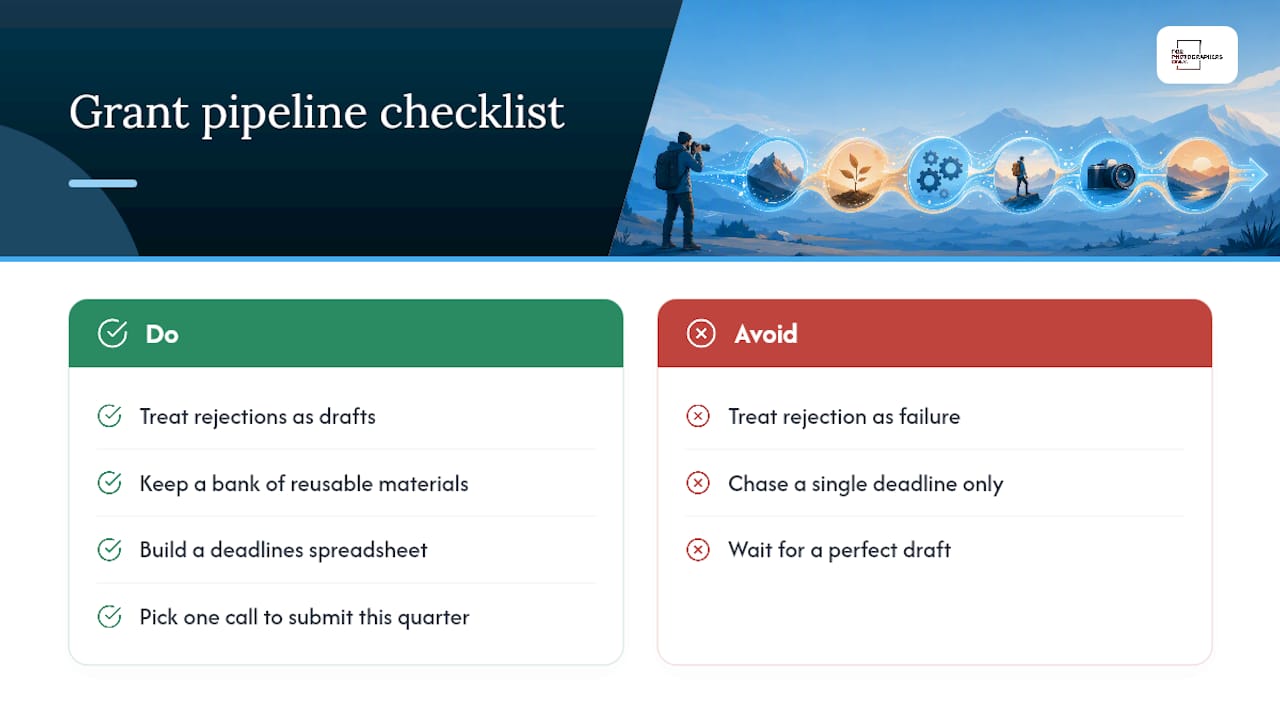
The photographers who win grants consistently are not the most talented in the room. They are the ones who treat every rejected application as a working draft instead of a dead end.
Keep a bank of reusable materials: a current CV, a flexible project statement, a budget template you adjust per call. Competitive programs commonly accept only 5 to 15% of applicants, which means a strong proposal loses far more often than it wins, and reapplying with a sharper draft is the normal path, not a failure. Build a spreadsheet of deadlines this month, and pick one call to submit before the quarter ends. Momentum beats perfection.
— DARIO
Access Curated Grants and Awards Without the Weekly Search
Forphotographersonly exists for exactly the problem this article just walked through: figuring out which of the hundreds of open calls out there actually fit your project and your timeline. Instead of bookmarking a dozen foundation pages and checking each one manually, a PhotoContestsClub membership puts 320 to 330 active contests, grants, and awards on a single continuously updated page, including over 100 free-to-enter options, for €6 per month or €40 per year.
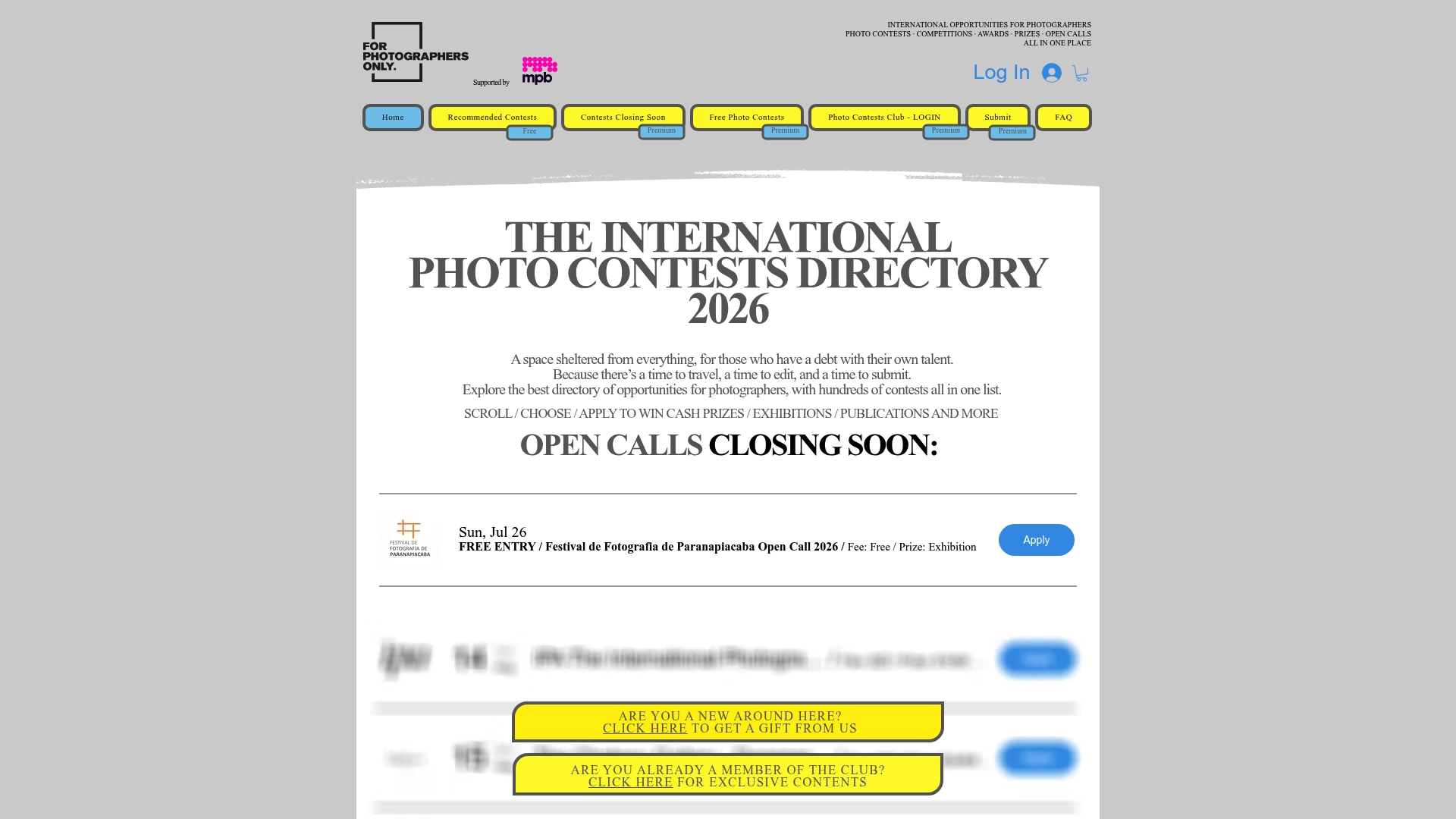
Use it the way this guide suggests: filter for grants when your project needs production funding, filter for awards when you have finished work ready to submit, and check deadlines weekly instead of hunting for them from scratch. If you are also thinking about visibility beyond the win itself, a complementary route worth knowing about is SEO support built for photographers, which helps winning work actually get found after the announcement fades. Start your subscription today and stop losing opportunities to a missed deadline.
Where to Verify Grant and Award Details Before You Apply
Every program mentioned here updates its rules, deadlines, and eligibility from cycle to cycle, so confirm current details directly on the official page before drafting anything.
W. Eugene Smith Grant official page, for current award amounts and payment stages.
National Geographic Society grants and investments, for active RFP cycles.
Fulbright U.S. Program types of grants, for research and exchange grant categories.
Firecracker’s guide to grant panel reading order, for a deeper breakdown of evaluation priorities.
Ziip Foundation’s step-by-step application guide, for a practical walkthrough of common pitfalls.
Eligibility windows and award amounts shift yearly, so treat these as your verification stops, not your final answer.
Sources
FAQ
What Is the Difference Between a Grant and an Award?
A grant funds a project before it is finished, based on a written proposal and budget, while an award recognizes work that is already complete, based on the images themselves.
Can a Grant Be Considered an Award?
Not typically. A grant is production funding tied to future deliverables, while an award is recognition or a prize for finished work, though some programs blur the line by calling a project grant an “award” in their branding.
How Do I Apply for Photography Grants?
Build a project proposal, a realistic budget, a portfolio showing access to your subject, and a current CV, then tailor those materials to each funder’s stated mission and submission format, as outlined above.
How Many Photographers Earn Over $300,000 a Year?
There’s no reliable public data on how many photographers earn that much, and success at that level typically comes from a mix of commercial work, licensing, and reputation built through awards and grants rather than any single funding source.
What Is the 20/60/20 Rule in Photography?
Definitions vary depending on who is using the term, and it is not a standardized funding or judging framework referenced by the grants and awards discussed in this guide.
Does Forphotographersonly List Both Grants and Awards?
Yes. The directory tracks both grant programs and award competitions, updating weekly, with over 100 free-to-enter listings available alongside paid-entry opportunities on the contests page.
Recommended