How to Exhibit Photography Internationally Through Contests
A focused, juried international contest that includes a confirmed exhibition and publication component is one of the fastest, verifiable routes to exhibit photography internationally. Not every contest gets you there. The ones that do share a pattern: a credible organizer, named judges, and a stated exhibition partner. Here’s what to do next.
Check For Photographers Only for curated, exhibition-linked listings.
Run a fast vet on any contest using an organizer, judges, exhibition-details, image-rights checklist.
Prepare one polished entry package that matches specs exactly and includes signed releases.
Forphotographersonly tracks more than 320 active international contests, updated weekly, with over 100 free-to-enter listings.
Key Takeaways
Juried international contests with named judges, confirmed exhibition venues, and transparent image rights are the most reliable route to exhibit photography internationally.
Point | Details |
Vet before you enter | Confirm organizer credibility, named jurors, and stated exhibition venue before paying any fee. |
Budget beyond the entry fee | Printing, framing, shipping, and insurance are often the artist’s responsibility even in gallery shows. |
Prepare for universal readability | Write captions and statements that need no local context, and confirm releases before submitting. |
Document every win | Save award notices, screenshots, and press mentions to use in future grant and residency applications. |
Use a curated directory | Forphotographersonly lists 320+ vetted international contests, updated weekly, to cut research time. |
Table of Contents
Why Exhibition-Focused International Contests Matter for Your Career
Where to Discover Reputable International Contests and Exhibition Calls
How Do You Turn a Shortlist or Win Into Publication and Career Opportunities?
Which Directories Save the Most Time Finding Exhibit Photography Contests?
How Should You Tailor Your Portfolio for International Juries?
Why Exhibition-Focused International Contests Matter for Your Career
A single win rarely changes a career. A pattern of smart, well-chosen entries does. The real payoff of contest-driven exhibitions comes from who encounters your work afterward, not the trophy itself. A meaningful result tied to a respected organization, strong jury, and exhibition program reaches editors, curators, and creative directors who remember names.
That’s the distinction worth internalizing: short-term prizes pay you once; long-term leverage pays you repeatedly, through press mentions, curatorial invitations, and residency offers that surface months or years later.
Credibility signals travel with your name long after the show closes.
Publication features often outlast the exhibition run itself.
Jury connections can lead to studio visits, portfolio reviews, and future submissions.
Scale matters too. The CEWE Photo Award drew more than 650,000 entries in 2025 with a combined prize pool of €250,000, proof that exposure and competition intensity rise together.
Where to Discover Reputable International Contests and Exhibition Calls
Finding calls that genuinely lead to exhibitions takes more than a search engine query. Start with a curated, weekly-updated directory like Forphotographersonly, which filters out dead listings and fee-driven traps before they reach you. From there, widen your search across a few reliable channels.
Curated directories: platforms that vet organizers and update listings regularly, saving hours of manual research.
Festival and museum open calls: juried group shows tied to physical venues and often touring partners.
Publisher and magazine competitions: contests where the prize includes a print or digital feature alongside exhibition space.
Artist residencies and grant programs: less about instant exhibition, more about long-term studio time and eventual showcase.
Established body-of-work competitions: programs like Critical Mass, run by Photolucida, function as launching pads, connecting finalists to editorial attention and lasting career relationships.
Check any organizer’s past-winners page before entering. If previous participants can point to a real show, a magazine spread, or a gallery representation deal, that’s a strong signal the current cycle will deliver the same. Our call for photographers breakdown covers what a legitimate call-for-entry notice looks like versus a vague one.
Pro Tip: Set up email alerts and follow contest organizers on social media weeks before deadlines. The best exhibition slots often fill through early-bird entries, and late submitters miss curator walk-throughs or artist-talk invitations.
How Do You Know a Contest Is Worth Entering?
Not every “international exhibition opportunity” is what it claims. Some are legitimate juried shows with real gallery partners. Others exist mainly to collect entry fees. Run this checklist before you submit anything.
Organizer credibility. Search for the organizing body’s history, affiliated museum, gallery, publisher, or academic institution.
Named jurors with bios. Reputable contests list who is judging and why they’re qualified, not just “a panel of experts.”
Explicit exhibition details. Venue name, curator, run dates, and any touring partners should appear in the official terms, similar to how the Arte Laguna Prize specifies Arsenale Nord in Venice alongside partner galleries and e-commerce exposure for finalists.
Published past winners. Confirm the exhibition actually happened and that winners talk about it publicly.
Transparent image-rights language. Usage terms should be specific, time-bound, and limited to promotional use.
Watch for red flags: vague rights clauses granting perpetual usage, no named exhibition partner, unverifiable “past winners,” or entry pages that read more like a sales funnel than a call for art.
Verify jury bios independently, not just on the contest’s own site.
Look for third-party press coverage of prior editions.
Confirm museum, gallery, or publisher affiliations through their own websites, not just the contest’s word.
Pro Tip: If an organizer can’t name a single past winner or exhibition venue when you email them directly, that silence tells you everything you need to know.
How Do You Prepare an Entry That Reads Internationally?
International juries weigh the same fundamentals as local ones, clarity, technical skill, impact, but they place extra weight on universal readability. A caption that assumes local context can lose a juror in another country entirely. Judging criteria research confirms that entrants who answer the stated theme directly, with proper releases attached, consistently outperform technically flashier but off-theme submissions.
Decide early whether a single image or a series serves your project better. A series needs a clear sequence, an opening frame that establishes tone, and a closing frame that resolves it. A standalone image needs to carry its entire narrative weight alone.
Match resolution, color space, and file naming exactly to the contest’s published specs.
Embed complete metadata and attach model or property releases before you upload anything.
Write captions that explain context a stranger from another country would need, without over-explaining the image itself.
Keep your project description to a few tight sentences; jurors reviewing hundreds of entries reward clarity over flourish.
Draft your caption and statement first, then edit for length and jargon.
Test your files against the contest’s technical specs before the deadline, not the night of.
Confirm every release form is signed and dated.
Administrative missteps disqualify strong work before a judge ever sees it. Submission specs research is blunt about this: incomplete metadata or missing releases can end an entry at the screening stage.
Pro Tip: Open your final export on a device other than the one you edited on. Color shifts and compression artifacts often only show up once a file leaves your original screen.
What Should You Budget for Entry Fees and Exhibition Costs?
Entry fees are only the first line item. Many exhibition prizes cover gallery space and curatorial work but expect the artist to handle everything else, printing, framing, shipping, and insurance, even at prestigious venues. Reporting on gallery exhibition arrangements makes clear that this cost split is common and rarely advertised upfront.
Treat every submission like a business expense with an expected return, not a hobby purchase. A $30 to $50 fee for a juried show with a named venue and real jury is often reasonable. A $75 fee with no listed judges or exhibition partner is a warning sign.
Read the fine print for who pays production costs before you submit, not after you win.
Build a simple deadline calendar tracking entry dates, notification windows, and shipping deadlines.
Save every award notice, contract, and screenshot; you’ll need them later for press and grant applications.
With over 650,000 entries flooding contests like CEWE in a single year, budgeting deliberately, rather than entering everything, keeps your submission strategy sustainable.
How Do You Turn a Shortlist or Win Into Publication and Career Opportunities?
A win that sits quietly on your website does nothing for your career. Treat placement as the start of an outreach campaign, not the finish line.
Document the placement immediately: screenshot the announcement, save the award certificate, and update your CV and artist statement the same week.
Prepare a short press kit, high-resolution files, finalized captions, and a brief project statement, ready to send on request.
Email targeted editors and curators directly rather than waiting for them to find you.
Offer an exhibition walk-through or artist talk if the show has a physical venue.
Pitch the win to niche and local press outlets who cover regional artists making international marks.
Reference the win in every grant and residency application going forward; jurors and editors often re-encounter finalists years later for books, features, and solo shows.
Use the recognition as leverage when negotiating terms with future exhibition partners.
Keep your published images organized and easy to license, since editors move fast once interested. Guidance on showcasing wins without compromising privacy is worth reviewing before you publicize sensitive or personal projects.
Which Directories Save the Most Time Finding Exhibit Photography Contests?
Manually tracking contest deadlines across dozens of festival, museum, and publisher websites eats hours you could spend shooting or editing. A comprehensive directory solves that by centralizing verified listings in one place, updated on a schedule instead of whenever you happen to check.
Forphotographersonly maintains more than 320 active international contests, refreshed weekly, including upwards of 100 free-to-enter opportunities. Listings span brand-backed competitions from names like Nikon, Canon, Leica, and National Geographic alongside smaller juried shows and independent festivals that rarely surface in a general search. The point isn’t just volume. It’s curation: each listing gets checked before it’s published, so you’re not sorting legitimate exhibition opportunities from fee-collecting operations on your own.
[

Other discovery paths still have their place. Festival newsletters, museum call-for-entry pages, and publisher competition announcements each surface opportunities a general directory might miss. Our where to submit photography guide and photography open calls roundup both cover channels worth bookmarking directly.
The efficient approach combines both: use a curated directory as your primary filter, then supplement with direct festival and museum alerts for niche opportunities tied to your specific genre or region. Photographers chasing landscape and wildlife work, for instance, benefit from checking dedicated nature-focused listings alongside general directories, since specialty contests often carry less competition and clearer jury expertise in that genre.
How Should You Tailor Your Portfolio for International Juries?
A portfolio built for a hometown gallery doesn’t automatically translate for a jury in Berlin, Tokyo, or São Paulo. International juries are reading your work without the shared cultural shorthand a local audience brings, so clarity has to carry more of the weight.
Start with sequencing. Lead with your strongest, most universally legible image, not your most personally meaningful one if the two differ. A juror scanning hundreds of portfolios in an afternoon needs the first frame to establish competence and vision immediately.
Avoid symbols, gestures, or references that only read clearly within one culture; if a visual cue needs a footnote to make sense, reconsider its placement or add context in your caption.
Write your artist statement in plain, direct language. Ornate prose translates poorly and reads as vague to non-native English-reading jurors.
Keep technical jargon minimal; describe your process in terms a curator, not just a fellow photographer, would understand.
Research the specific contest’s past winners to gauge the visual language and thematic range that jury has historically rewarded.
Consistency matters more internationally than variety. A tightly edited series of eight strong images beats a scattered twenty spanning multiple unrelated projects. Jurors reviewing global submissions are looking for a clear point of view they can describe in one sentence to their co-jurors. If your statement and your images don’t reinforce the same idea, tighten the edit until they do.
What Persistent Entrants Learn That Others Miss
Contests reward pattern recognition more than talent alone. The photographers who build real momentum treat each entry as a data point: which themes resonate, which juries respond to their style, which organizers actually deliver on exhibition promises. That takes documentation, not memory.
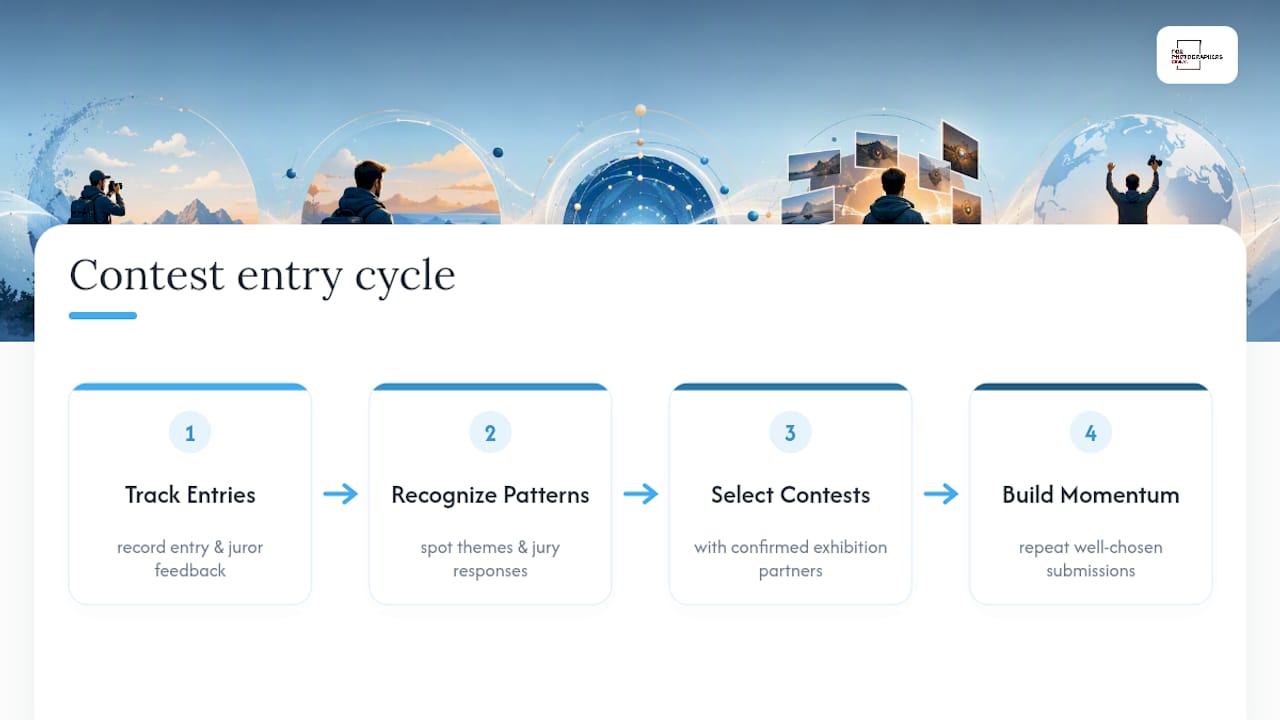
Keep a running record of every entry, outcome, and juror feedback you receive. Repeated, well-chosen submissions to contests with confirmed exhibition partners compound in ways a single high-profile win never will. A curated directory removes the guesswork of deciding where to spend that effort next.
Save Time Vetting Contests With a Curated Directory
Forphotographersonly exists so you spend your evenings editing photographs, not cross-referencing contest terms and conditions across forty browser tabs. Every listing on the platform has already passed the kind of organizer, jury, and exhibition-details check this article just walked you through.
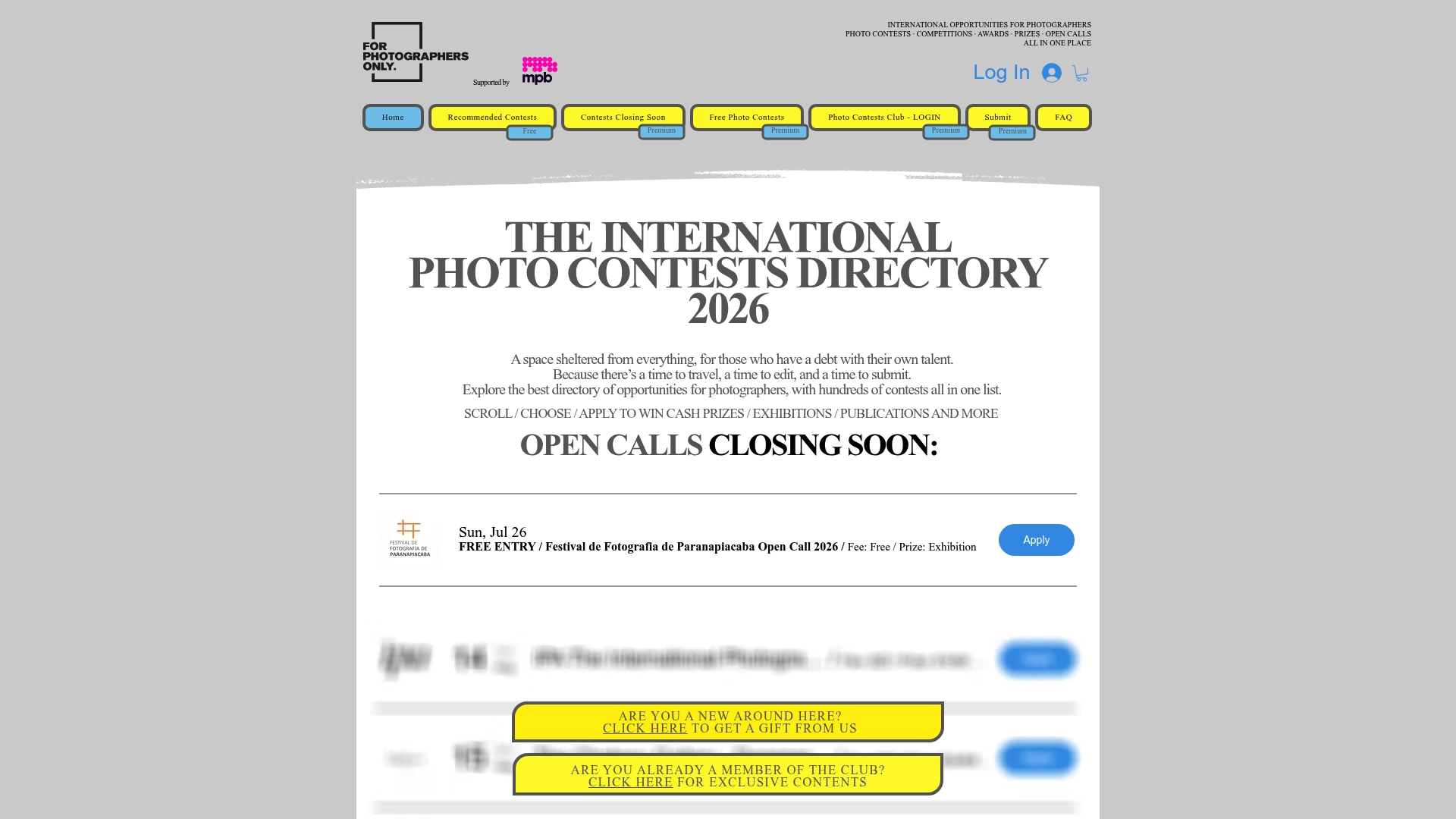
The directory currently tracks more than 320 active contests worldwide, refreshed weekly, with over 100 free-to-enter listings included. That means when a new opportunity like the Creative Quarterly Competition, which pairs a call for entries with publication exposure, or The Nature Photography Contest appears, it’s already vetted and sitting in your feed instead of buried in a search results page. A subscription runs €6 per month and unlocks the full, continuously updated listing, along with member perks like saved searches, deadline alerts, and a monthly internal competition exclusive to subscribers.
Browse the full contest directory now and start building your submission calendar for the year ahead.
Frequently Asked Questions
Do I need to pay entry fees to exhibit photography internationally? Not always. Forphotographersonly lists over 100 free-to-enter contests, though reputable paid contests with confirmed juries and venues can still be worth the fee if the terms are transparent.
How many contests should I enter per year to build real momentum? There’s no fixed number, but photographers who track outcomes tend to prioritize quality over volume, entering fewer, better-vetted contests with confirmed exhibition partners rather than dozens of unverified calls.
What’s the difference between a juried contest and an open call? A juried contest involves a named panel scoring entries against stated criteria, while an open call may simply invite submissions for a themed show without competitive judging. Both can lead to exhibition, but juried contests typically publish clearer selection criteria.
Should I ever agree to give up full image rights to enter a contest? Be cautious. Reasonable contests request limited, promotional usage rights tied to the competition and exhibition period. Broad, perpetual, or exclusive rights language is a signal to read the terms closely or reconsider entering.
Can a single contest win actually lead to gallery representation? It can, particularly through established body-of-work competitions with strong juror networks, but it’s more common as one step in a longer pattern of visibility built through repeated, well-placed entries and follow-up outreach.
Sources
Recommended