7 Vetted Emerging Photographer Awards for Early Career Photographers
The most valuable emerging photographer awards combine three things: a transparent jury, a real career benefit beyond cash, and eligibility rules that match your actual career stage. Grants like the Alexia and Stanley Greene Foundation fund long-term projects, while talent awards like AOP and Nikon’s Photo London prize deliver mentorship, exhibitions, and editorial visibility. The strategy that works is simple: shortlist a handful of vetted opportunities that fit your project and career stage, verify eligibility before you pay a fee, and treat each entry as a step toward exposure, not just a lottery ticket.
TL;DR:
Verify the eligibility criteria carefully, including years of experience, residency, income, and exhibition history, to avoid wasting entry fees on ineligible contests.
Focus on competitions with transparent juries, public past winners, and clear prize structures that match your career goals and project focus.
Prioritize submitting cohesive series with accurate technical specifications and a targeted response to the contest theme, rather than disjointed portfolios or generic work.
Keep track of deadlines, entry fees, rights restrictions, and tax obligations using a simple spreadsheet to streamline submissions and avoid administrative errors.
Start by entering three to five well-matched contests that offer career visibility, such as exhibitions or mentorship, instead of pursuing numerous low-quality or unclear opportunities.
Table of Contents
The Best Emerging Photographer Awards and Grants to Enter
Thousands of contests compete for your attention and your entry fee. These seven consistently deliver credible jury panels, meaningful prizes, and real career traction for early-career photographers.
1. International Photography Awards (IPA) IPA runs one of the largest annual competitions open to professional and non-professional photographers worldwide. It’s best for photographers with a polished single image or short series who want visibility inside a large, well-known photography ecosystem. Winners get published exposure and inclusion in the Lucie Awards gala lineage, and the competition publishes past winners publicly, so you can gauge the aesthetic before entering.
2. AOP Emerging Talent Award The Association of Photographers in the UK defines “emerging” as practicing professionally for less than three years, making this a genuinely early-career award, not a marketing label. The prize centers on mentorship and industry visibility rather than a large check, and the AOP frames those relationships as the real payoff for winners.
3. Lucie Foundation Scholarships Lucie casts a wide eligibility net: students, photographers in their first five years of practice, or anyone who doesn’t yet earn the majority of their income from photography can apply. Categories carry published prize amounts and modest entry fees, and the foundation’s judging structure is publicly listed each cycle.
4. John Chervinsky Emerging Photographer Scholarship (Griffin Museum) This is the rare high-quality award with no application fee and no age or residency restrictions. It targets photographers who haven’t yet had a major solo exhibition, awards $3,000, and includes exhibition opportunities at the Griffin Museum.
5. The Alexia Emerging Photographer Grant Aimed at photographers pursuing documentary and social-issue work, the Alexia rewards project proposals rather than finished portfolios. It’s best for photographers with a clear long-form story who need production funding to finish it, not polish an existing one.
6. Stanley Greene Foundation Emerging Photographers Grant This grant offers substantial project funding, up to $10,000, and prioritizes applicants from underserved communities. It’s built for visual storytellers with a documentary project already underway.
7. Nikon / Photo London Emerging Photographer Award Paired with one of the UK’s major photography fairs, this award gives winners exhibition placement at Photo London itself, plus camera equipment. It runs annually with a shortlist announced ahead of the fair, giving finalists real gallery-floor exposure.
Deadlines rotate annually or seasonally across all seven, so track dates as they open rather than waiting for a single fixed calendar window.
How Contest Organizers Actually Define “Emerging”
“Emerging” means something different to every organizer, and misreading the definition wastes both your fee and your time. AOP caps it at under three years of professional practice. Lucie’s definition is broader, covering students, first-five-year photographers, and anyone not earning most of their income from the craft. The Chervinsky Scholarship skips age and residency limits entirely, focusing instead on whether you’ve had a major solo show.
Before you submit, verify these fields on every entry form:
Years of professional practice required (if any)
Student or recent-graduate status requirements
Prior solo exhibition history
Residency or citizenship restrictions
Income threshold definitions (some awards disqualify full-time working photographers)
Log each answer in your submission tracker next to the deadline, so you never enter a contest you don’t actually qualify for.
Choosing Awards That Are Worth Your Fee and Your Time
Thousands of photography competitions launch every year, and not all of them deserve your work or your money. Run every opportunity through the same filter before you enter.
Look for these credibility markers:
A named judging panel with published bios, not just “our expert team”
A public gallery of past winners and shortlisted artists you can actually view
Clear prize structure: is it cash, exhibition, publication, or a mix?
A rights policy limited to promotional use, not full copyright transfer
Entry fee proportional to the prize and exposure offered
Genuine thematic fit between your project and the contest’s stated focus
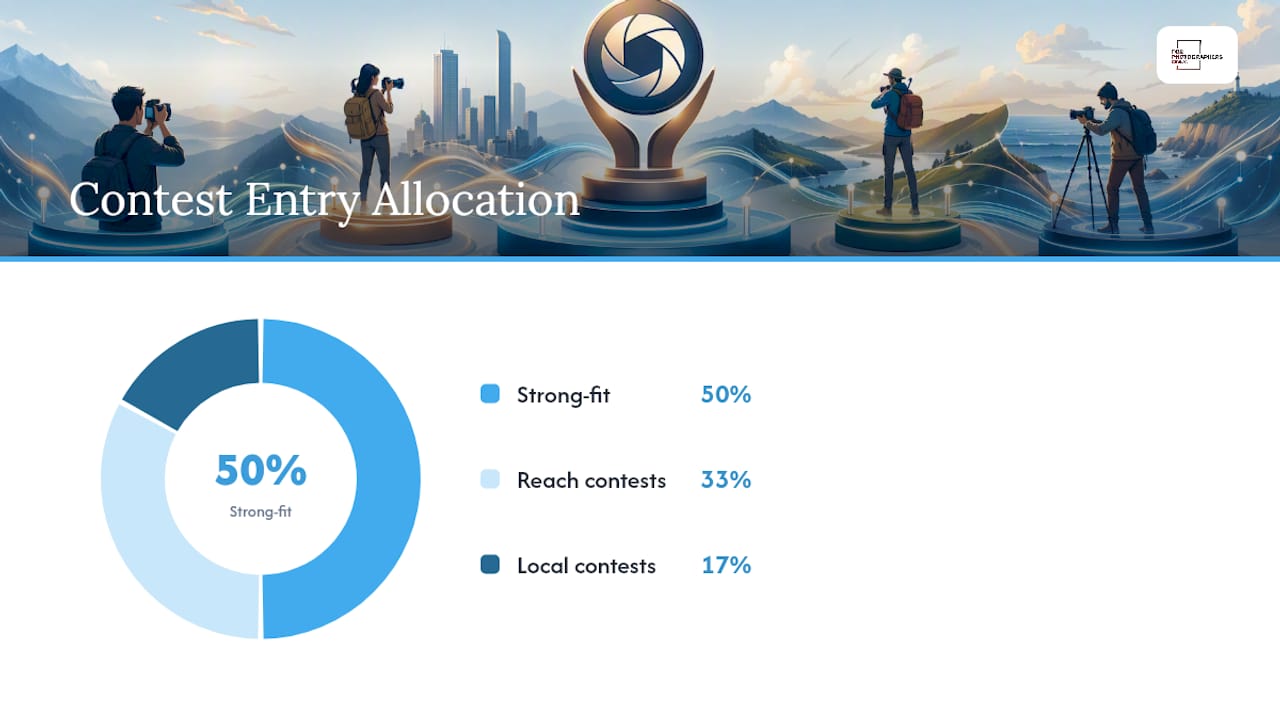
Red flags include vague or unnamed judges, requests for unlimited usage rights, unclear prize delivery timelines, and contests that split into dozens of micro-categories designed to multiply entry fees. A practical triage: pick three contests where your work is a strong fit, two “reach” contests with prestige but tougher odds, and one local or low-stakes contest purely for feedback. Our guide to vetting legitimate contests walks through this same checklist in more depth.
Pro Tip: Keep a simple spreadsheet with columns for deadline, fee, rights terms, and jury names. It takes ten minutes to set up and saves you from ever entering a contest you’d regret.
Preparing an Entry That Actually Competes
A scattered portfolio loses to a cohesive series almost every time. Judges reward images that answer the stated brief directly, so start there before you touch your file exports.
Select for cohesion, not just strength. A tightly themed series of five images usually outperforms five disconnected “best shots,” because judges are evaluating a single visual argument, not a highlight reel.
Match the technical spec exactly. Confirm the required color space (sRGB or Adobe RGB), file size limits, and naming convention. Strip embedded watermarks and check that metadata doesn’t violate the entry rules.
Test your thumbnail. Shrink each image to the size judges will see first. If the composition collapses at thumbnail scale, swap it before submission.
Write a tight artist statement. Two or three sentences that frame the series’ intent beat a paragraph of biography.
Sequence deliberately. Open and close your series with your two strongest images; the middle carries the narrative.
Get a second opinion. A peer critique catches sequencing or clarity problems you’re too close to see.
Rejection is often about brief mismatch rather than image quality. Many contest reviewers note that submissions fail because photographers submit a generic portfolio instead of a targeted response to the theme. Understanding judging criteria before you shoot, not after, changes what you frame in the first place.
Deadlines, Fees, Rights, and the Tax Paperwork Nobody Mentions
Administrative slip-ups sink more entries than weak photography does. Confirm submission through an automated email or your member portal, and check your spam folder before assuming a submission failed, since most organizers send confirmation automatically.
Fees vary widely, and value should scale with prize and exposure, not the other way around.
Fee range | Typically worth it when | Skip when |
— | Chervinsky-style scholarships with strong exhibition value | Rarely a reason to skip |
$20 | Named jury, published past winners, real prize | Judges are unnamed or vague |
— | Major industry brand, large cash grant, festival placement | Category proliferation designed to multiply fees |
On rights, accept only promotional-use clauses. If an organizer demands full copyright transfer or broad perpetual usage rights, treat that as disqualifying and look elsewhere, since reputable foundations explicitly limit their own rights asks to promotion.
Contest winnings are taxable. In the United States, organizers must issue a 1099-MISC when a participant’s prize winnings from that sponsor reach $2,000 or more, but you’re responsible for reporting prize value even below that threshold. Confirm each sponsor’s specific reporting practice before assuming no form means no obligation.
Why This Shortlist Holds Up to Scrutiny
Every award named above was checked against three standards: a transparent jury, a public track record of past winners, and a career outcome beyond a cash prize. The Chervinsky Scholarship, for instance, waives its application fee entirely while still delivering a $3,000 award and museum exhibition space, a combination Lenscratch has highlighted as a marker of contest credibility that’s rarer than it should be.
Vetting criteria that separated the shortlist from the noise:
Named judging panels with public bios and prior-year decisions
Prize structures that go beyond cash: exhibitions, mentorship, publication
Fee transparency and rights terms limited to promotional use
Demonstrable outcomes for past winners, not just marketing copy
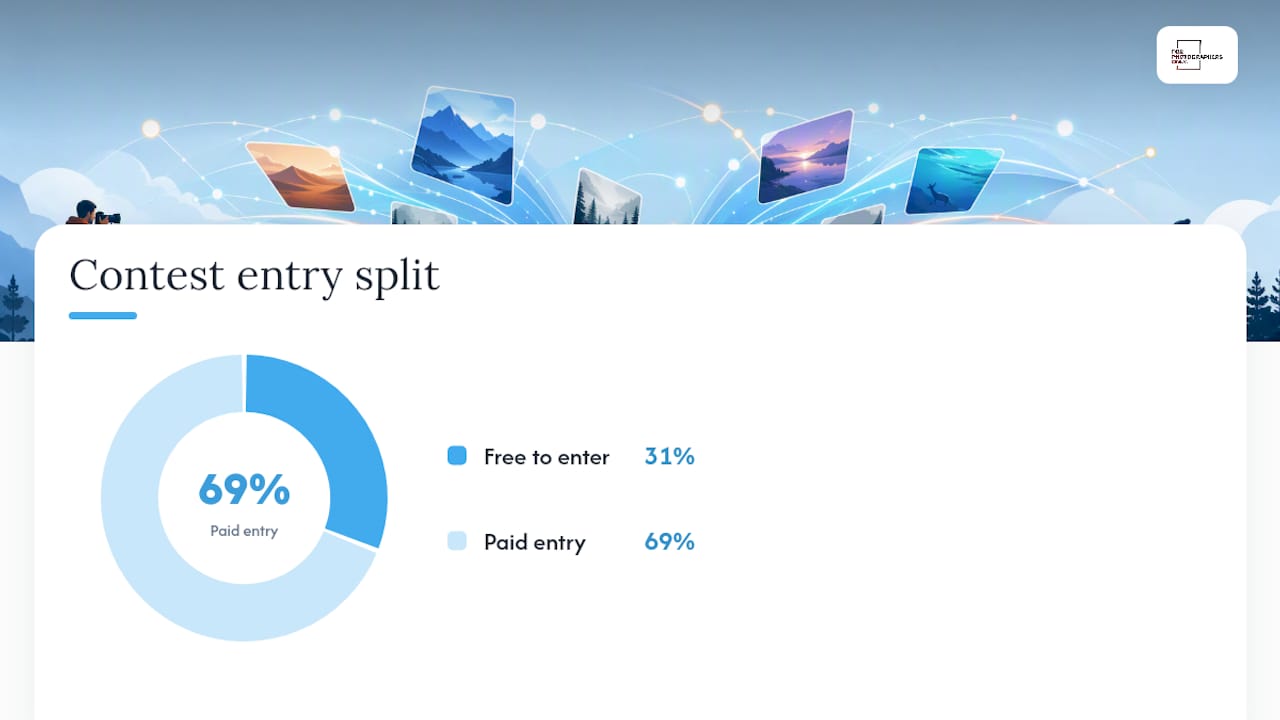
Forphotographersonly applies this same filter across more than 320 active contests, updated weekly, with over 100 flagged as free to enter.
A Curator’s Note on Starting Small
Start with three to five contests that genuinely fit your project, not fifty that don’t. Early in a career, a shortlist mention or a jury comment often does more for momentum than a modest cash prize, because it puts your name in front of curators and editors who remember it later. Treat every rejection as data about fit, not a verdict on your talent, and refine the next entry accordingly.
— DARIO
Let Forphotographersonly Track the Deadlines So You Don’t Have To
Chasing eligibility rules, jury bios, and rights clauses across dozens of contest websites eats hours you’d rather spend shooting. A continuously updated page tracks many active contests, filters free-to-enter opportunities, and lists deadlines and prize details side by side, so you can compare fit in minutes instead of an afternoon.
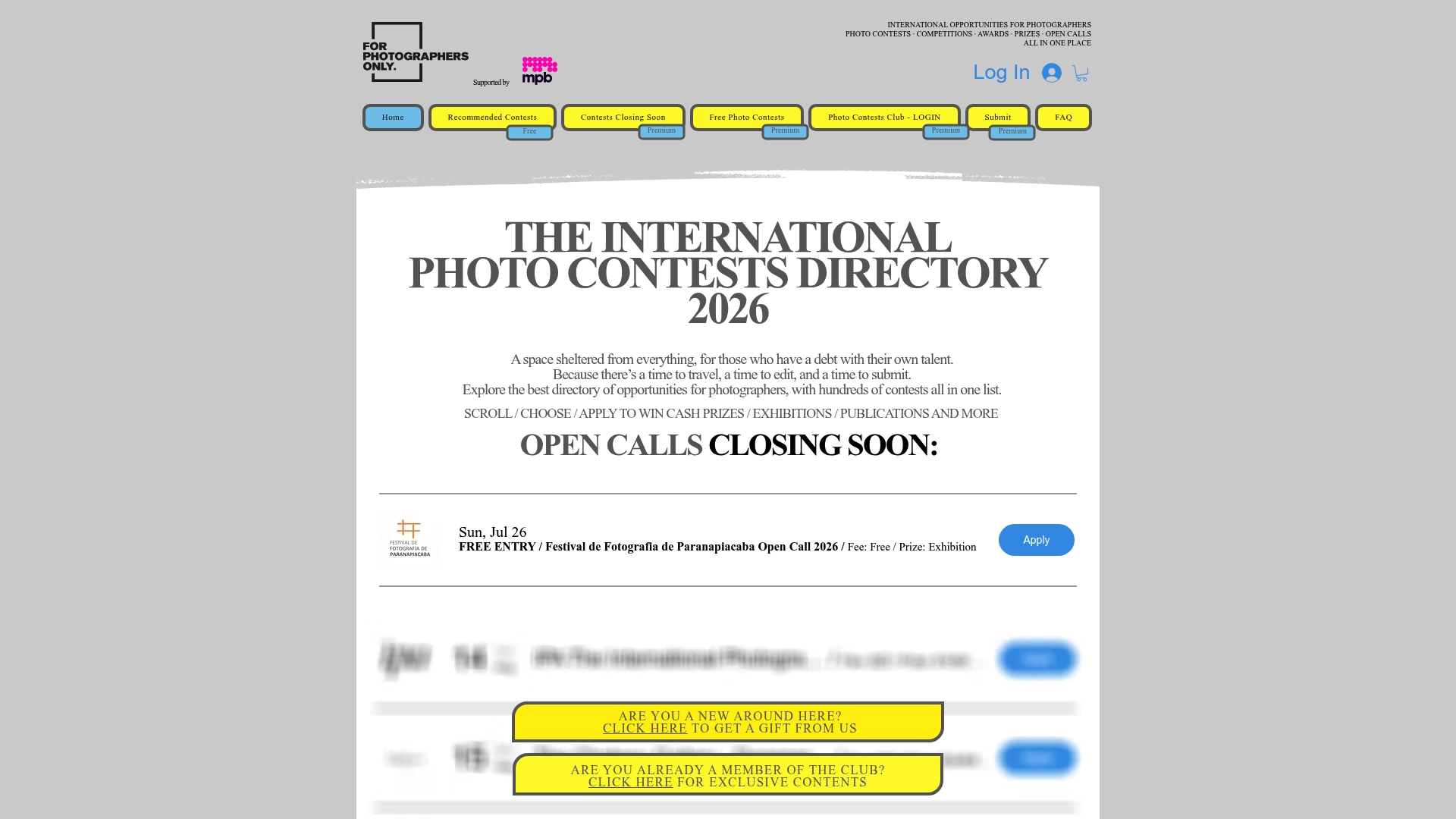
That saved research time also cuts your exposure to predatory contests, since every listing gets curated before it’s published rather than pulled from an unfiltered search result. The directory complements everything covered here: once you know what “emerging” means for your career stage and what a credible jury looks like, you still need a reliable place to find those opportunities as they open. Explore the current listings on Photography Life and start building your shortlist for the next submission window.
Sources
FAQ
What Is the Most Prestigious Photography Award?
Prestige depends on category: IPA carries broad international weight for general competitions, while grants like the Alexia and Stanley Greene Foundation are considered among the most respected for documentary and social-issue project funding.
Who Are the Finalists for the Alexia Grant in 2026?
Finalist lists are published directly by the Alexia Foundation on its own site each cycle; check the foundation’s announcements page for the current year’s shortlist rather than relying on secondhand roundups.
What Is the 20/60/20 Rule in Photography?
Definitions of this rule vary by source and aren’t a standardized judging framework used by the awards covered here, so treat any specific version you encounter with caution rather than as an official contest standard.
What Are Some Free Photo Contests Coming Up in 2026?
The Chervinsky Scholarship charges no application fee and remains open to photographers without a major solo exhibition. Forphotographersonly’s directory flags over 100 free-to-enter contests updated weekly for additional no-fee options.
Are Photography Contest Prizes Taxable?
Yes. Prize winnings count as taxable income in the United States, and organizers must issue a 1099-MISC when a winner’s total from one sponsor reaches $2,000 or more in 2026, though you must report smaller prizes yourself regardless.
Recommended