How to Write Captions That Win Photo Awards
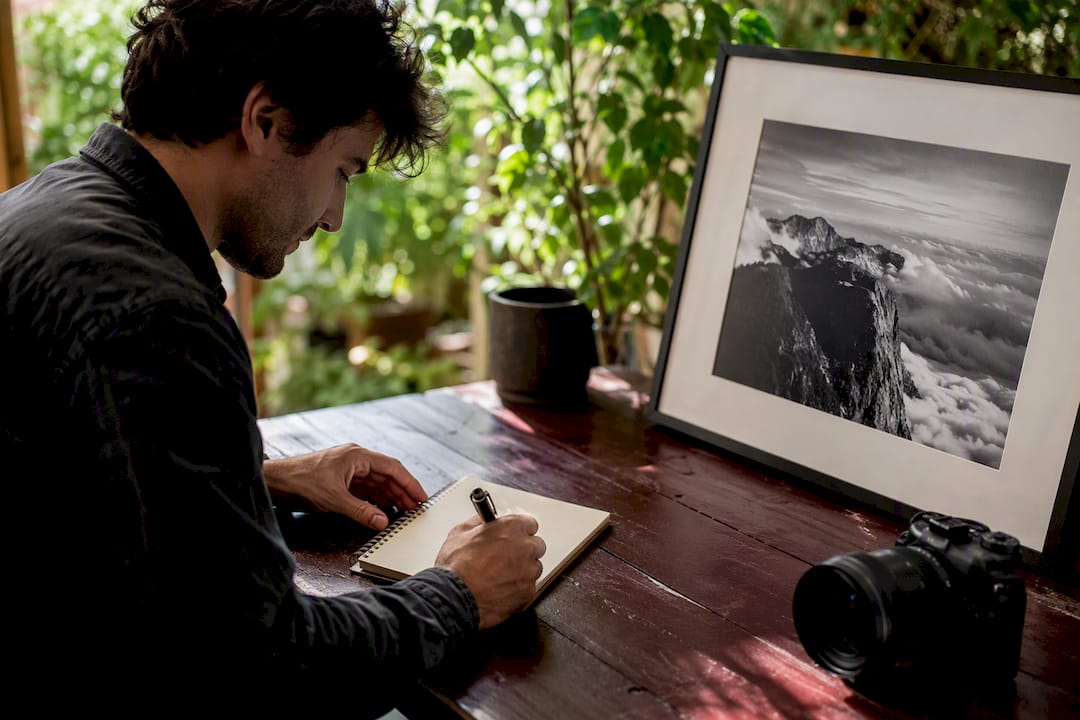
A contest-ready caption states the five Ws in plain language and discloses any staging, permits, or manipulation before a judge has to ask. Before writing a single word, gather the facts a judge cannot see: who is in the frame, where and when it happened, and why the moment matters.
Who: name or describe the subject accurately
What: the action or event, stated plainly
Where: city, region, and country
When: date or timeframe
Why: the context that gives the image meaning
Disclosure: note staging, permits, or post-processing if applicable
Key Takeaways
A winning caption states the five Ws in plain, present-tense language and discloses staging or editing in a single direct line.
Point | Details |
Lead with the five Ws | Cover who, what, where, when, and why before adding any other detail. |
Disclose staging upfront | Use short phrases like “posed with permission” or “composite, combined in post.” |
Match length to the field | Use one sentence for short captions, up to three for extended fields. |
Cut assumed emotion | State observable facts; avoid words like “grieving” or “proud” that guess at feelings. |
Embed captions in metadata | Add IPTC/XMP data and a shortened alt-text version so captions survive platform uploads. |
Where to Check Exact Caption Rules
World Press Photo’s caption requirements for the industry-standard five-Ws and disclosure rules
NANPA’s caption guides for ethics context and contest-specific nuance
Chico State’s storytelling guidance for accuracy, tense, and alt-text conventions
JEA’s scholastic journalism resources for teaching-oriented caption fundamentals
Head On’s competition advice for trimming filler and testing captions by reading them aloud
Table of Contents
What Belongs in Caption Writing for Photo Awards
Caption writing for photo awards succeeds or fails on five facts: who, what, where, when, and why. Judges are not mind readers, and a panel reviewing hundreds of entries will not fill in gaps with generosity. Every fact you leave out is a question mark against your entry.
Who — Name the subject if they are identifiable and willing, or describe their role (“a fisherman repairing nets”) when a name isn’t available. Avoid vague phrasing like “a local person.”
What — Describe the action in one clear clause. “A crew removes storm debris from a coastal highway” beats “a scene of cleanup.”
Where — Give city, region, and country. World Press Photo requires this level of geographic specificity for every entry, and most major contests follow the same standard.
When — A date or a tight timeframe (“early morning, October 2025”) anchors the image in reality.
Why — One sentence of context: what makes this moment worth a judge’s attention.
When a fact isn’t visible in the frame, attribute it. This keeps your caption factual rather than speculative, a distinction judges notice quickly, according to NANPA’s caption guidance, which lists the what, when, where, method, and post-processing as the five elements worth including whenever relevant.
Most entry forms separate a short caption field from an extended description. Use the short field for the five Ws in one or two sentences. Save the extended field for attribution, permits, or backstory a judge might want but doesn’t need to render a first verdict.
Pro Tip: Draft your caption before you crop or edit the image. Writing it first forces you to confirm the facts instead of retrofitting a story to a finished photo.
How Should You Write the Tone and Length of a Caption?
Judges read captions the way editors read wire copy: fast, and looking for reasons to trust the work. Write in present tense when describing an ongoing scene (“a fisherman mends nets at dawn”), which is the convention Chico State’s caption guidance recommends for its immediacy and clarity.
Skip words that assume feelings or judge the moment for the viewer. “A grieving mother” assumes an emotional state you can’t verify from a photograph. “A mother sits beside a hospital bed” states the fact and lets the image carry the emotion. Poynter’s caption guidance makes the same point: a caption should never restate what the image already shows, and should never invent a feeling the photographer can’t confirm.
Length depends on the field:
Title: two to five words, concrete, no puns
Short caption: one sentence covering the core five Ws
Extended caption: one to three sentences adding attribution, context, or disclosure
Cut gear lists unless the contest specifically asks for technical data. A caption cluttered with lens specs and ISO settings distracts from the story rather than supporting it.
Pro Tip: Read your caption aloud before submitting. If it sounds like something a person would say describing the photo to a friend, it will read well to a judging panel too.
When Do You Need to Disclose Staging or Editing?
Judges use disclosure to resolve ethical questions before they cost you the entry. A concise, upfront line about staging, captivity, or compositing does more for your credibility than a caption that reads clean but leaves a judge guessing. NANPA’s contest caption guidance notes that captions carrying enough context to resolve ethical uncertainty can be the difference between an entry that advances and one that gets set aside.
Short, direct phrases work better than paragraph-long explanations:
Wildlife: “photographed at a licensed rehabilitation facility” or “image made under a wildlife photography permit”
Portrait: “posed with the subject’s permission” when direction was given
Documentary: “photographer requested the subject step into the doorway; all other elements unaltered”
Composite work: “composite image, elements combined in post-processing”
World Press Photo’s rules require disclosure whenever a photographer influenced the scene or provided direction, and the same principle applies to Altered Reality categories, where a brief statement of what was changed and whether elements were combined is typically all that’s expected.
One line usually suffices. Save a fuller explanation of method for the extended caption field, and only when the contest rules ask for it.
Templates and Examples for Photography Awards
Unique Photo’s caption framework offers a practical shortcut: one sentence to situate the image, one to explain why it matters, and an optional third sentence only if it deepens understanding, according to Unique Photo’s contest caption FAQ. Use it as your default structure.
Micro (title only): two to five words, no punctuation games. “Last Light, Salt Flats”
Short (one sentence): covers who, what, where, when. “A farmer clears flooded rice terraces near Sapa, Vietnam, after three days of monsoon rain in September 2025.”
Extended (one to three sentences): adds why and any disclosure. “A farmer clears flooded rice terraces near Sapa, Vietnam, after three days of monsoon rain in September 2025. Regional officials report this as the heaviest seasonal rainfall in a decade. Photographed on assignment; no elements altered.”
Before and after, trimmed for judges:
Documentary: Before — “In this photograph, we see a group of firefighters bravely battling a massive blaze that has engulfed the hillside.” After — “Firefighters contain a hillside blaze near Paradise, California, in August 2025.”
Wildlife: Before — “A majestic wolf stares intently into the distance, clearly proud of its territory.” After — “A gray wolf surveys its territory in Yellowstone National Park; photographed from a vehicle at a legal distance.”
Fine art: Before — “An abstract exploration of light and shadow that speaks to the human condition.” After — “Double-exposure composite combining a shoreline at dawn with a hand study; elements merged in post-processing.”
Pro Tip: Delete any sentence that starts with “In this photograph” or “This image shows.” Judges already know they’re looking at a photograph. Head On’s competition advice recommends this exact cut as one of the fastest ways to tighten a caption.
Before submitting, run this checklist: five Ws present, disclosure included if relevant, present tense used, gear list removed, read aloud once.
How to Embed Captions and Handle Submission Fields
Embed your caption in the image’s IPTC or XMP metadata so it travels with the file even if a submission platform strips the visible text field. Write a shortened version, roughly one sentence, as alt text for accessibility, a practice Chico State’s photo caption guidance recommends for any published image.
Check character limits before pasting; many contest fields cut off at 250 or 500 characters
If a contest requires English alongside your native language, keep both versions in a master file
Proofread the caption exactly as it will appear in the entry form, not just in your notes
Keep a running caption file per project so you’re not rewriting from scratch each deadline
Why Trust This Caption Guidance
This guidance draws on contest rules and industry standards rather than guesswork. World Press Photo’s caption requirements and NANPA’s contest caption guides set the bar most major competitions follow.
Forphotographersonly tracks caption and entry requirements across hundreds of active competitions
Rules vary by contest, category, and even judging round
Always check the specific contest’s rules and entry fields before finalizing wording
Adapt these templates rather than pasting them verbatim into every entry
A Quick Note Before You Submit
Every caption I’ve watched improve got shorter, no longer, in the final pass. Use the templates above, read your draft aloud once, and check your target contest’s judging criteria before you hit submit.
Enter Contests With Confidence
Strong captions only matter if you’re entering the right competitions. Forphotographersonly curates more than 320 international photography contests, including over 100 free-to-enter opportunities, updated weekly so you’re never working from a stale deadline list. Members get one continuously updated directory instead of a dozen scattered bookmarks, plus a community of photographers refining entries the same way you are.

Browse current opportunities like the Houston Center for Photography Annual Fellowship Awards or explore the full contest directory to find your next submission deadline. For a subscription that costs less than a single contest entry fee, you get access to the opportunities most photographers never discover in time.
If you’re building out a photography business alongside your contest entries, clear, keyword-aware writing also helps collectors and clients find you; photography-focused SEO guidance covers the same clarity principles that make a caption work.
Frequently Asked Questions
How long should a photo award caption be? A short caption should be one sentence covering the five Ws. An extended caption can run one to three sentences if it adds attribution, context, or a required disclosure.
Do I need to disclose editing for every contest category? Disclosure requirements vary by category and contest. Documentary and photojournalism categories almost always require it; fine art and Altered Reality categories usually just need a brief statement of what changed.
Should I list my camera gear in the caption? Only if the contest specifically requests technical details. Otherwise, gear lists distract from the story and add nothing judges are scoring for.
What’s the biggest caption mistake entrants make? Restating what the image already shows, like “a man is shown walking,” instead of adding facts the image can’t convey on its own.
Sources
Recommended