Enter Botanical Photography Competitions in 6 Steps With PSA Rules

Yes, there are several recurring botanical and nature photography competitions that reward strong plant-focused work, and this page gives you a prioritized shortlist plus a step-by-step entry guide. Two of the most established names are the 2026 Birds & Blooms National Nature Photography Awards and the Botanical Photographer of the Year, run by the Botanical Society of Britain & Ireland. Scan the shortlist below, or jump straight to the entry checklist if you already know where you’re submitting.
TL;DR:
Most reputable botanical photography contests require high-resolution files (around 300 DPI) and often ask for species identification and location details to verify botanical accuracy.
Entry fees vary, with some contests being free and others charging modest amounts; always confirm category names match your images before paying.
Pixel-based edits like cropping and sharpening are usually allowed, but generative AI modifications are typically prohibited and can lead to disqualification.
Judges evaluate technical quality, botanical accuracy, and storytelling, with prizes ranging from cash awards to publication and exhibition placements.
Using a curated contest directory and setting reminders can streamline submissions and help build a consistent entry schedule.
Table of Contents
1. Prioritized shortlist of botanical and nature contests to enter
3. Eligibility, image rights, and AI or editing policies to watch
4. Judging, categories, prizes and timelines: what winners get and how they’re chosen
6. Where to discover more contests and keep a submission calendar
7. What entering contests consistently teaches working photographers
How For Photographers Only helps you find and track botanical contests
1. Prioritized shortlist of botanical and nature contests to enter
Before you invest hours preparing files, it helps to know which competitions actually welcome botanical subject matter and which have entry structures worth your fee. The following opportunities represent a strong starting point for photographers building a submission calendar around flora and garden imagery.
2026 Birds & Blooms National Nature Photography Awards: runs May 8 through August 14, 2026, with a dedicated Flowers category, public voting to surface semi-finalists, and cash prizes at every tier, so read the official rules before submitting.
Botanical Photographer of the Year (BSBI): a category-based competition built entirely around plant subjects, with a published archive of past winners that shows the level of botanical detail judges expect.
NYC4PA’s botanical-themed calls, such as the “From a Seed…A World of Botanicals” juried call, which accepts fine-art interpretations of plant life rather than strict documentary shots.
Dusk Gallery’s “Botanical” open call, a smaller juried exhibition with clear category guidance and useful examples of how captions should read.
General nature photography contests that accept botanical entries within broader wildlife or landscape divisions, worth checking for flexible category fits.
Garden and horticultural society competitions, often free to enter and tied to a physical exhibition or magazine feature.
Botanical art and illustration crossover challenges, which sometimes accept photographic entries alongside painted or drawn work.
Regional and national photography federation contests that maintain a standing Nature or Macro division open to plant subjects.
Before committing to any contest, confirm three things: the fee structure (free or paid), whether the category names match your image type, and whether the organizer publishes clear judging criteria. A broader roundup of nature competitions can help you widen the search beyond botanical-specific calls.
2. How to enter: step-by-step checklist from file to upload
Once you have picked a contest, the preparation sequence matters as much as the image itself. Skipping a step, especially around file specs, is one of the most common reasons strong photographs get disqualified before a judge ever sees them.
Select your strongest images and assign each to the category where it fits most precisely, rather than the one with the least competition.
Write captions and confirm species identification, since accurate botanical names and location details often strengthen a judge’s read of the image.
Check export settings, including file size limits, DPI (commonly 300 for print-quality submissions), color space, and accepted formats like JPEG or TIFF.
Review metadata, removing anything that could identify you if the contest requires blind judging.
Create or log into your entry account, pay any applicable fee, and keep the payment receipt.
Upload your files, confirm the category assignment on screen, and save or screenshot the confirmation message before closing the browser.
3. Eligibility, image rights, and AI or editing policies to watch
Most reputable contests share a common backbone of rules, even when the wording differs. Entrants typically must confirm they are the original author of the image and grant the organizer a license to display, publish, or promote the work, without surrendering full copyright.
Disqualifying practices commonly include staged subjects, digitally removed or added plants, and manipulated scenes, following PSA nature and exhibition guidance.
Acceptable editing generally covers enhancements that use only the original image’s data, such as cropping, dodging, burning, and sharpening.
Prohibited editing generally includes generative AI fills, outpainting, or any process that introduces new synthetic content not captured in camera.
Consequences for violations can extend beyond a single disqualification to exclusion from future editions of PSA-recognized exhibitions.
Many reputable nature divisions now follow explicit rules distinguishing pixel-based edits from generative content, and violating those rules can lead to exclusion from PSA-recognized exhibitions. That distinction is worth memorizing before you touch a single slider in post-processing.
4. Judging, categories, prizes and timelines: what winners get and how they’re chosen
Judges in botanical divisions typically weigh technical execution, composition, botanical accuracy, and whether the image tells a story beyond a pretty bloom. Category names vary by organizer, but most reward a mix of macro detail, garden or landscape context, and creative interpretation.
Technical quality, including sharp focus where intended and clean exposure, remains a baseline expectation across nearly every contest.
Botanical accuracy, meaning the species is identifiable and the caption matches what’s shown, carries weight in contests like Birds & Blooms that request species and location details.
Storytelling and context often separate a competent flower photo from a compelling one, since judges see thousands of technically sound entries.
Prizes range from cash awards, such as the $50 semi-finalist and $1,000 grand prize tiers at Birds & Blooms, to publication, exhibition placement, and inclusion in a winners’ archive.
Most contests follow a predictable rhythm: an open entry period, a judging phase, a shortlist or semi-finalist announcement, and a final winners’ reveal, often months after the entry deadline closes.
5. Practical submission tips for botanical photography
Field technique and post-processing decisions both shape whether an image survives the first round of judging. A few habits consistently separate finalists from the pile.
Use focus stacking for macro detail, but blend frames carefully to avoid halos around petal edges, and keep unstacked source frames in case an organizer requests proof of capture.
Shoot in diffused or golden-hour light to avoid blown highlights on pale petals, which are notoriously easy to overexpose.
Write precise captions that include the species name and location, since judges in botanically focused divisions often reward demonstrated plant knowledge.
Limit post-processing to non-destructive, pixel-based edits that stay clearly inside the rules covered in the eligibility section above.
Pro Tip: Choose images that reveal something about how the plant lives, grows, or interacts with its environment, not just a well-lit close-up of a flower.
6. Where to discover more contests and keep a submission calendar
Finding contests one search at a time wastes time you could spend shooting or editing. A short list of reliable sources keeps your pipeline full without the guesswork.
Check official organizer pages directly, such as Birds & Blooms or the BSBI, for the most current rules and deadlines.
Use a curated directory like ForPhotographersOnly’s contest listing to see multiple opportunities in one chronological view.
Prioritize free-to-enter contests first, then weigh paid entries against their prize value and exposure potential.
Set calendar reminders two weeks before each deadline, giving yourself buffer time for file prep and technical checks.
7. What entering contests consistently teaches working photographers
Entering competitions regularly does something quieter than winning: it forces you to look at your own botanical work with a judge’s eye, spotting weak crops and inconsistent captions before anyone else does. Keep a simple spreadsheet tracking deadlines, fees, and category fits. It sounds unglamorous, but it’s the single habit that separates photographers who enter consistently from those who miss every window.
— DARIO
How For Photographers Only helps you find and track botanical contests
Searching contest by contest eats hours you could spend shooting. The PhotoContestsClub listing gives you a single, continuously updated page covering curated international competitions, including free-to-enter opportunities, so you spend less time hunting and more time preparing strong entries.
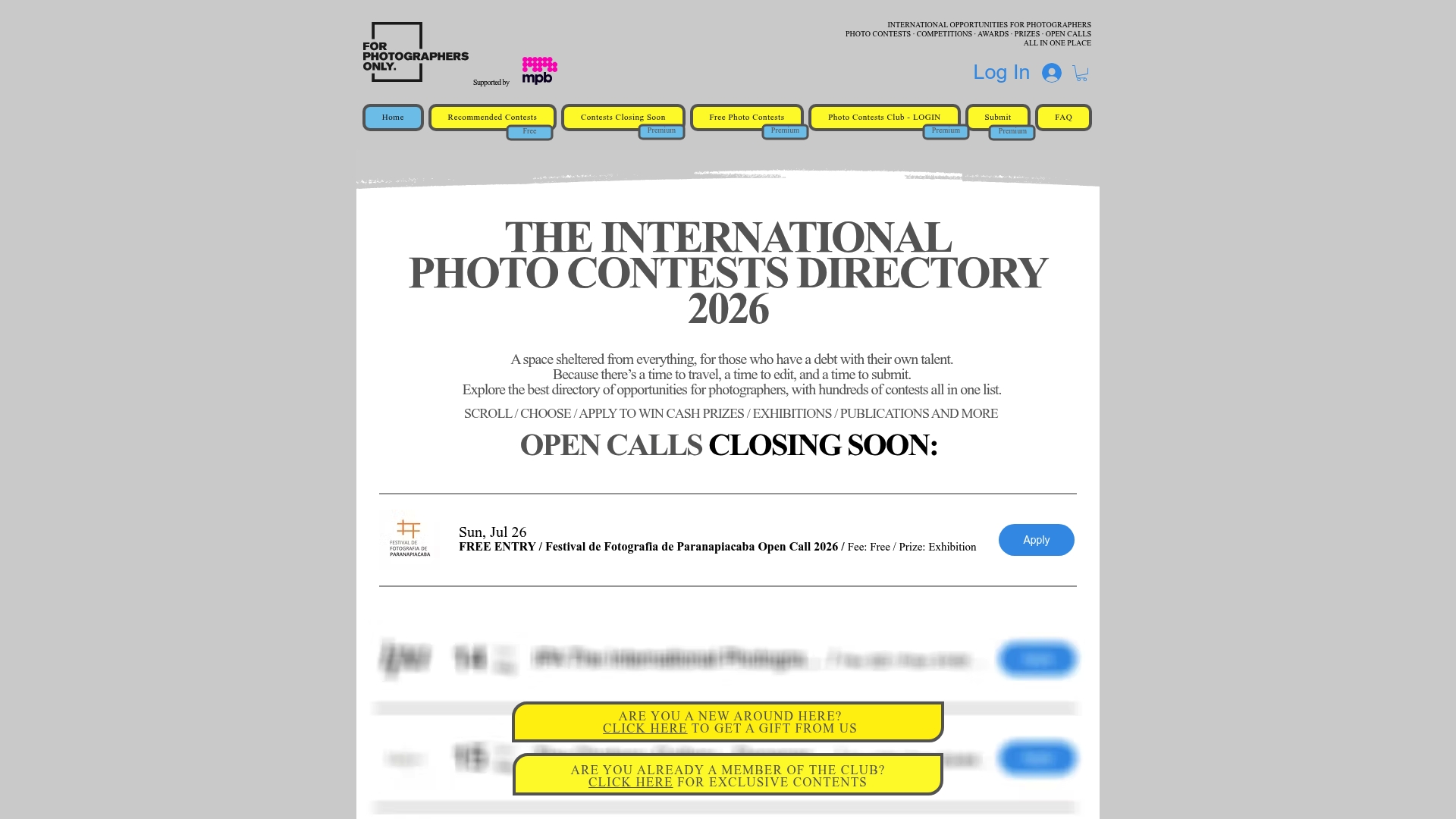
Access runs €6 per month or €40 per year through PhotoContestsClub, and if presentation matters once you start winning, a service like photography SEO support can help your published work reach more editors and curators. Check the current listing to see what’s open right now.
Official rules and judging guidance worth consulting
PSA Nature Guide for Judges and Exhibitors: definitions, ethics, and AI editing policy.
Birds & Blooms 2026 official rules: entry specs, categories, and prizes.
Botanical Photographer of the Year (BSBI): categories, judging process, and past winners.
Sources
FAQ
What are the best botanical photography competitions to enter?
Strong options include the 2026 Birds & Blooms National Nature Photography Awards and the Botanical Photographer of the Year from the Botanical Society of Britain & Ireland. Both publish clear categories and judging criteria, which makes them a reliable starting point for plant-focused entries.
What file specs do botanical photo contests usually require?
Requirements vary by organizer, but Birds & Blooms asks for digital files between 5 and 25 megabytes at 300 DPI for its 2026 competition. Always confirm the exact size, format, and color space on the official rules page before submitting.
Is AI editing allowed in botanical photography contests?
Most reputable contests follow guidance similar to the PSA Nature Guide, which permits pixel-based enhancements like sharpening but prohibits generative AI content such as fills or added elements. Rules differ by organizer, so check each contest’s stated AI policy directly.
Do botanical contests require species identification?
Many do, particularly ones like Birds & Blooms that ask for location details and a short explanation alongside each entry. Accurate species names can strengthen how judges read an image, even when identification isn’t strictly mandatory.
How can I find more botanical photography contests to enter?
A curated directory like ForPhotographersOnly tracks active international competitions in one continuously updated page, including free-to-enter options. Checking official organizer sites directly is also worthwhile for the most current deadlines and rules.
Recommended